Why does a kettle whistle?
As the water starts to boil, steam passing through the whistle makes it resonate like a bottle you blow across. At higher flow, the steam sheds tiny vortices that produce the sound. The mechanism was worked out in 2013.
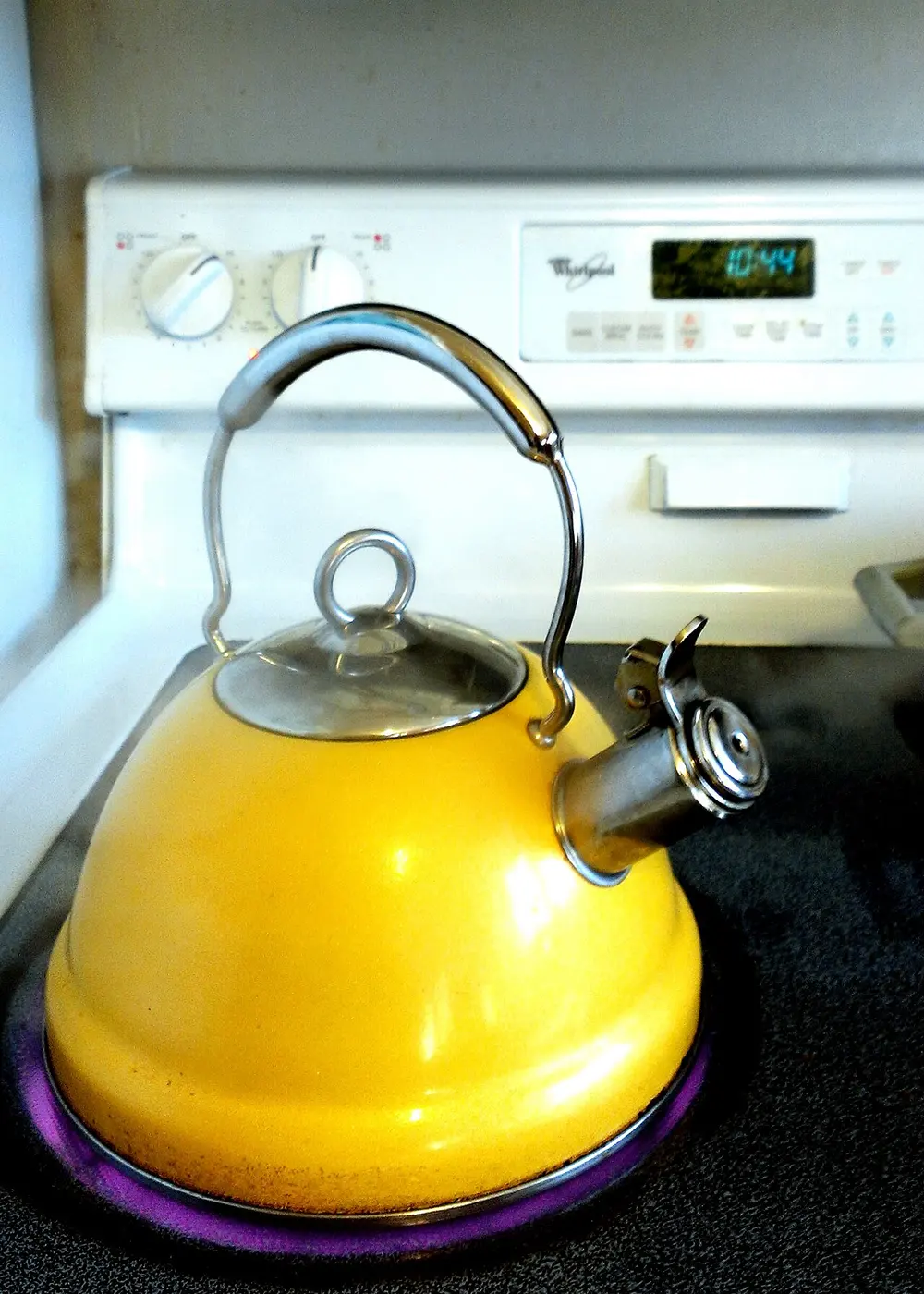
Put a whistling kettle on the stove and, before long, it lets out a piercing whistle to announce that the water is boiling. It is one of the most familiar sounds in the kitchen.
The whistle itself looks simple enough. But where, and how, the sound is actually produced was a long-standing puzzle for physicists. It was finally solved in 2013 by an engineering student at the University of Cambridge and his supervisor.
Whistles that announce the boil
The whistle is driven by steam rushing out of the boiling water. The idea of fitting a whistle to a vessel for heating water dates back at least to the late 19th century.
Patent records tell part of the story. A patent for a “tea-kettle” granted in 1889 to Charles E. Coats of Chicago already included a whistle, but it was meant to warn that the water was running low, not that it was boiling. A British patent applied for by Arthur Whitaker in 1898 described a whistle or siren fitted to the lid of a saucepan or kettle to signal that the water had begun to boil. And in 1915, Jorgen Madsen of Perth Amboy, New Jersey, received a US patent for a “combined tea-kettle and signal” whose whistle sounded once the water produced enough steam. Who came up with the idea first is unclear.
Even Lord Rayleigh was stumped
Inside, a kettle whistle is surprisingly basic: two plates held a short distance apart, each with a hole in the middle. Steam rising up the spout passes through the first hole, crosses the small gap between the plates, and escapes through the second.
According to the University of Cambridge, the source of the whistle had puzzled scientists for more than 100 years. In the 19th century, the British physicist Lord Rayleigh, author of the classic textbook The Theory of Sound, tried to explain this kind of whistle, but he had to concede that “much remains obscure as regards the manner in which the vibrations are excited.” The explanation he did put forward would later prove to be flawed.

A student project cracks it
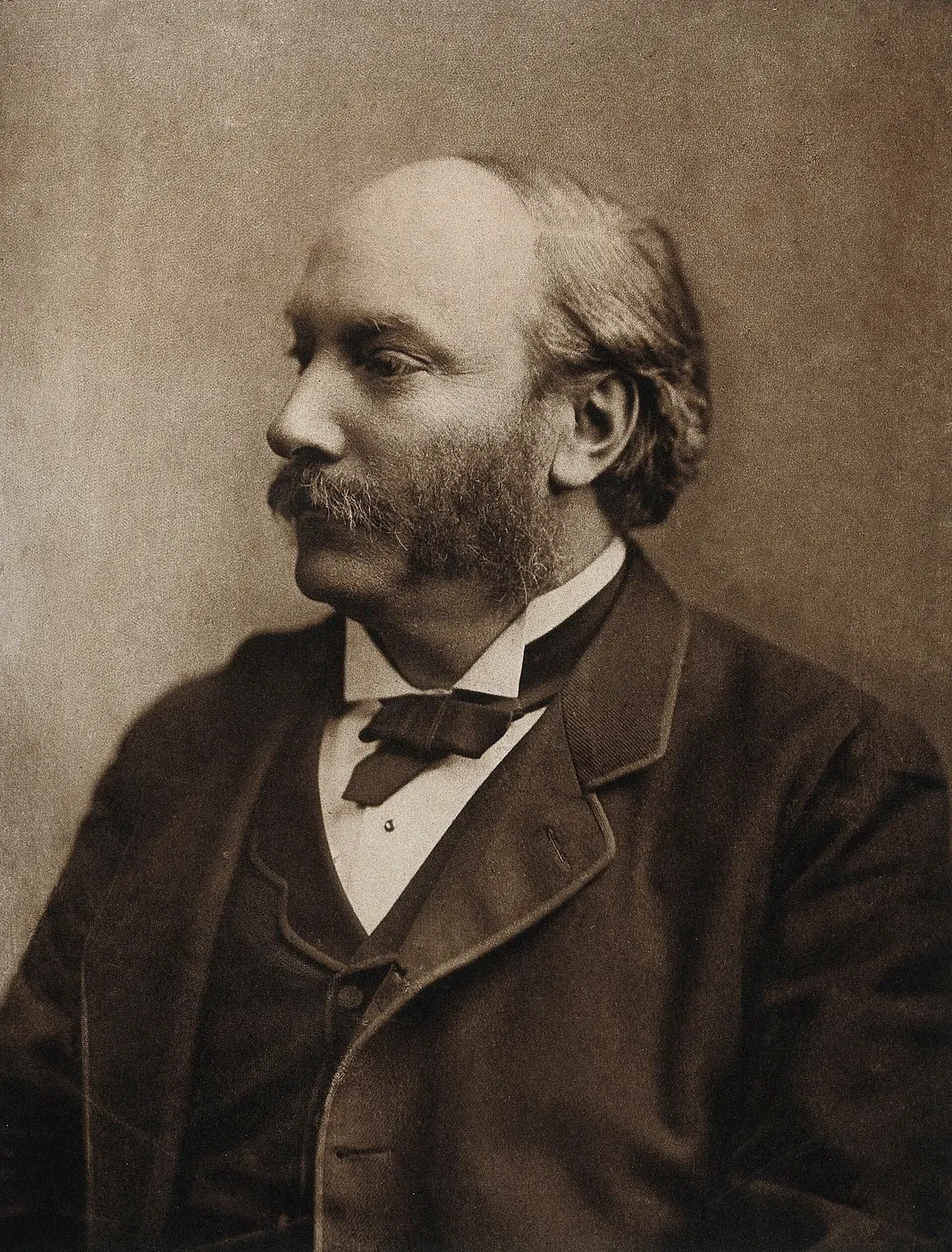
The puzzle was solved by Ross Henrywood, then a fourth-year engineering student at Cambridge, as his final-year project. His supervisor was Anurag Agarwal, a lecturer in aeroacoustics whose earlier research had identified sources of noise in jet engines. The pair built a series of simplified kettle whistles, forced air through them at different speeds and recorded the sounds. They published their results in the October 2013 issue of the journal Physics of Fluids.
They found that the whistle works in two different ways.
At higher flow rates, the sound comes from vortices. The first hole is much narrower than the spout, so the steam passing through it forms a jet. Like the stream from a garden hose that begins to break into droplets after a while, the jet is unstable. When the disturbed jet hits the second plate, it creates a small pressure pulse, which makes the steam form small vortices, or swirls, as it leaves the whistle. These vortices produce the sound. The reason you hear a clear note rather than a rushing hiss is similar to what happens in an organ pipe or a flute: one frequency, set by the size and shape of the opening and the length of the spout, wins out over the others. The longer the spout, the lower the note.
The whistle also sounds at lower flow rates, just as the water begins to boil, and here the researchers found something they had not expected. The pitch stayed fixed even as the flow changed. In this regime, the whistle behaves like a Helmholtz resonator, the effect that makes an empty bottle hoot when you blow across its neck. The air inside the whistle acts like a spring, while the air in the hole bounces back and forth. In a kettle, Henrywood explained, the air is blown through the neck rather than over it, which makes the effect similar to whistling with your mouth.

Learning how to silence a whistle
The research was about more than curiosity. The same effect can occur anywhere air flows through a structure shaped like a kettle whistle. Henrywood pointed to the whistling that happens when air gets into household plumbing, or in damaged car exhaust systems. “Once we know where the whistle is coming from, and what’s making it happen,” he said, “we can potentially get rid of it.” The pair went on to work on quieter high-speed hand dryers.