Did the Olympic torch relay exist in ancient times?
No. Ancient Olympia had a sacred fire, but the first torch relay was held for the 1936 Berlin Games.
3331runners
As each Olympics approaches, the flame is lit at Olympia in Greece, and runner after runner carries it, torch in hand, to the host city. The lighting ceremony, in which women dressed in ancient Greek style gather the sun’s rays with a curved mirror to kindle a fire, looks like a ritual that has gone on for thousands of years.
Yet passing the flame from person to person was never part of the ancient Olympics. The relay began in the 20th century—and at a Games swirling with political ambitions.
The fire at ancient Olympia
The ancient Olympics were a festival held at Olympia, a sanctuary dedicated to Zeus. There, a sacred fire is said to have burned without interruption on the altar of Hestia, goddess of the hearth, and it stayed lit throughout the festival. That Olympia had a “sacred fire” is not in doubt.
Ancient Greece also had a torch race called the lampadedromia. Runners posted at intervals handed a torch from one to the next, and the first team to bring it to the finish still burning won—a true relay. But this was held at festivals in Athens and elsewhere. It was neither an event at the ancient Olympics nor a ceremony for carrying fire from Olympia.
In other words, the sacred fire and the torch relay both existed in ancient Greece, but they were never connected.

A flame over Amsterdam, 1928
The flame first appeared at the modern Olympics at the 1928 Amsterdam Games. A fire burned throughout the Games atop the stadium’s “Marathon Tower,” designed by the architect Jan Wils. But it had not been carried from Olympia; it is said to have served mainly as a landmark showing people anywhere in the city where the Games were being held.
A relay born in Berlin
The torch relay was the idea of Carl Diem, the German sports official who served as secretary-general of the organizing committee for the 1936 Berlin Games. Carrying fire from ancient Olympia to the host city would draw a single line between the ancient and modern Olympics.
On July 20, 1936, the flame was kindled from sunlight at Olympia using a curved mirror. From Greece it passed through Bulgaria, Yugoslavia, Hungary, Austria and Czechoslovakia into Germany. Over 12 days, 3,331 runners carried it about 3,187 kilometers (roughly 1,980 miles). The torches were made by the German industrial giant Krupp, and the mirror for lighting the flame by the optics company Zeiss. At the opening ceremony on August 1, the final runner, Fritz Schilgen, brought the flame into the stadium and lit the cauldron.
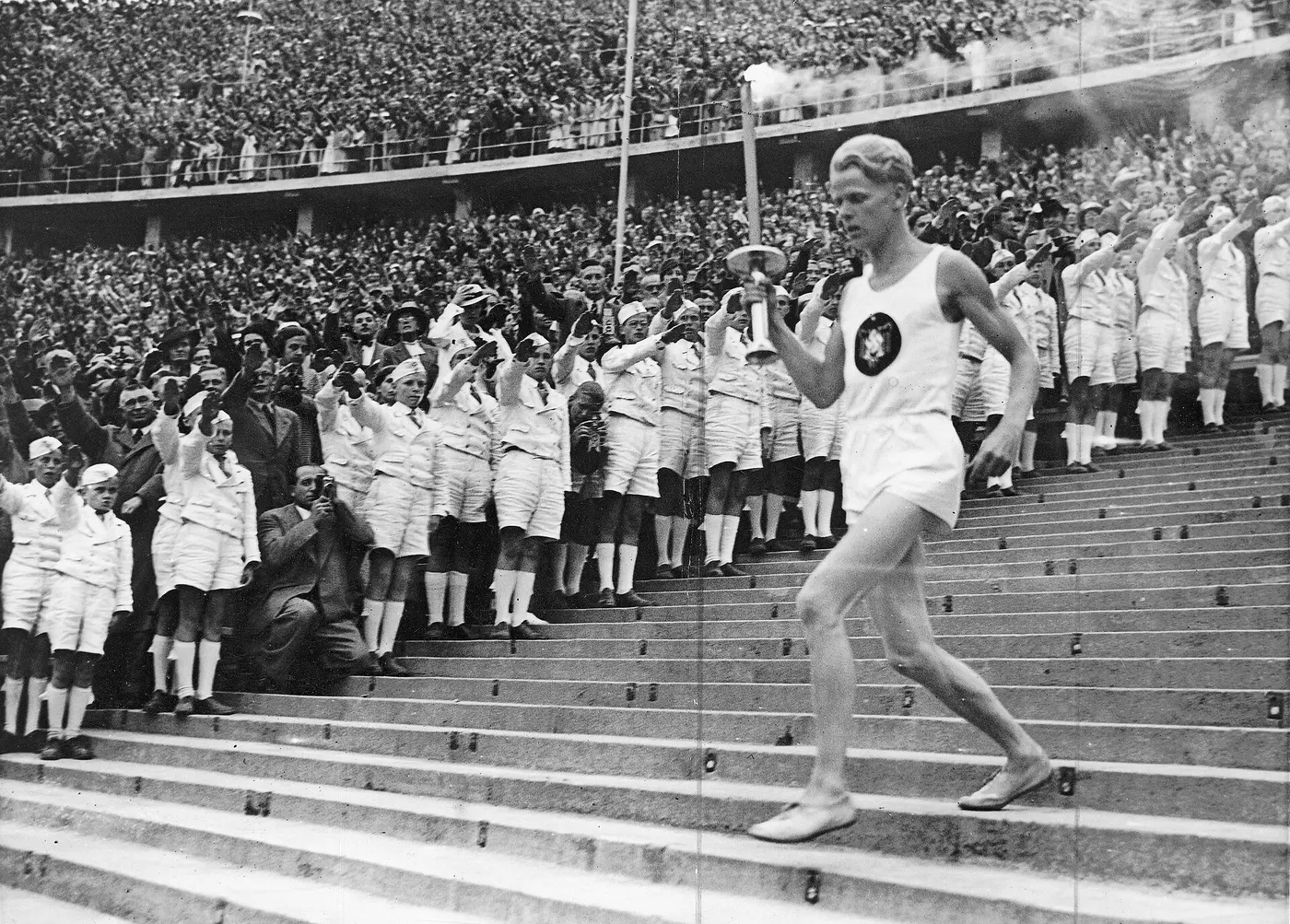

This spectacle also served the aims of the Nazi regime. It is said to have been meant to cast ancient Greece as Germany’s forerunner and to display the nation’s power at home and abroad. The relay was filmed by the director Leni Riefenstahl and appears in her 1938 documentary Olympia.
A “new tradition” that outlived the war
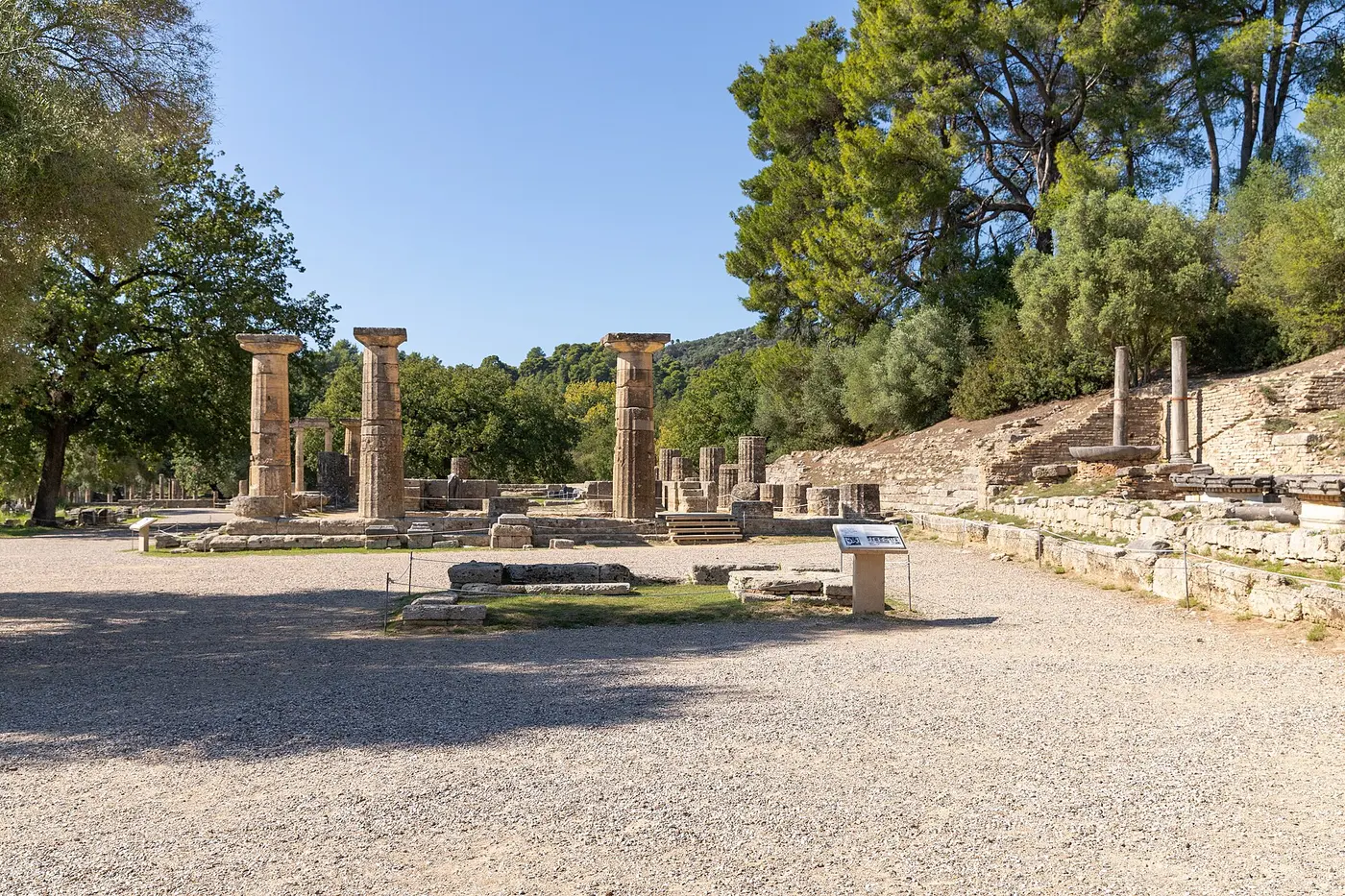
Despite its troubled beginnings, the torch relay was carried on at later Games and became an indispensable Olympic ritual. Today’s lighting ceremony is held in front of the Temple of Hera at Olympia, where women dressed as ancient priestesses (usually 11 of them) gather sunlight with a curved mirror.
Japan hosted its first Olympic torch relay for the 1964 Tokyo Games. The final runner was Yoshinori Sakai, a 19-year-old track athlete born in Hiroshima Prefecture on August 6, 1945, the day the atomic bomb was dropped on Hiroshima. The choice, carrying hopes for postwar recovery and peace, is still remembered today.