Why does a round of golf have 18 holes?
In 1764, golfers at St Andrews in Scotland combined some short holes, turning their round into 18.
1764
A round of golf is 18 holes. That is the basic unit at golf courses all over the world. Yet on reflection it is an odd number. It isn’t a round figure like 10 or 20, and it doesn’t seem to carry any special meaning as a multiple of anything.
Golfers have long passed around a famous tale about where the “18” came from. Follow the records, however, and the real reason turns out to be plainer and far more practical.
No two courses alike
Golf is said to have flourished in Scotland from around the 15th century. The courses of the day were links: grassy stretches of sandy ground along the sea. Rather than designed courses, they were landscapes in which players found holes among the natural contours.
As a result, the number of holes varied from place to place. The course at Leith, near Edinburgh, had five holes in 1744. Musselburgh had seven for many years, adding an eighth only in 1832. At Montrose the count rose and fell over time, from 7 to 14 to 11 to 25. Prestwick, laid out in 1851, had 12 holes, and when the Open Championship began there in 1860, it was played as three trips around that 12-hole course.
The “22 holes” of St Andrews
Amid all this variety stood the town later hailed as the “home of golf”: St Andrews, on Scotland’s east coast. Golf is said to have been played on its links by the early 15th century, and records show that in 1552 the archbishop granted the townspeople the right to play there.
In the 18th century the course at St Andrews ran in a long, narrow strip along the shore. Golfers played out to the far end and came back along the same route. Because many holes were shared going out and coming in, a round came to 22 holes.
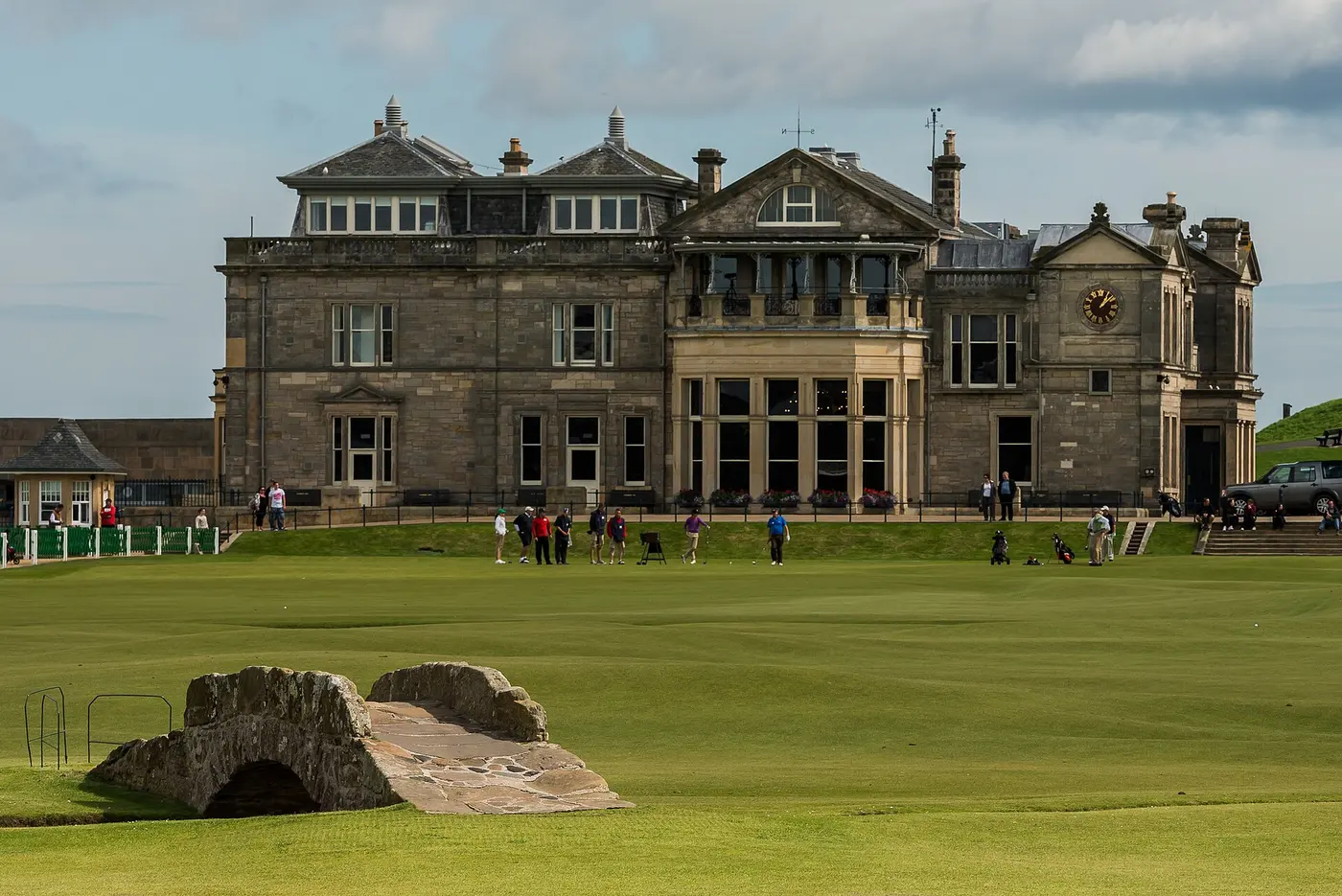

The turning point came on October 4, 1764. The local golfers’ club, the Society of St Andrews Golfers (later the Royal and Ancient Golf Club, or R&A), decided that the first four holes were too short and should be combined into two. With two fewer holes on the way out and two fewer on the way back, 22 became 18.
In other words, 18 wasn’t worked out from some ideal. It was simply what was left after tidying up holes that were too short.
The home of golf sets the standard
Still, St Andrews carried enormous influence, because its golfers also played a central role in writing the rules. By the mid-19th century, the R&A’s rules included a provision to the effect that “one round of the links, or 18 holes, is reckoned a match.”
Other clubs gradually followed suit. Even Prestwick, the Open’s first home, was later expanded to 18 holes. By the end of the 19th century, “one round = 18 holes” had taken hold as the standard around the world.
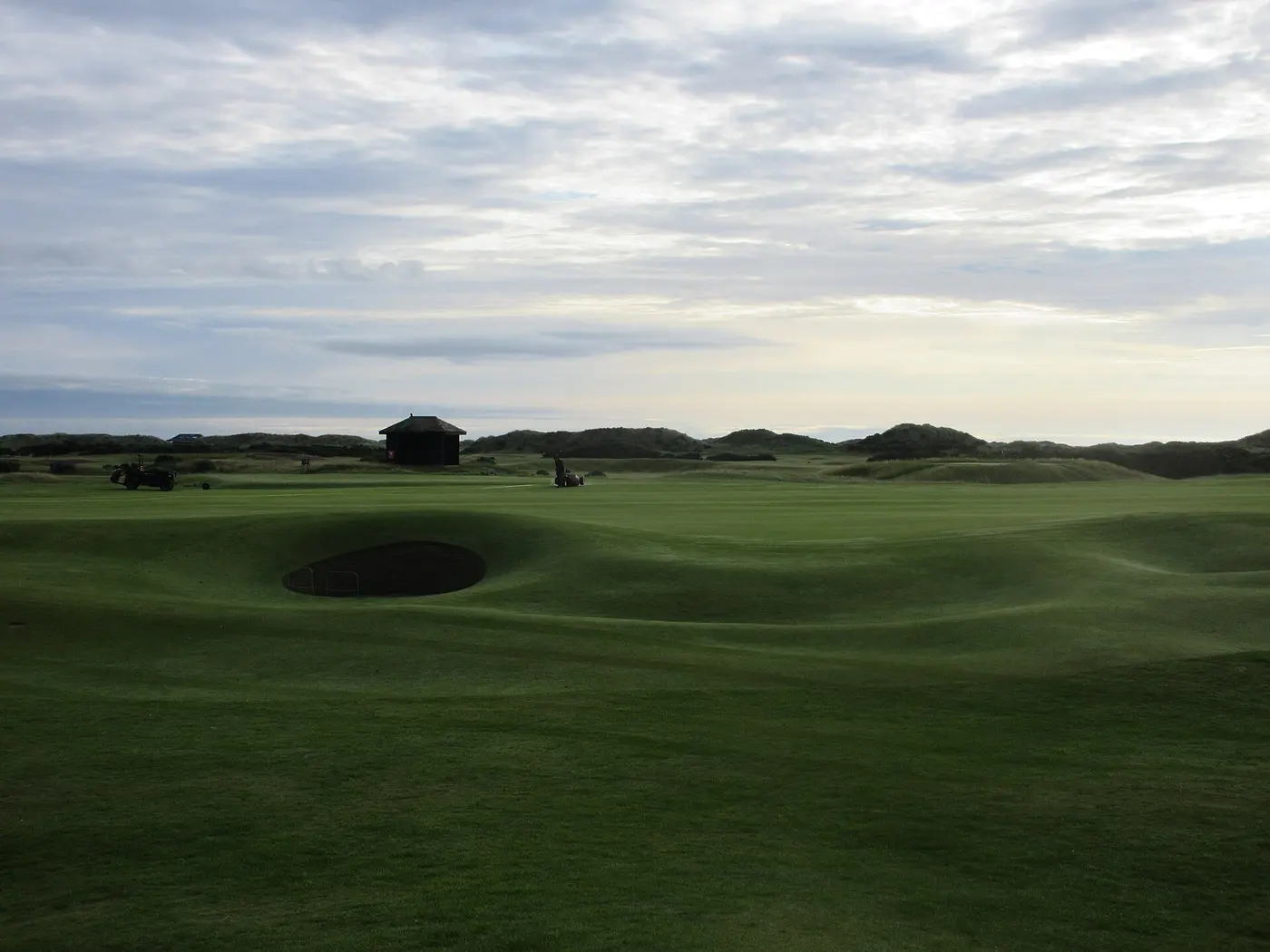

Today’s Old Course at St Andrews still bears traces of the era when outward and homeward holes shared the same ground. Even after the present 18-hole layout took shape around 1863, seven greens remained “double greens,” each shared by one hole going out and another coming in. A single vast green with two flags on it is a sight unique to this course.
Why 18 shots of whisky?
Now for the famous tale mentioned at the start. Scottish golfers of old, the story goes, carried a bottle of whisky onto the course and took one shot per hole. The bottle held exactly 18 shots, and when it ran dry, the round was over. Hence 18 holes.
It is a delightfully Scottish story, but no record has ever been found to support it. The origin of 18 holes is thought to lie squarely in the 1764 decision at St Andrews. The whisky tale is best enjoyed as a joke invented after the fact.