Are Olympic gold medals made of solid gold?
No. They are silver inside, plated with at least 6 grams of gold.
6g
Athletes on the Olympic podium biting the gold medals hung around their necks: it is a familiar sight on TV and in the papers. Looking at those heavy golden disks, it is tempting to imagine they must be precious lumps of gold.
Modern gold medals, however, are not solid gold. Most of their weight is actually silver. The gold is little more than a thin costume covering the surface.
Solid gold, but only briefly
Surprisingly, at the first modern Games, held in Athens in 1896, the winners received silver medals. Runners-up are said to have been given bronze, and third place got no medal at all. At the next Games, in Paris in 1900, many events awarded trophies and other prizes instead of medals; the form of the awards had not yet been settled.
The system of gold, silver and bronze medals for first through third place began at the 1904 Games in St. Louis. Gold medals from 1904 through the 1912 Stockholm Games are said to have been made of solid gold.
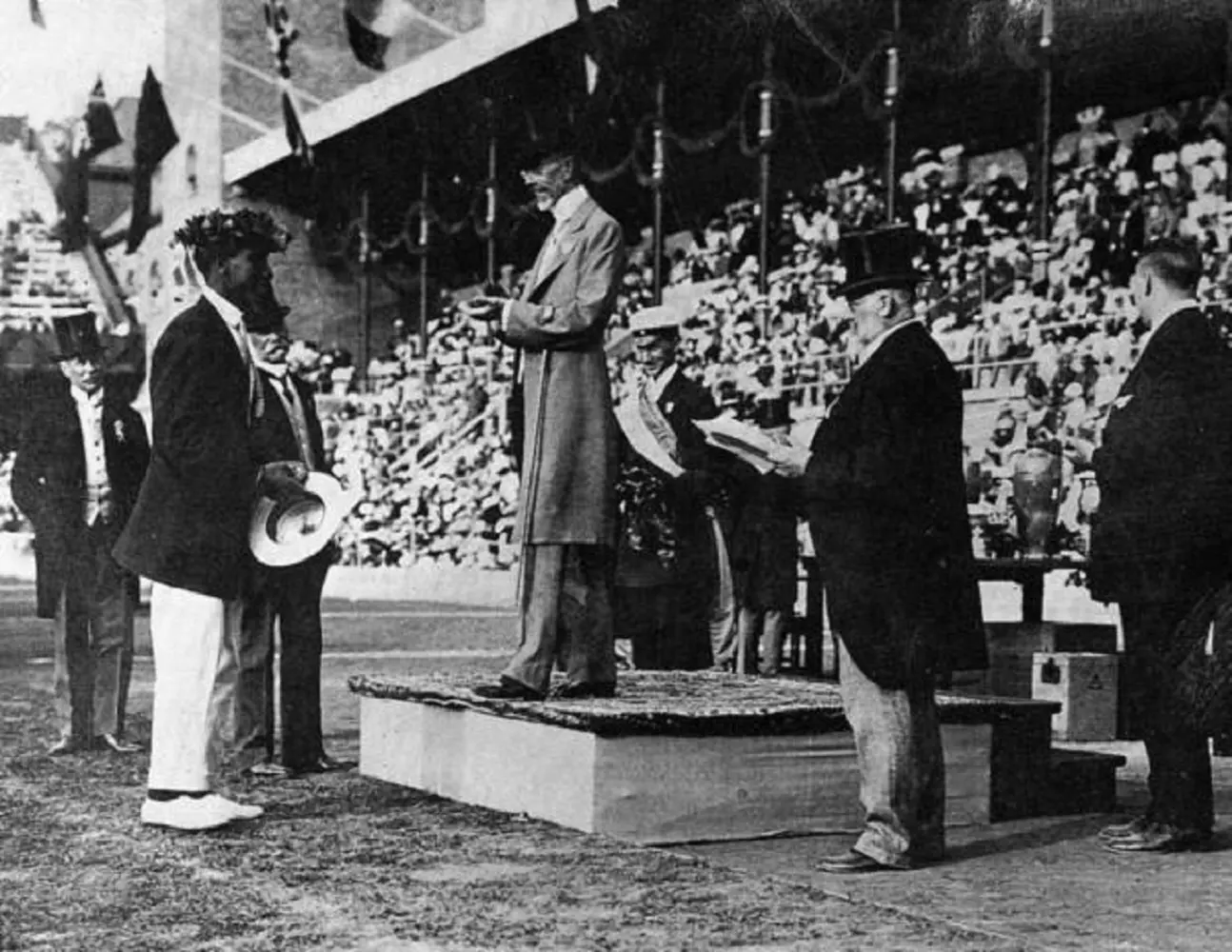

In other words, genuine “solid gold medals” existed for only a very short stretch of Olympic history. Starting with the 1920 Antwerp Games, the first held after World War I, the medals were made of gold-plated silver.
What’s inside a gold medal today
Under the standards of the International Olympic Committee (IOC), gold and silver medals must be made of silver that is at least 92.5% pure. Gold medals are then plated with at least 6 grams of pure gold. That is the basic recipe for a modern gold medal.
Gold medals at recent Games weigh around 500 grams (about a pound). Only about 6 grams of that is gold—a mere 1 to 2% of the total. If a medal that size were made entirely of gold, the cost of materials would balloon by orders of magnitude, a heavy burden for Games that must prepare thousands of medals. Practical considerations like these are thought to be part of why solid gold medals disappeared.
Incidentally, silver medals are, as the name says, made of silver, and bronze medals are usually made of a copper-based alloy. So on the inside, gold and silver medals are made of almost the same material.
Biting won’t tell you it’s gold
So why do athletes bite their medals? One explanation sometimes given is that, because gold is a soft metal, people once tested it by biting: if their teeth left a mark, the gold was real.


Bite a modern gold medal, though, and your teeth meet a thin layer of gold with silver beneath it. It tells you nothing about whether the medal is genuine. In reality, the pose is said to have caught on because photographers kept asking athletes to “give it a bite,” until it became a standard shot.
Medals with a story in the metal
At recent Games, organizers have increasingly tried to build a story into the medals’ materials themselves. For the Tokyo Games, held in 2021, metal was extracted from used cell phones and small electronics collected from across Japan, and all of the roughly 5,000 medals were made from recycled material. About 79,000 tonnes of small electronics were reportedly collected, yielding about 32 kilograms of gold.
Perhaps a gold medal’s value lies not in the weight of its gold, but in the weight of the journey it took to win it.
As a material, it may be “silver dressed in gold,” but for the athletes, its shine is no less real.