Did athletes at the ancient Olympics compete naked?
Yes. Runners, jumpers and wrestlers competed in the nude, though even ancient writers disagreed on how it began.
Look at ancient Greek vase paintings or marble statues and you will notice that runners, discus throwers and wrestlers are usually wearing nothing at all. It is easy to assume this was an artistic convention, a way of showing off the ideal human body.
But it was not an exaggeration. At the ancient Olympic Games, traditionally said to have begun in 776 BC, athletes really did compete naked.
The gym was the “naked place”
The ancient Greek word for naked was gymnos, and it is the root of the word gymnasium. Originally, a gymnasium was a place where you exercised in the nude.
Before competing, athletes rubbed themselves generously with olive oil. After a contest or a training session, they scraped off the mixture of oil, sweat and dust with a curved metal tool called a strigil. Naked, oiled, then scraped clean: that was simply what a Greek athlete looked like.
A slipped loincloth? How nudity began
It seems athletes were not always naked, though. The earliest competitors are said to have worn a cloth around their hips.
The story most often told about the switch involves Orsippus, a runner from the city of Megara. At the Games of 720 BC, he is said to have won the short sprint without a loincloth. Pausanias, a Greek travel writer of the 2nd century AD, gave his own view: “My own opinion is that at Olympia he intentionally let the girdle slip off him, realizing that a naked man can run more easily than one girt.”
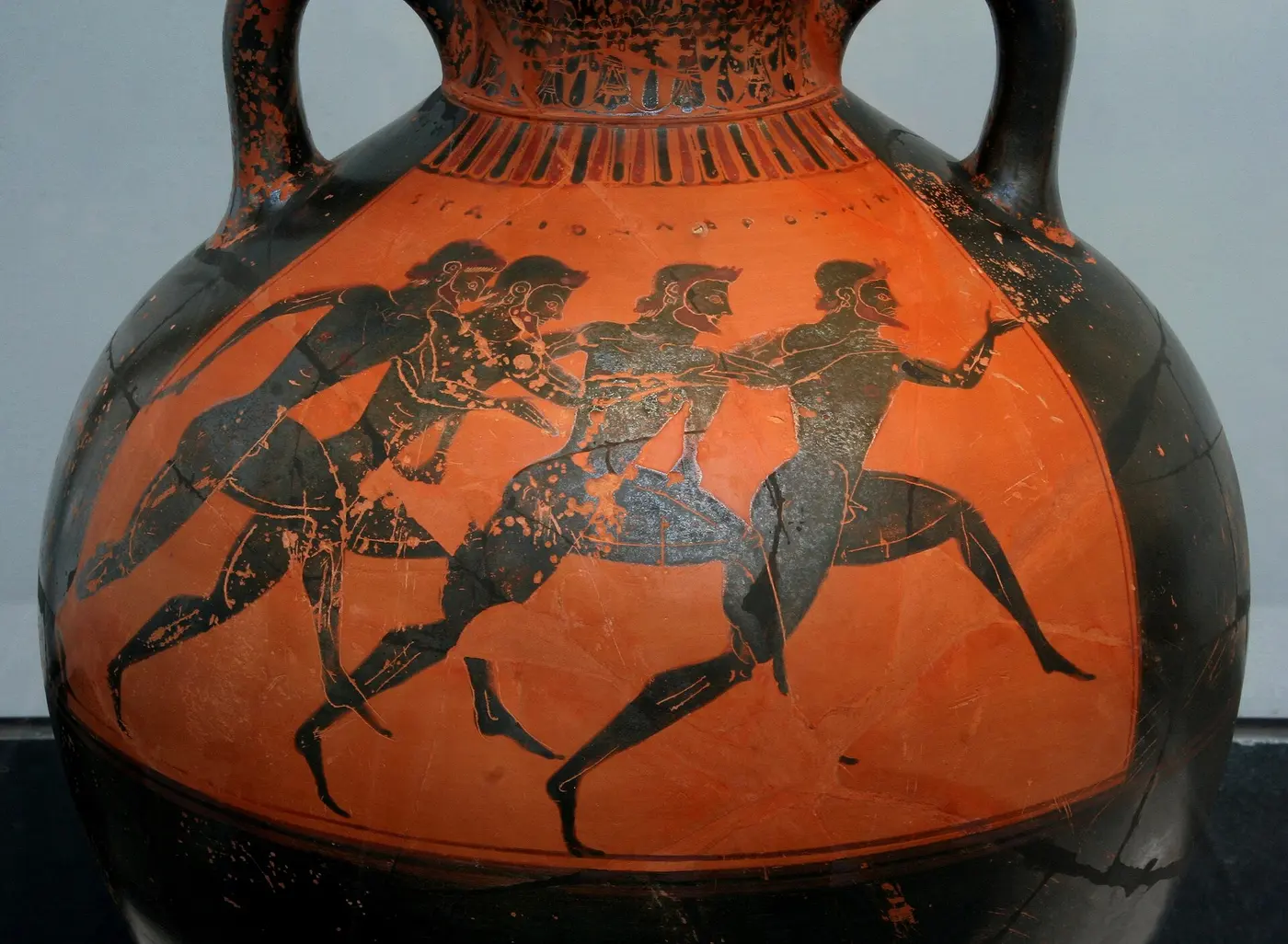

There are other versions, however. Some ancient sources say the first to run naked was Acanthus of Sparta, who won races at the same Games of 720 BC. And the 5th-century BC historian Thucydides wrote that it was the Spartans who started stripping and oiling themselves, and that even at Olympia athletes had covered their loins until “not very many years ago.”
In other words, even the ancient Greeks could not agree on when, or with whom, naked competition began. As for why they competed naked at all, suggestions include freedom of movement, pride in showing off a trained body and religious meaning, but there is no definitive answer.
Who was not allowed to watch
A festival of naked men came with strict rules. Under the law of Elis, the region that ran the Olympic sanctuary, married women were barred from watching the Games, and any caught there were to be thrown off a cliff of Mount Typaeum. Unmarried girls, on the other hand, were not prevented from watching, according to Pausanias. And the priestess of Demeter, a goddess of the harvest, watched the games from a seat on an altar in the stadium.
Pausanias also tells of a woman who broke the rule. A widow named Callipateira disguised herself as a trainer to accompany her son. When he won, she leapt over the barrier of the trainers’ enclosure in excitement, and her disguise was exposed. She was spared punishment because her father, her brothers and her son had all been Olympic champions, but from then on trainers too had to enter the arena naked.
Some athletes did wear clothes
Not every event was performed naked. In the chariot races, the charioteers who drove the horses wore long robes reaching down to their ankles.
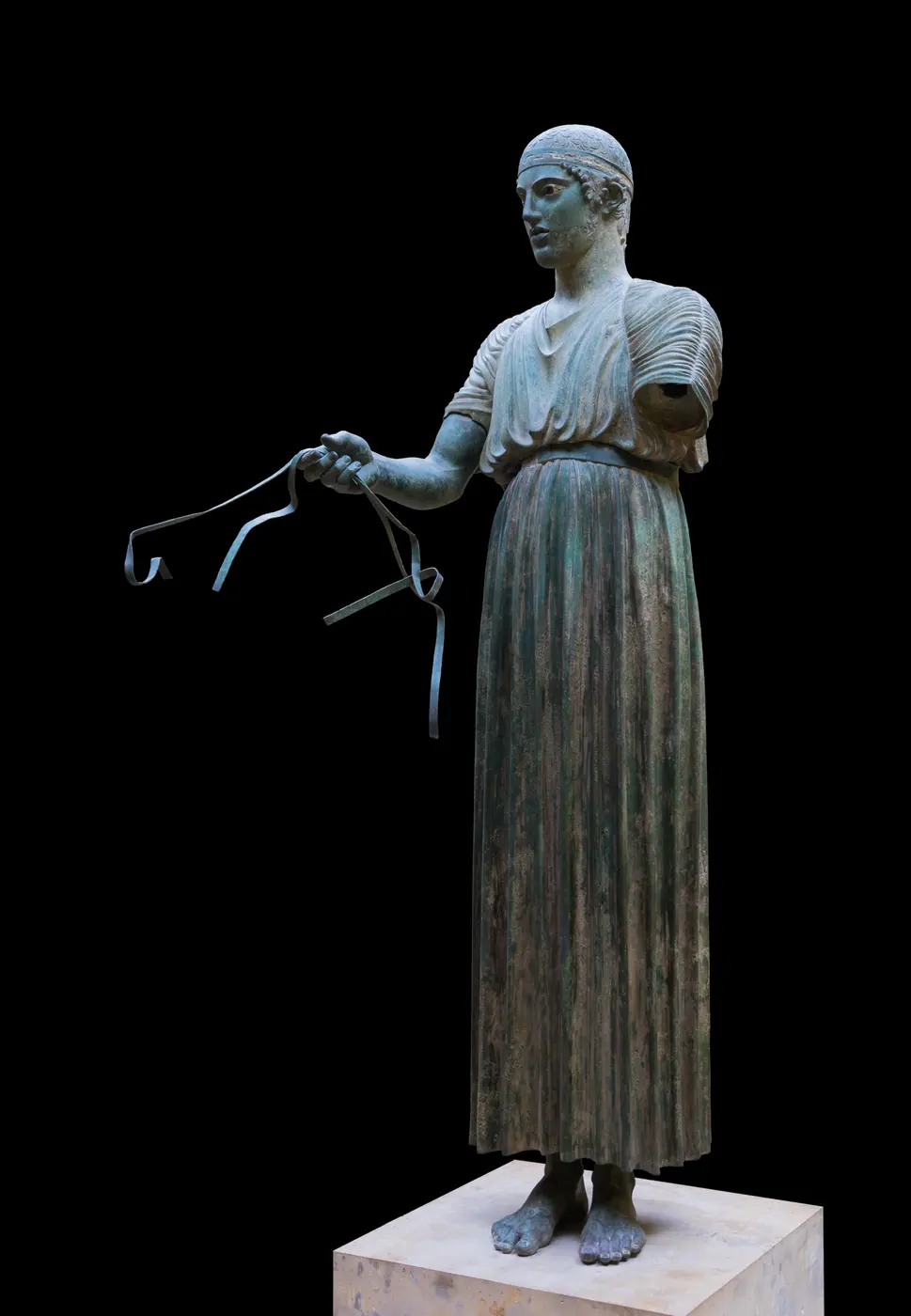

What is more, in chariot racing the name that went down as the winner was not the driver’s but that of the owner of the horses and chariot. Thanks to that rule, a woman once became an Olympic champion.