What is the oldest musical instrument?
The oldest securely dated ones are flutes of bird bone and mammoth ivory from caves in Germany, made some 42,000 to 43,000 years ago.
43,000years ago
Singing, clapping, beating drums: music turns up in every human culture on Earth. So what was the very first musical instrument that people made?
Voices and clapping leave no trace, and anything like a drum made of wood or animal hide rots away over the millennia. The oldest instruments archaeologists can actually track down are therefore those made of hard, durable materials such as bone and ivory. And so far, the answer is a flute.
Flutes from Ice Age caves
In southwestern Germany, along the upper reaches of the Danube, lies the Swabian Jura, a region dotted with caves where people lived during the last Ice Age. One after another, these caves have yielded flutes made of bone and ivory.
The best known comes from Hohle Fels Cave. It was found during an excavation on September 17, 2008, broken into 12 pieces. It was carved from a wing bone (the radius) of a griffon vulture, a large bird with a wingspan of more than 2 meters (6.5 feet), and the surviving part is 21.8 centimeters (8.6 inches) long. It has five finger holes, and one end bears two V-shaped notches, probably where the player blew. Near the holes are fine incised lines that seem to have been guide marks for placing them.
According to the paper by Nicholas Conard of the University of Tübingen and his colleagues, the flute is more than 35,000 years old. In the same layer, only about 70 centimeters (2 feet) away, the excavators had found the famous female figurine known as the Venus of Hohle Fels.
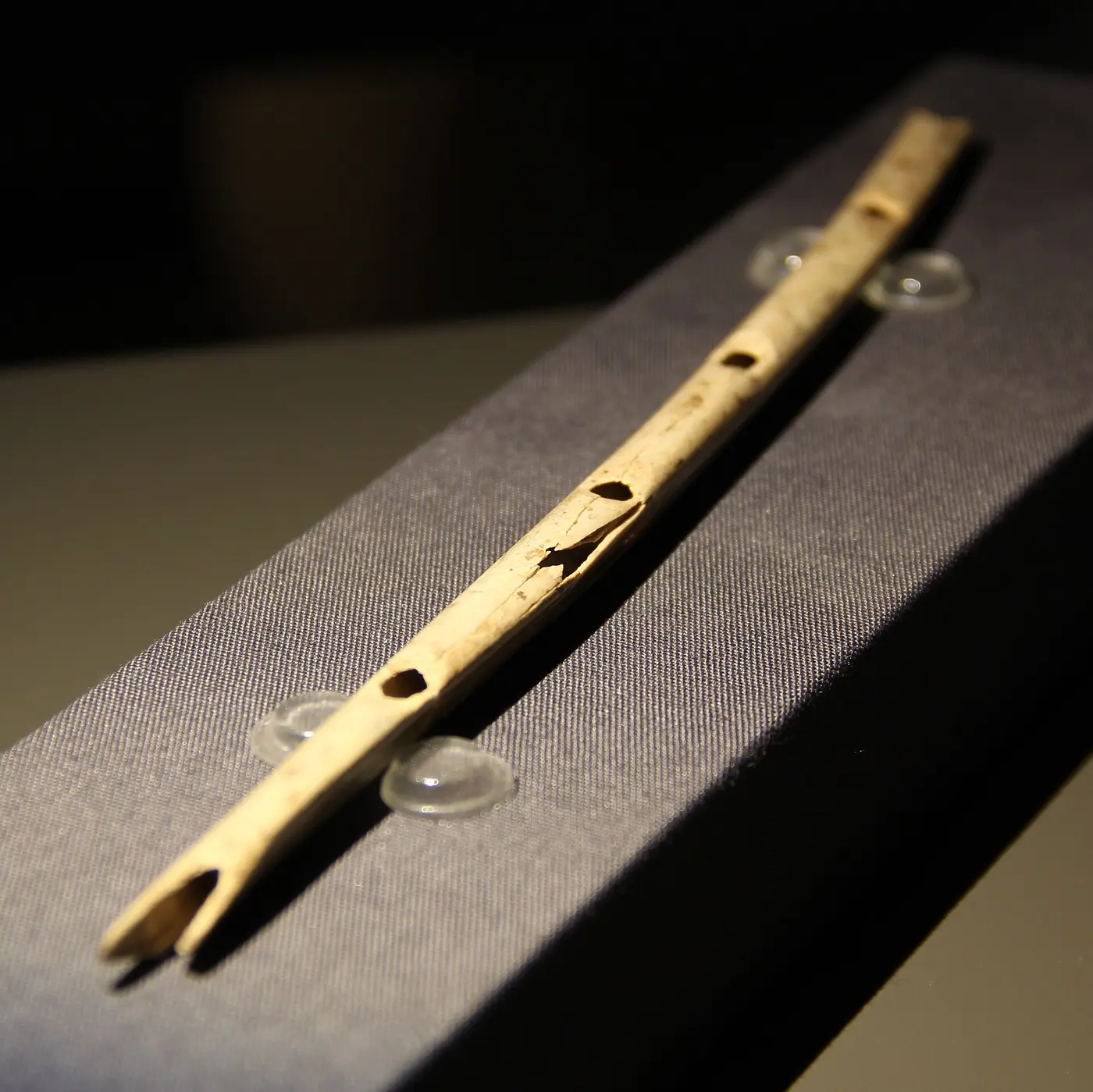

Even older: flutes of swan bone and mammoth ivory
Nearby Geissenklösterle Cave has produced a flute made from the bone of a mute swan and another carved from mammoth ivory. In 2012, a team from the University of Oxford and the University of Tübingen re-dated the cave’s layers in fine detail and announced that the flutes were about 42,000 to 43,000 years old. That makes them the oldest securely dated musical instruments in the world.
The swan-bone flute is small, with just three finger holes, yet blowing across one end produces four basic notes, and blowing harder brings out three more overtones. Its range compares well with many flutes played today.
The ivory flute took far more work than one made from a hollow bird bone. The maker had to shape a curved piece of tusk, split it lengthwise, hollow out both halves, carve the holes and then join the halves again with airtight seams. Not long after modern humans arrived in Europe, they already had the skills to make such an elaborate instrument.
In 2017 these caves were added to UNESCO’s World Heritage List as the “Caves and Ice Age Art in the Swabian Jura,” recognized for finds that include carvings and the oldest musical instruments ever discovered.
A Neanderthal flute?
One more object sometimes appears in the race for the world’s oldest instrument: the so-called Neanderthal flute, found in 1995 in Divje Babe Cave in Slovenia. It is the thigh bone of a young cave bear with holes in a row, and it is dated to around 50,000 to 60,000 years ago. If it really is a flute, it was made not by modern humans but by Neanderthals.
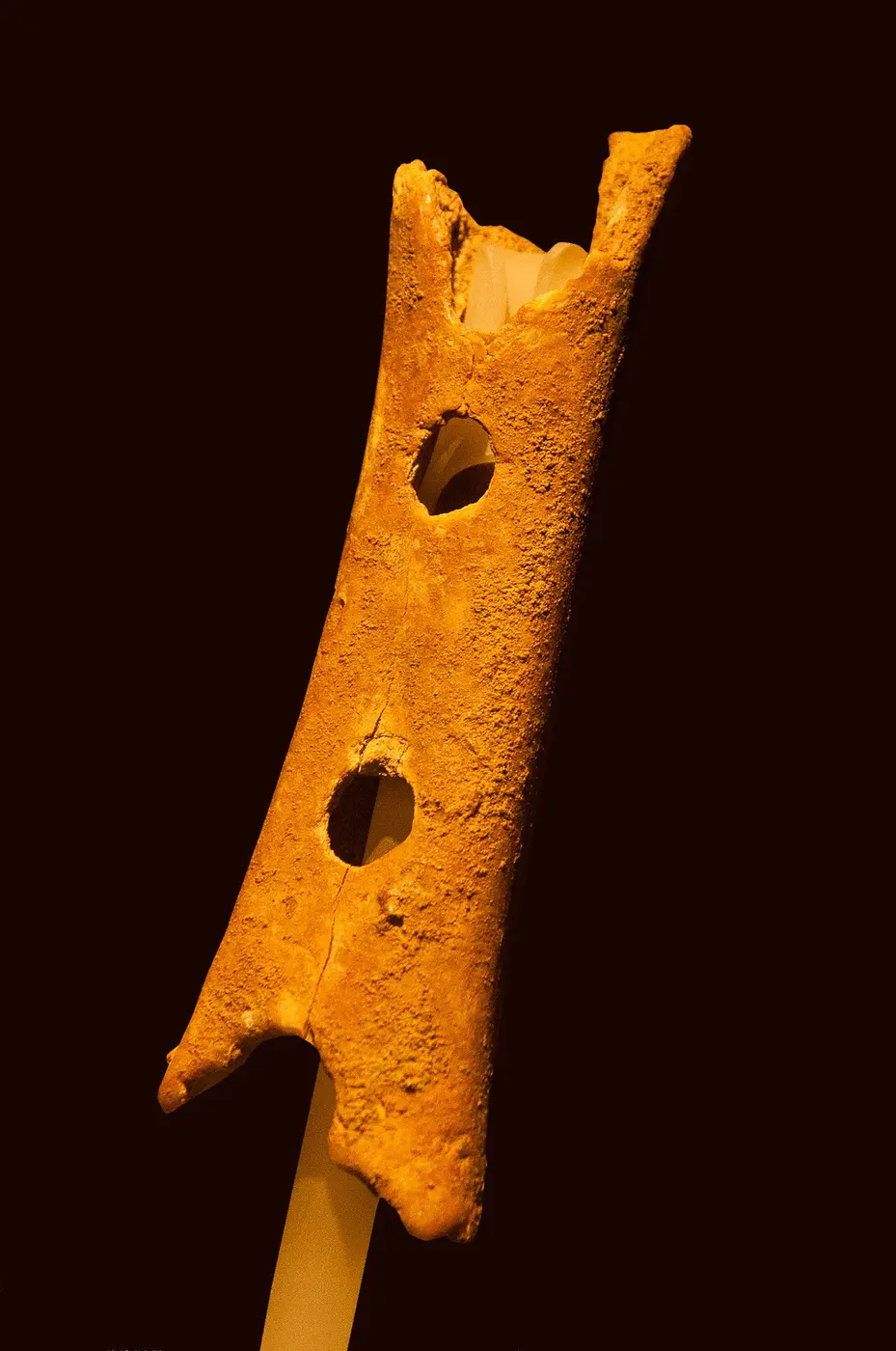

The National Museum of Slovenia, which holds it, considers it a flute made by Neanderthals. Critics, however, point out that similar holes turn up in cave bear bones from places where no humans were present, and argue that the holes were made by the bites of carnivores such as hyenas. Researchers have not reached a consensus, which is why the German flutes are usually named as the oldest instruments we can be sure of.