Did Bach really write a song about coffee?
Yes. His so-called Coffee Cantata is a comic piece about a daughter who loves coffee and a father who wants her to quit.
3
Johann Sebastian Bach brings to mind grand, solemn music for the church. But Bach also wrote something closer to a sitcom: a piece about coffee, usually called the Coffee Cantata. It tells, in song, of a young woman who cannot give up her coffee and a father determined to make her.
Its formal title, taken from its opening words, is Schweigt stille, plaudert nicht (“Be quiet, stop chattering”), BWV 211. A cantata is a work for singers and instruments, but this one has a plot and characters, and plays almost like a miniature opera.
Concerts at a coffeehouse
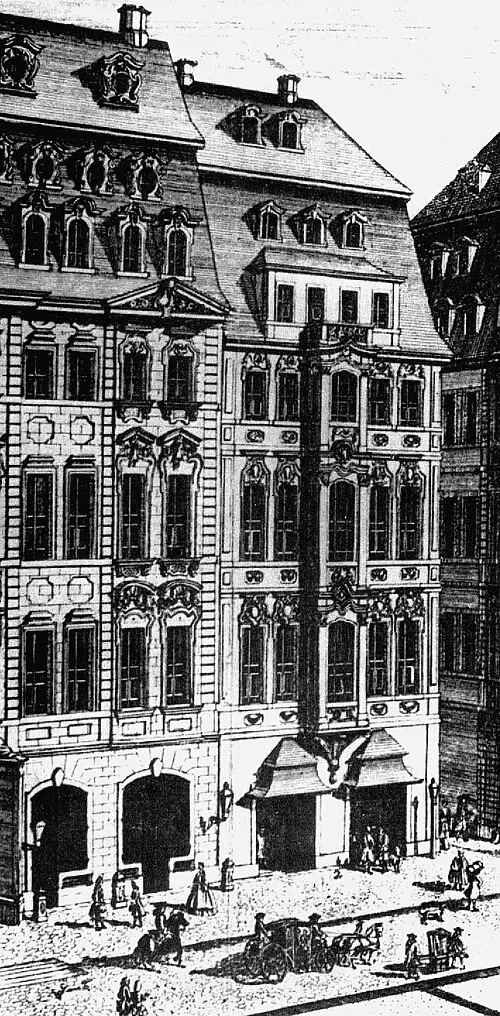
Bach had been cantor of St. Thomas Church and music director in Leipzig since 1723. In March 1729 he also took over the Collegium Musicum, an ensemble made up largely of university students. According to the Bach scholar Andreas Glöckner, writing in the preface to the Bärenreiter edition of the score, local papers of the time reported that the group played every week at Gottfried Zimmermann’s coffeehouse: in summer on Wednesdays from 4 to 6 p.m. in the garden, and in winter on Fridays from 8 to 10 in the evening at the coffeehouse on Katharinenstraße.
Coffee was all the rage in Leipzig. According to the Netherlands Bach Society, which is recording all of Bach’s works, the city had more than ten coffeehouses. Glöckner notes that since the late 17th century, coffee had been a favorite “vice” of the middle classes as well as the nobility, brewed more and more often at home, and that attempts by the authorities to ban or restrict it got nowhere.

Three cups a day, or else
The libretto was by the poet Picander (the pen name of Christian Friedrich Henrici), who wrote many texts for Bach. It was published in a collection of his poems in 1732, and other composers set it to music as well.
A narrator opens by telling the audience to hush and listen. Enter a grumpy father, Schlendrian, and his daughter Liesgen. When he orders her to give up coffee, she answers that if she cannot drink her little cup of coffee three times a day, she will shrivel up like a dried-out roast goat. Then she sings its praises: “Ah, how sweet coffee tastes, lovelier than a thousand kisses, smoother than muscatel wine.”
Her father tries every threat he can think of. If she will not give up coffee, she will not go to weddings or out for walks. He will not buy her a fashionable hooped skirt. She may not stand at the window watching people pass, and there will be no silver or gold ribbon for her bonnet. Liesgen shrugs it all off, as long as she can keep her coffee. Then he plays his last card: no husband. At that, she promptly swears off coffee for good.
A twist only Bach’s version has
That is where Picander’s libretto ends. Bach’s cantata keeps going. As the old man bustles off to find a son-in-law, the narrator lets us in on a secret: Liesgen is quietly letting it be known that no suitor will get through her door unless he promises, in writing in the marriage contract, that she may brew coffee whenever she likes.
All three singers then join in a closing trio with a moral. A cat will not stop chasing mice, and girls stay faithful to their coffee. Mother loved it, and Grandma drank it too, so who can blame the daughters?
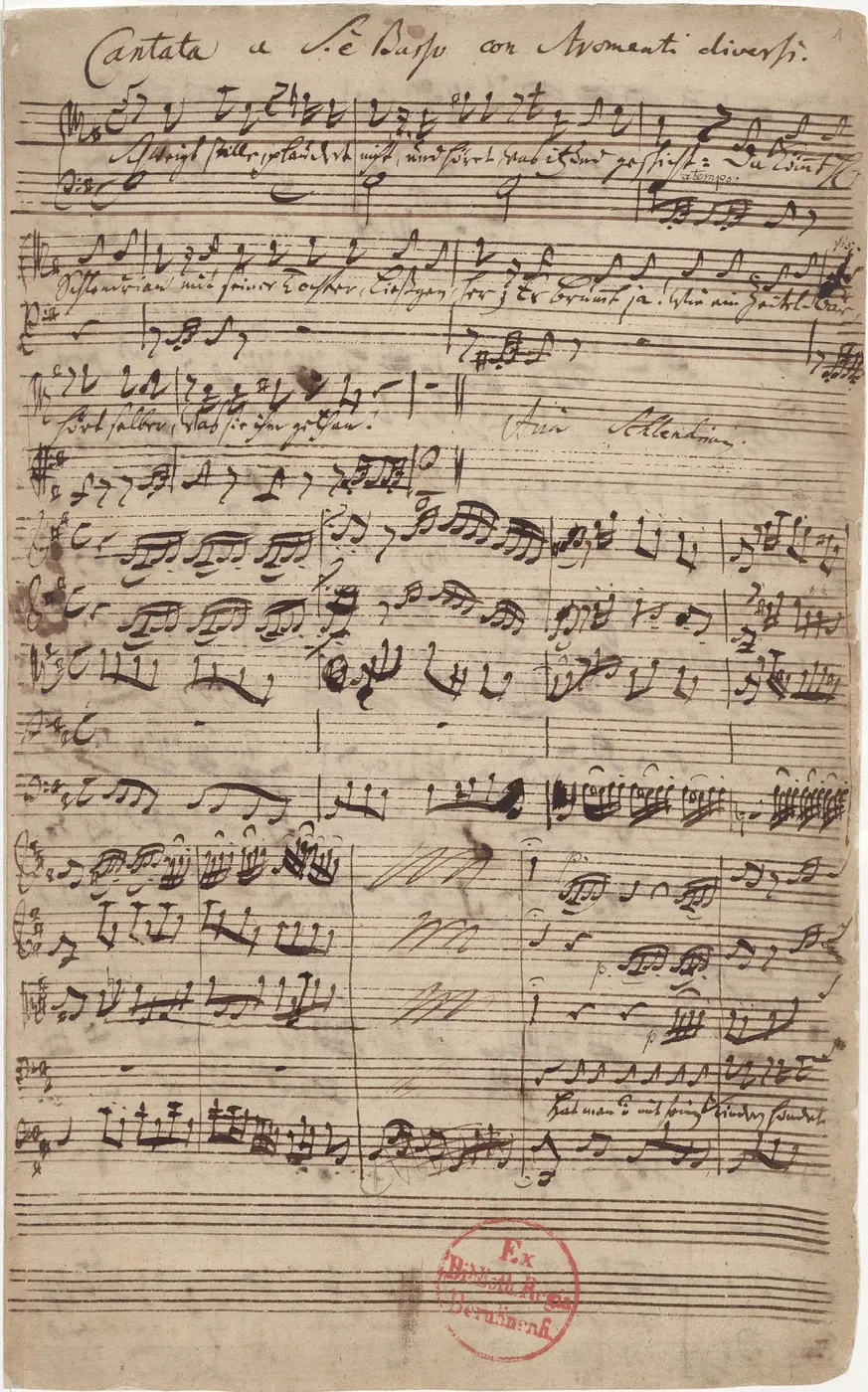

No one knows who wrote the words of those last two movements. The Netherlands Bach Society suggests it may have been Bach himself. Glöckner goes a step further and wonders whether this cheerful family quarrel reflects something of Bach’s own experience of raising daughters.
First heard in the summer of 1734?
The cantata’s date comes from the parts copied out for performance. According to Glöckner, one of the copyists was Bach’s young son Carl Philipp Emanuel. Since Carl Philipp Emanuel left Leipzig for university in 1734, the first performance probably came before that, most likely on a late-summer afternoon in Zimmermann’s coffee garden.
A song about coffee, performed in a coffeehouse: for some in the audience, the joke may have hit close to home. The building that housed Zimmermann’s coffeehouse stood on Katharinenstraße for two more centuries, until it was destroyed in an air raid in December 1943, during World War II.