Should you tilt your head back for a nosebleed?
No. Tilting your head back sends blood down your throat. Sit, lean slightly forward, and pinch the soft part of your nose for about 10 minutes.
10minutes
A red drop lands on your sleeve: your nose is bleeding. You tip your head back, and someone pats you on the back of the neck. Many of us remember a scene like that from childhood.
The Japan Society of Otorhinolaryngology–Head and Neck Surgery, Japan’s professional body for ear, nose and throat specialists, tells a similar story in its guide to children’s health problems. A second grader who often had nosebleeds would tap the back of his neck or pinch the bridge of his nose, but the bleeding never stopped easily. When he asked the school nurse about it, she laughed and told him that was just a good-luck charm. The method the society recommends is closer to the opposite of tilting your head back.
Most nosebleeds start just inside the nostril
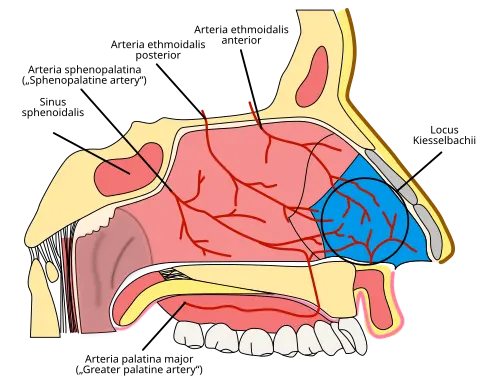
According to the society, nosebleeds usually come from the lining of the septum, the wall that divides the left and right sides of the nose. About 1 cm (less than half an inch) inside the nostril, small blood vessels form a dense network close to the surface, which makes the spot prone to bleeding again and again. Nosebleeds are especially common from early childhood through the first years of elementary school.
The MSD Manual, a standard medical reference, also says that most nosebleeds come from this area at the front of the nose. The most common triggers are minor injuries, such as blowing or picking the nose, and dry nasal lining, for example in cold weather.
The spot is known as Kiesselbach’s plexus, or Kiesselbach’s area, after the German ear specialist Wilhelm Kiesselbach. According to the Neue Deutsche Biographie, Kiesselbach was born in Hanau in 1839. A complicated broken leg and paralysis of his right hand held up his studies, and he did not complete his medical degree at Erlangen until 1875, at the age of 35. Although his teaching post was in diseases of the ear, he also worked on the nose, and in 1884 he published a paper on spontaneous nosebleeds.
He was not the only one to notice the spot. According to a history of nosebleed treatment by the German ear, nose and throat specialist Feldmann, several doctors between 1874 and 1884, among them James Little in the United States and Kiesselbach in Germany, recognized the front of the septum as a common source of bleeding. In English it is also called Little’s area.

Head back, blood down
So why not tilt your head back? The Japanese society explains that when you look up, blood runs into your throat. You may cough, or swallow it and feel sick enough to vomit. Tilting your head back does nothing to stop the bleeding; it just sends the blood down your throat.
This has been known for a very long time. According to Feldmann, it was already understood in ancient times that compressing the sides of the nose often stops a nosebleed, and also that the blood can run down the throat and be mistaken for bleeding from the windpipe.
Patting the back of the neck puts no pressure on the spot that is bleeding. The school nurse in the society’s story had it right: it is little more than a charm. And pinching the hard, bony bridge of the nose does not press on the soft area near the nostrils where most bleeding starts.
How to stop a nosebleed
The society’s advice is simple. Sit up and tilt your head slightly forward. Using your thumb and index finger, firmly pinch the whole soft part of your nose, centered on the nostrils, for about 10 minutes. Spit out any blood that runs into your throat rather than swallowing it, and if you need to lie down, don’t lie on your back.
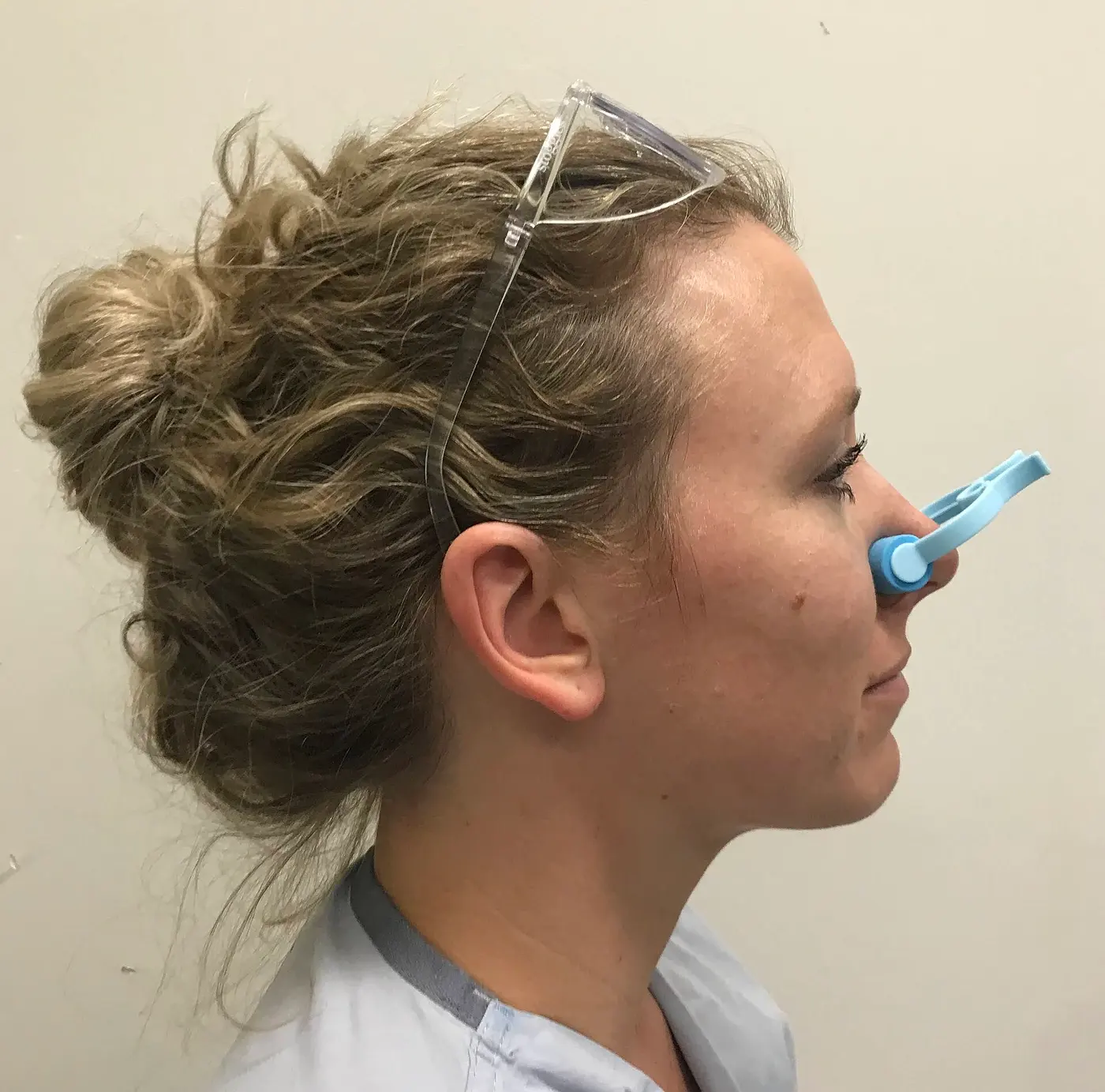

The advice from Britain’s National Health Service is much the same: sit down, lean forward, pinch the nose just above the nostrils for 10 to 15 minutes, and breathe through your mouth. An ice pack on the bridge of the nose may help, the NHS says, but the evidence for it is not very strong. For 24 hours after a nosebleed stops, it advises against blowing or picking your nose, hot drinks or alcohol, heavy lifting or strenuous exercise, and lying down flat.
The Japanese society advises seeing an ear, nose and throat doctor or going to an emergency department promptly if about 30 minutes of pressure doesn’t stop the bleeding, if the person feels faint or looks pale, if the bleeding is heavy, or if the nosebleed follows an injury to the face. People with high blood pressure, or who take medicines that thin the blood, may find that even small injuries are slow to stop bleeding. Anyone with frequent nosebleeds should see a specialist.