Are white spots on your nails a sign of calcium deficiency?
No. Most are the marks of small knocks to the base of the nail and have nothing to do with calcium. They move toward the tip as the nail grows and are eventually clipped away.
0.2%
Every so often a little white spot appears on a fingernail. Many of us were told as children that it meant we weren’t getting enough calcium, usually followed by an order to drink our milk.
The belief is common in Japan and in the English-speaking world alike. Dermatologists see it differently. Most of these spots are not a sign of poor nutrition at all, but the traces of a minor injury.
What the spots really are
White spots or streaks in the nail are called leukonychia, from the Greek for “white nail.” According to a 2022 review in the American Journal of Clinical Dermatology by dermatologists from Switzerland, Italy and the Netherlands, the scattered-spot type is probably the most common form, especially in children, and is usually caused by trauma. Overzealous manicures and nail biting can do it too.
A nail is made in the matrix, a zone hidden under the skin at its base, and is pushed out toward the fingertip. When the matrix is injured, the nail cells it produces harden while still holding on to their nuclei, which normally disappear, and the protein fibers inside them become disorganized. These patches scatter light in all directions, so they look white, like frosted glass. There is no white pigment involved.
Because the matrix lies beneath the skin, it takes time for a damaged patch to show on the surface of the nail. By the time you notice a spot, you have probably long forgotten the knock that caused it. The spot then travels toward the tip with the growing nail until it is trimmed away.
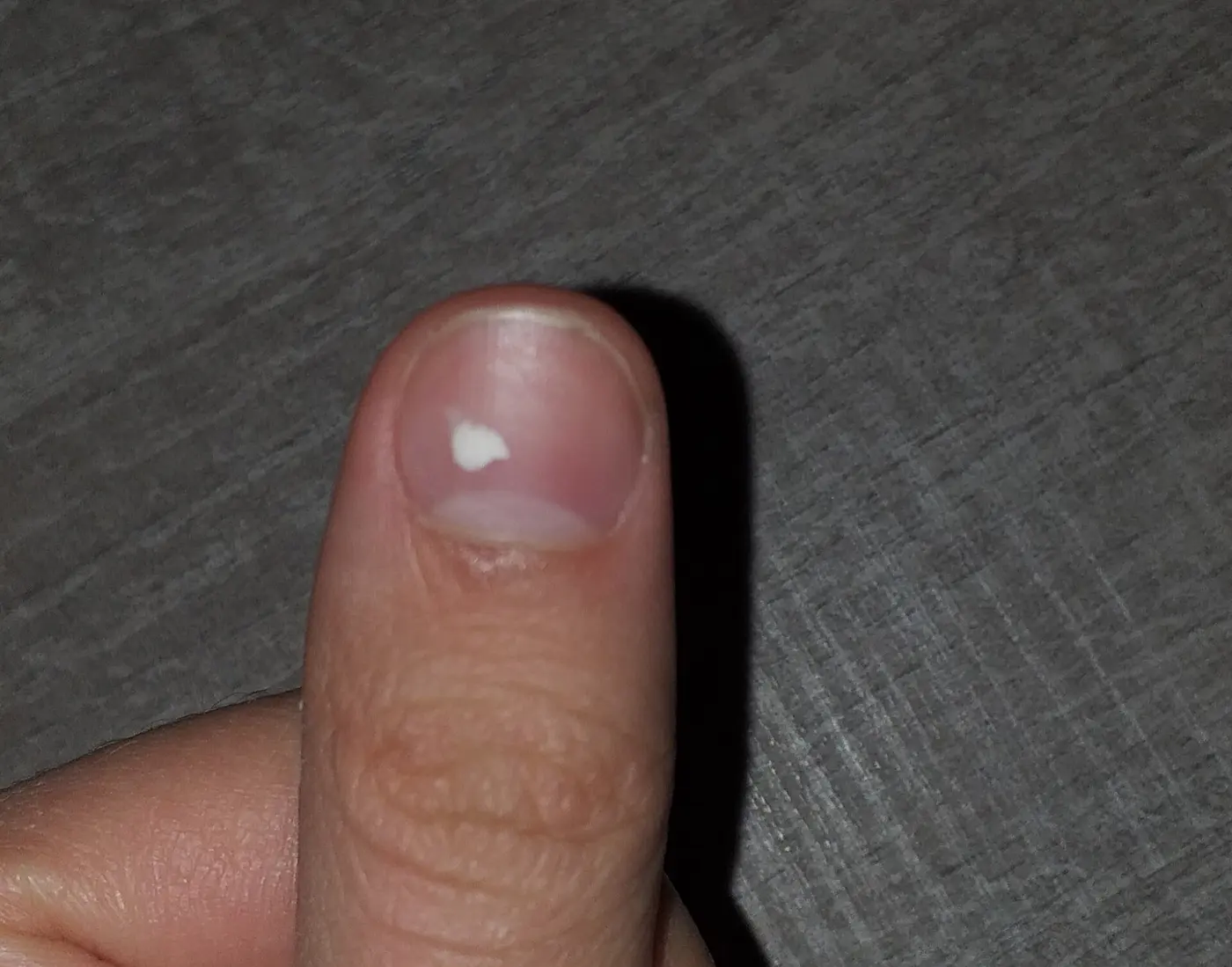

Nothing to do with calcium
The 2022 review states plainly that, contrary to popular belief, these spots are not related to low calcium or iron in the nail.
Nails are not made of calcium in the first place. According to a 2012 paper in the Indian Journal of Dermatology, Venereology and Leprology, calcium makes up only 0.2% of the nail plate by weight and contributes nothing to its hardness. Nails are mostly keratin, a protein, and their hardness comes from bonds between sulfur-containing amino acids. Water matters too: nails become brittle when their water content falls below about 16% and soft when it rises above 25%.
That is not to say nutrition and illness never show up in the nails. The same paper notes that a severe drop in blood calcium can produce white bands running across several nails. The 2022 review also lists zinc deficiency among possible causes of white spots, based on a letter published in the Journal of the American Medical Association in 1974. But the great majority of scattered white spots are, once again, the result of minor injuries.
White, but something else
Not every white nail is white because of the nail itself. The review explains that a fungal infection on the surface of the nail can turn it white, in which case a powdery white material can be scraped off. Artificial nails and frequent use of polish remover can also damage the surface and leave it patchy and white.
Sometimes the problem lies in the skin beneath the nail. Then the white area does not move as the nail grows, and it fades when the nail is pressed. In “Terry’s nails,” most of the nail looks white; they are known to occur with liver cirrhosis, among other conditions. In “half-and-half nails,” the half near the base is white and the half near the tip is reddish-brown, a pattern seen in chronic kidney disease.
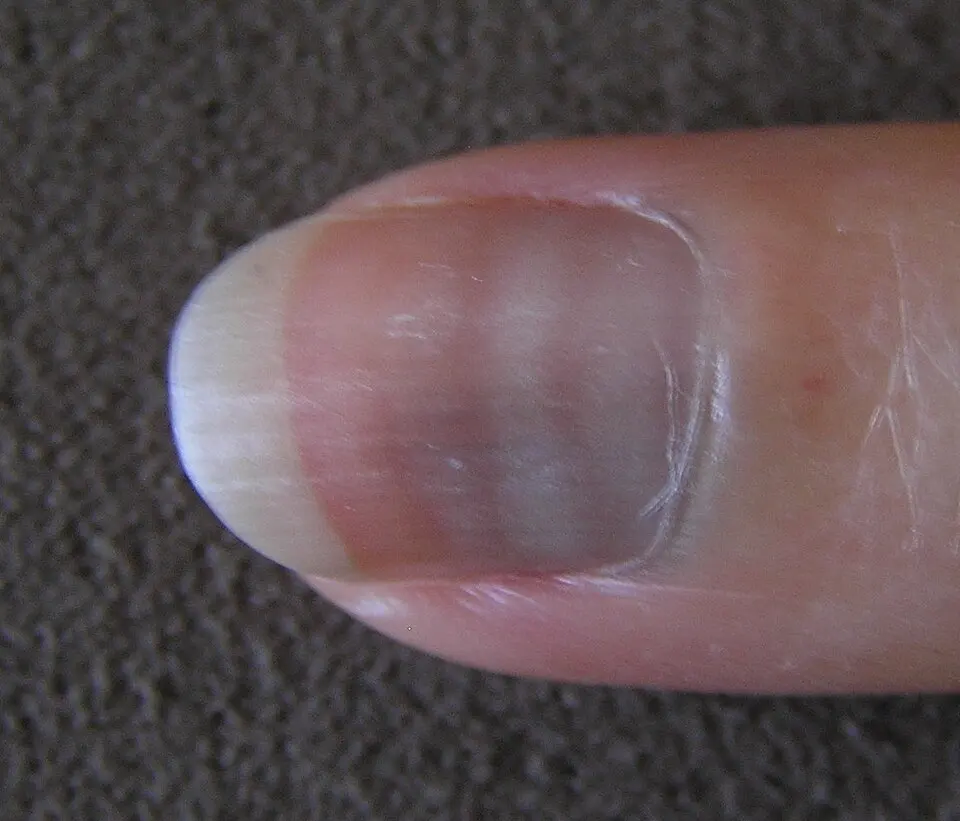

The review’s authors add that if only one finger is affected, the cause most likely lies in that finger, while whiteness across several fingers points to something affecting the whole body.
When to see a doctor
If you have a spot or two that moves toward the tip as the nail grows, it will usually just grow out. But if white areas spread, appear on many nails at once, or come with nails that turn cloudy, lift up or crumble, it is worth seeing a dermatologist. The American Academy of Dermatology notes that whitened nails can be a sign of liver disease or diabetes, and nails that are half pink can point to kidney disease.
The color change that deserves the most attention is a dark streak running lengthwise. The Japanese Dermatological Association says that dark streaks in children’s nails often fade on their own and are generally nothing to worry about. Those that appear after puberty, however, can occasionally be melanoma, so they should be watched for changes in color or width, and in some cases a tissue sample may be needed. The American Academy of Dermatology likewise advises having any new or changing dark streak checked.