Are cactus spines actually leaves?
Yes. Cactus spines are thought to be leaves that have changed shape.
From tiny pots on a windowsill to giant columns towering over the desert, cacti come in all shapes and sizes. What nearly all of them share, though, is a lack of visible leaves and a coat of sharp spines.
In most plants, photosynthesis happens in flat green leaves. So where did the cactus’s leaves go? The answer is hiding in an unexpected place: those painful spines are the leaves, transformed.
A cotton cushion at the base of every spine
Look closely at a cactus and you will notice that the spines don’t grow at random. They sprout in little bunches from small tufts of cottony hair. These cushion-like spots are called areoles, and they are found only in the cactus family.
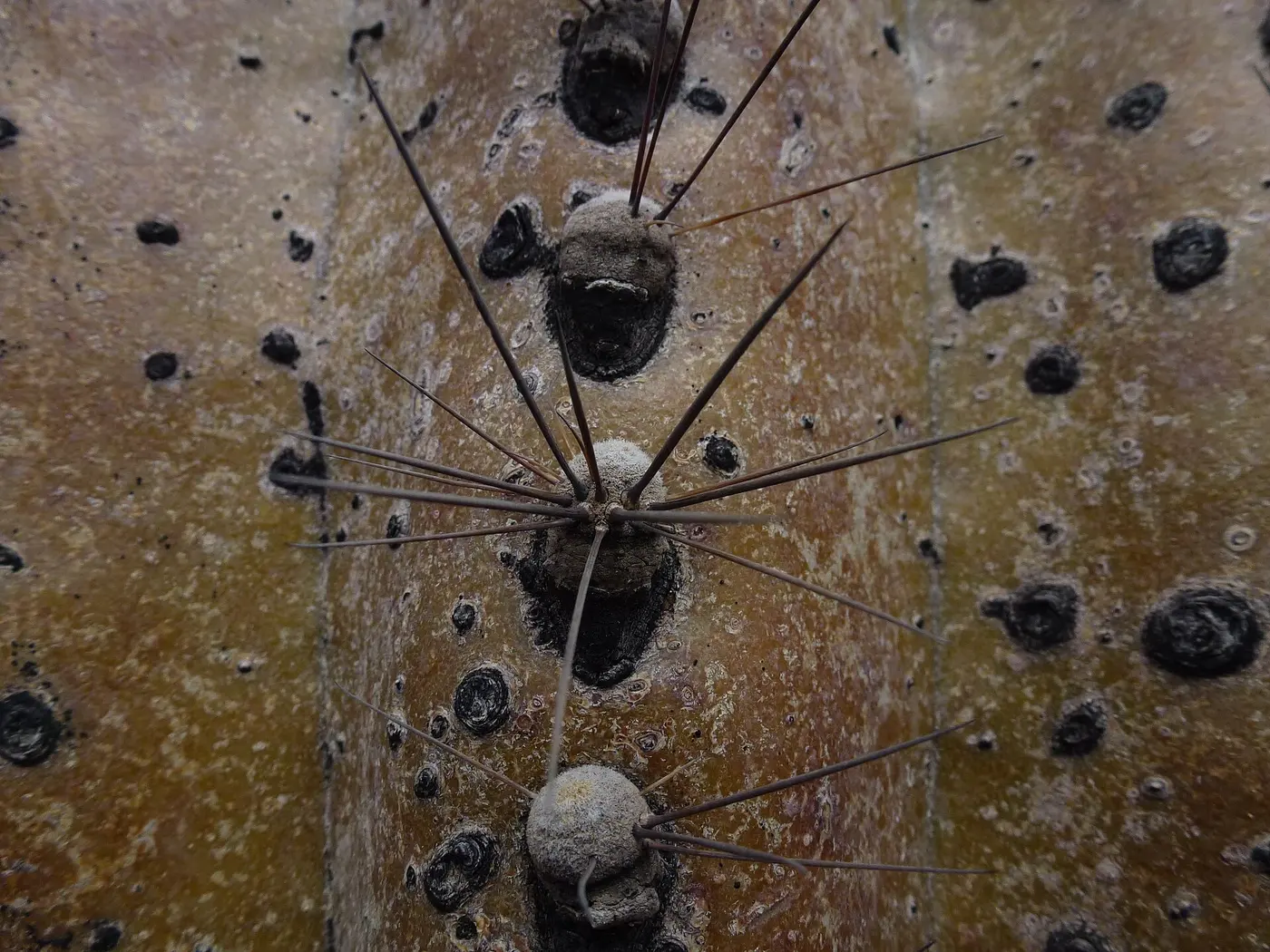

In an ordinary plant, there is a bud where each leaf joins the stem, and new branches grow out from it. An areole is thought to be one of these buds that never stretched out—a branch squeezed down until it is extremely short. The leaves that would normally grow on that tiny branch have turned into hard, slender spines. That, in a nutshell, is what a cactus spine is.
Like leaves, spines start out near the tip of the stem as small clusters of cells. Partway through their development, however, they stop spreading out flat the way a leaf would. Instead they build tough, fiber-like cells and taper to a point. The finished spine is hard tissue that does no photosynthesis at all.
Cacti that still have leaves
Some unusual cacti offer clear evidence that spines are leaves. Plants of the genus Pereskia, native to parts of Central and South America, belong to the cactus family, yet they grow flat green leaves just like an ordinary tree. And at the base of those leaves sit areoles, with spines growing from them.
Pereskia is thought to resemble the ancestors of cacti before they evolved fleshy stems. Cacti were originally leafy plants that gave up their leaves as they adapted to dry land.
Even the familiar prickly pear shows traces of its leaves. Small, cylindrical leaves form on the surface of its flat new pads, then eventually drop off.
Why give up leaves, and what spines are for
Cacti are thought to have abandoned leaves to save water. Broad leaves are great for photosynthesis, but they also let a great deal of moisture escape from their surface. Where rain is scarce, that can be fatal. Cacti handed the job of photosynthesis over to their green stems and chose to protect those thick, water-storing stems instead. On top of that, many cacti open their pores, or stomata, during the cool night to take in carbon dioxide, and close them during the hot day to conserve water.
So what do the leaf-turned-spines do? The first job that comes to mind is protecting the juicy stem from hungry animals. Beyond that, a dense coat of spines is also thought to soften the sunlight and trap a layer of air around the stem’s surface, easing the effects of heat and dryness.
In 2012, a Chinese research team reported that the spines of a prickly pear species native to Mexico are built to collect tiny droplets of fog and carry them to the spine’s base. Thanks to fine grooves on the surface and the spine’s carefully tapered shape, droplets naturally travel down toward the base.
Beware of look-alikes
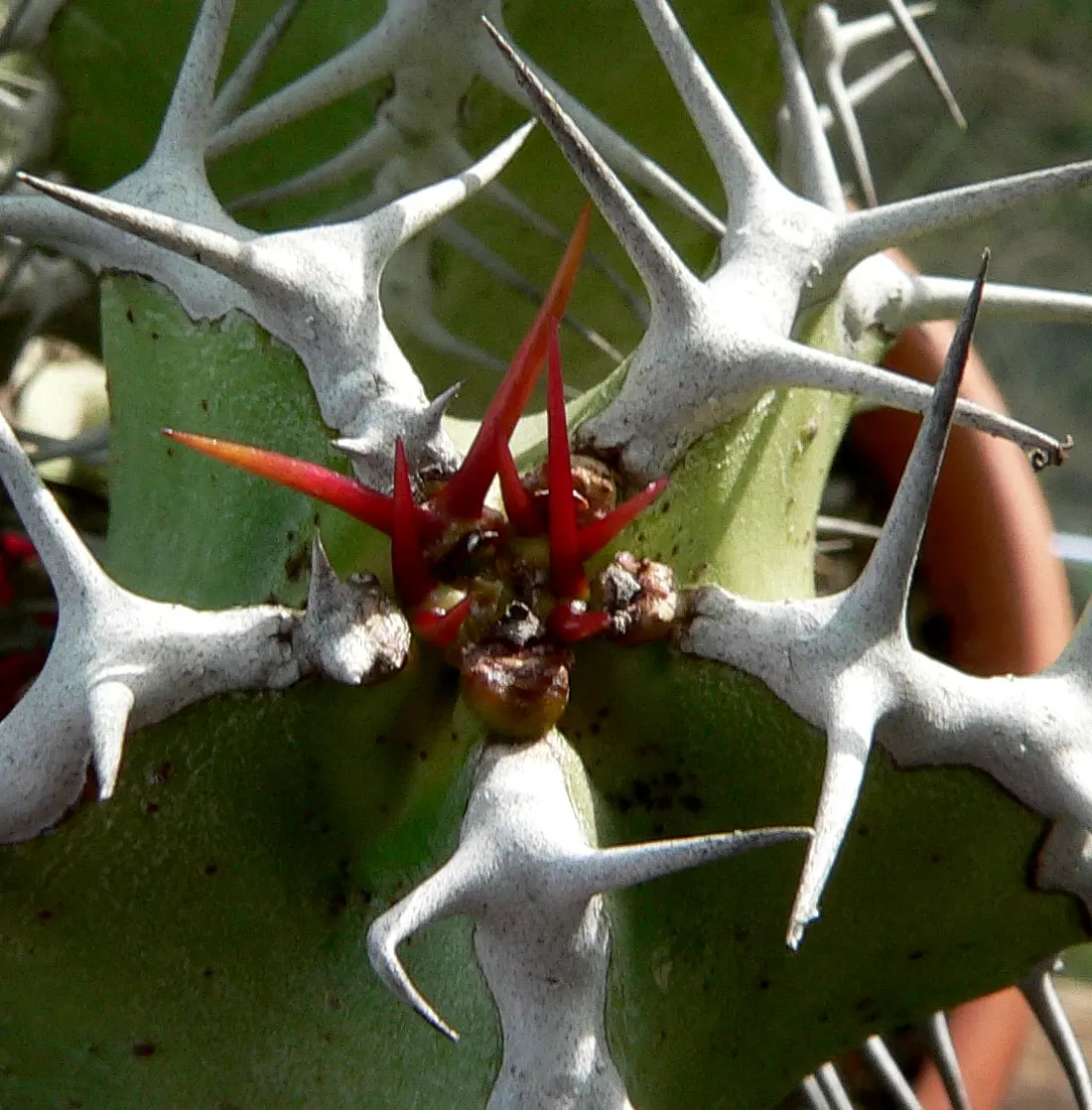
In Africa and elsewhere grow plants that look uncannily like cacti. They belong to Euphorbia, a genus in the spurge family. Thick green stems, sharp spines—they look exactly like cacti, but they are an entirely different group of plants.
Living in similarly dry places, these unrelated plants are thought to have evolved similar forms independently. Their spines form differently, though. Euphorbias have no areoles, and their spines often grow in pairs. To tell them apart, check whether there is a cottony areole at the base of the spines.