Is it true that only female mosquitoes drink blood?
Yes. Only females take blood, and they use it to nourish their eggs. Both males and females normally live on sugar from nectar, fruit juice and the like.
Just as you drift off to sleep, a thin whine sounds by your ear. Mosquitoes land on our arms, drink our blood and leave an itch behind: one of summer’s great nuisances.
Every mosquito that comes for your blood is a female. Male mosquitoes never drink blood in their lives. And when a female does, it isn’t really to keep herself alive. It’s to make eggs.
Blood for the eggs
According to the Kanagawa Prefectural Institute of Public Health in Japan, more than 100 species of mosquito live in Japan alone. Day to day, both males and females feed on sugar from flower nectar, fruit juice and tree sap. That sugar is what fuels their flight.
A female mates soon after she emerges as an adult. Usually, the institute explains, a single mating fills a storage organ in her body with sperm, and she never mates again. She then takes a blood meal and lays her eggs. The blood provides nourishment for the developing eggs, and the feeling of a full stomach is itself the signal that sets egg development going. The U.S. Centers for Disease Control and Prevention (CDC) puts it simply: mosquitoes need blood to produce eggs.
A blood meal usually takes less than five minutes and rarely more than ten. For the female, it is risky work. Every second she spends on someone’s skin is a second in which she might get swatted.
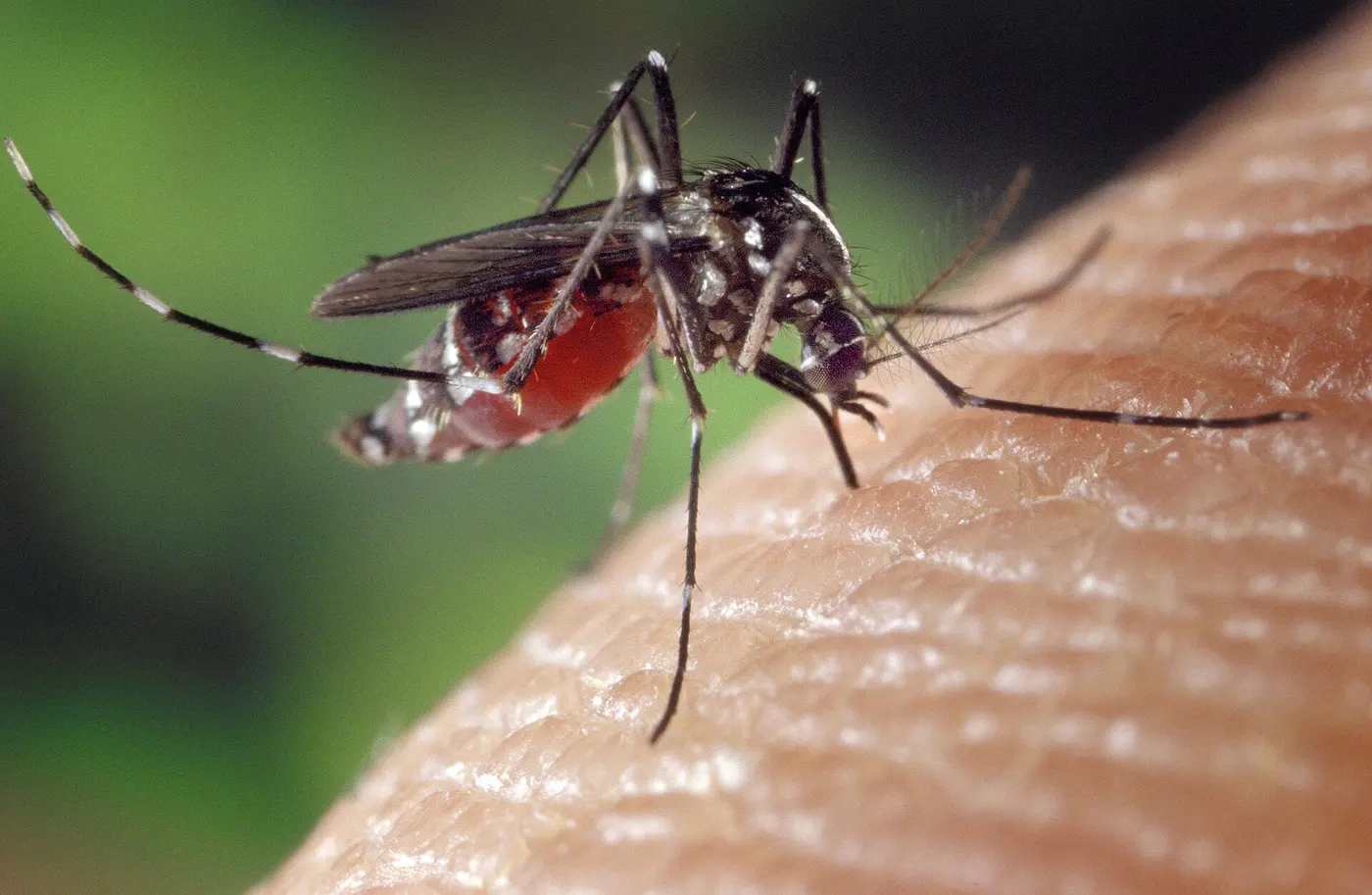

There are exceptions. Culex pipiens molestus, a mosquito that breeds year-round in places like the basements of buildings, can lay its first batch of eggs without any blood at all.
Males can’t pierce skin
There are good reasons why males don’t bite. They don’t lay eggs, so they have no use for blood. And their mouthparts aren’t built for it anyway. According to the Kanagawa institute, a male’s proboscis is soft and cannot cut through an animal’s skin.
Females, meanwhile, are expert hunters. From a distance, the institute explains, they home in on animal odors and the carbon dioxide in our breath. Up close, they take aim using movement, color, shape, size, heat and humidity. When a female bites, she injects saliva, and an allergic reaction to the proteins in that saliva is what makes the bite itch.
The time of day a mosquito bites depends on the species. The Asian tiger mosquito, common in Japanese gardens, is active in the daytime, especially in the morning and evening, while the common house mosquito Culex pipiens pallens bites at night.
Did ancient males drink blood?
It may not always have been this way. In December 2023, a team led by Dany Azar of the Lebanese University reported the oldest known mosquito fossils in the journal Current Biology.
Trapped in Lebanese amber from the Early Cretaceous, more than 120 million years ago, were two males of the same species, which the team named Libanoculex intermedius. Their mouthparts were built for piercing, with a very sharp, triangular mandible and an elongated structure lined with tiny teeth. The researchers think these males probably fed on blood.
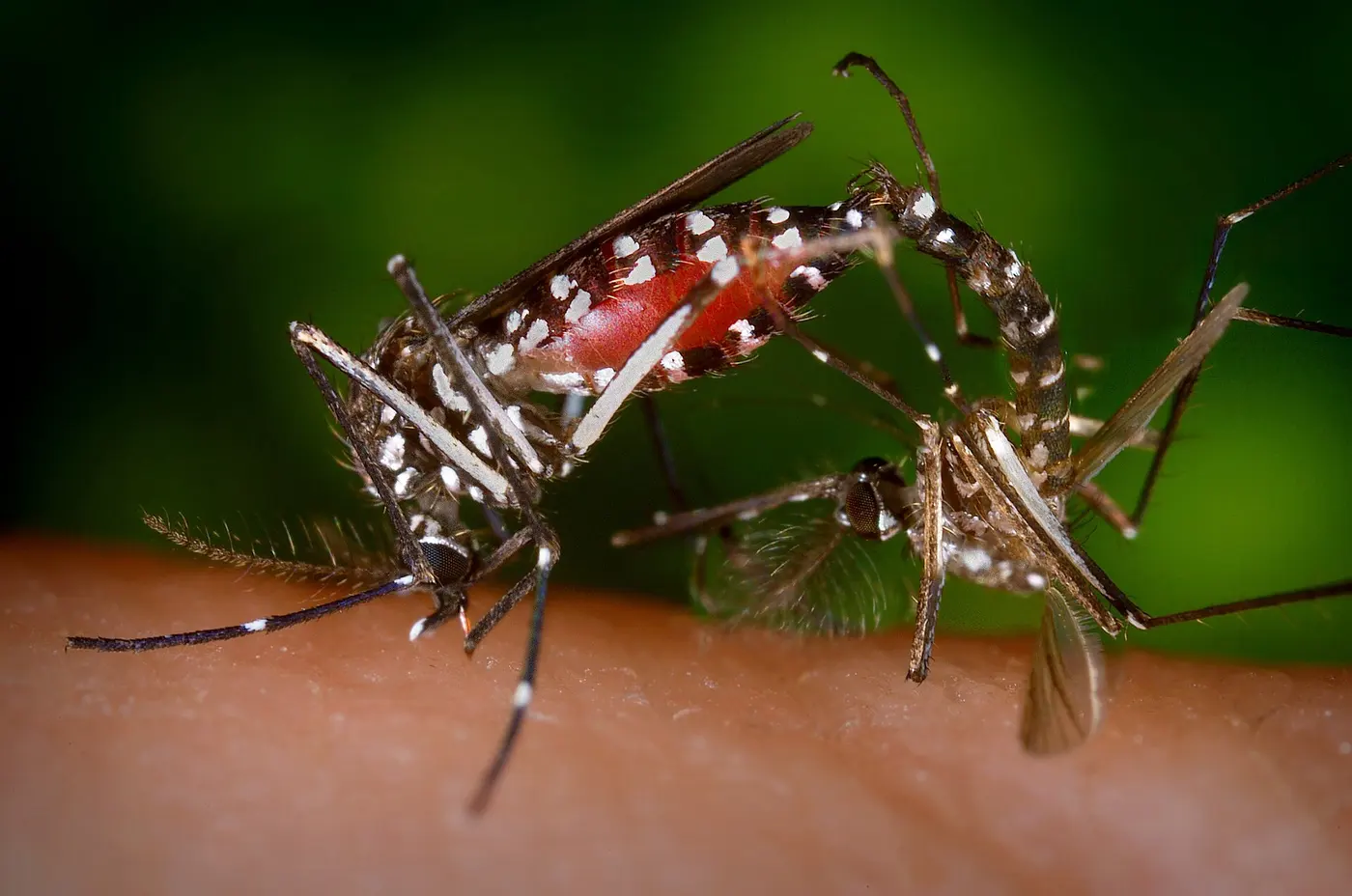

The fossils are about 30 million years older than the previous record holders. Today only female mosquitoes drink blood, but perhaps in the distant past males did too, and later lost the ability. The team suggests that blood-feeding in insects probably evolved from feeding on plant juices. The history of the mosquito’s taste for blood, it seems, is more complicated than anyone thought.