Do honeybees die after they sting?
A worker honeybee that stings a person or other mammal does die. Its barbed sting stays stuck in the skin and tears away from the bee’s body along with part of its insides.
A honeybee dies once it has stung, so it won’t sting you unless it really has to. Many of us were told something like this as children.
It is mostly true. A worker honeybee that stings a mammal, whether a person or a bear, leaves its sting behind in the skin and soon dies. But that does not mean that every bee that stings must die. It depends on which bee does the stinging, and on what it stings.
A sting that was once an egg-layer
A bee’s sting began as an ovipositor, the tube that female insects use to lay eggs. In his 1910 book on the anatomy of the honeybee, Robert E. Snodgrass, an entomologist at the U.S. Department of Agriculture, explained that the sting is simply an ovipositor that, no longer needed for laying eggs, has been turned into a device for injecting venom.
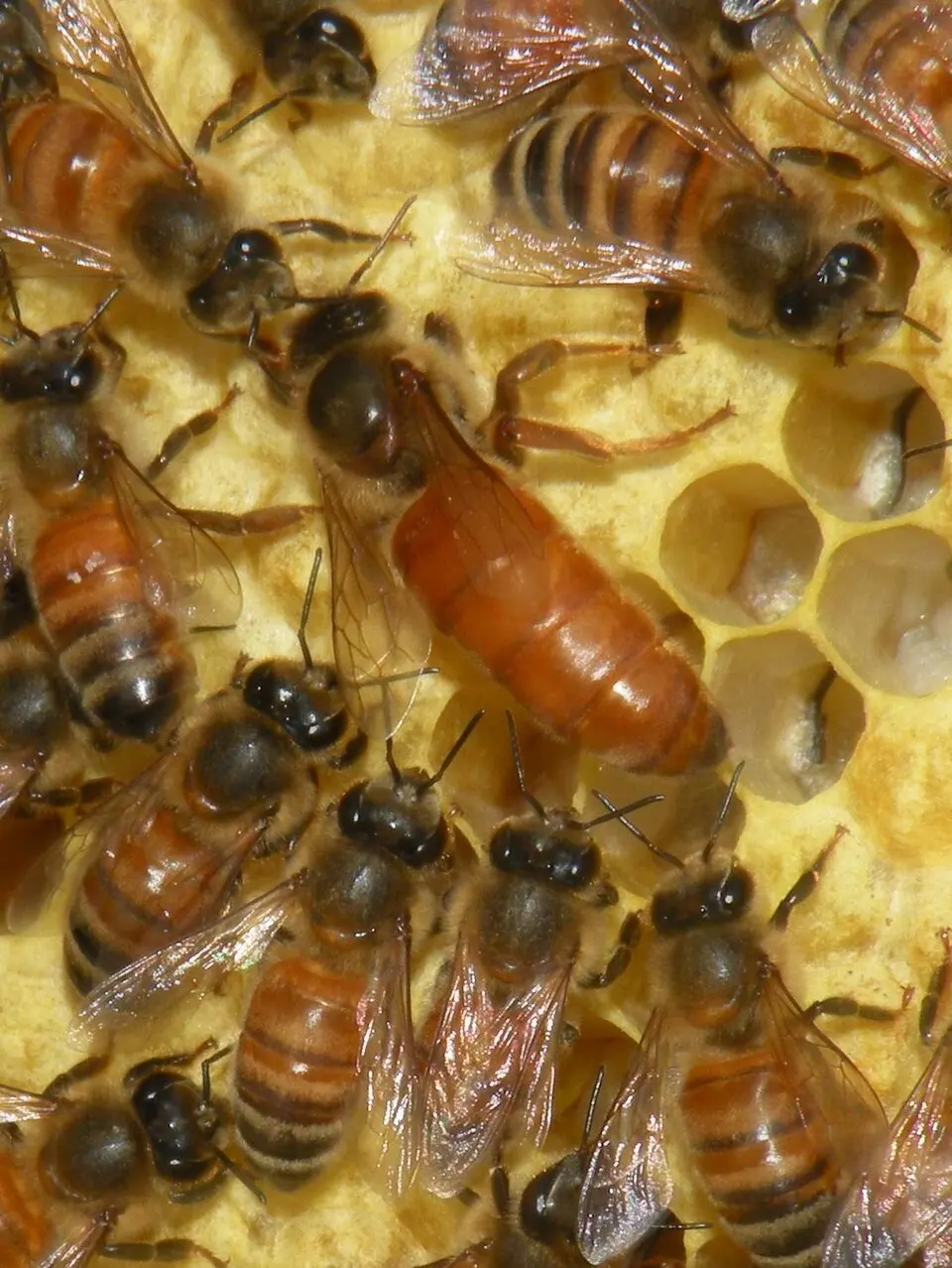
Only females have ovipositors. Among honeybees, then, only the female workers and the queen can sting. Male bees, called drones, have no sting at all, so you can pick one up without being stung.
Even among females, the queen’s sting is quite different from a worker’s. According to Snodgrass, it is longer, strongly curved, and has fewer and smaller barbs. Queens are said to use it mainly in fights with rival queens.

Barbs that grip the skin
A worker’s sting looks like a single needle, but it is really a thick shaft with two slender lancets that slide along it. The tips of the lancets carry rows of backward-pointing barbs, like the teeth of a saw. The two lancets usually move back and forth in turn, and as the barbs catch, the sting works itself deeper and deeper.
The trouble comes when the bee tries to pull out. In elastic skin like ours, the barbs grip firmly and the sting cannot be withdrawn. When the target is another insect, the barbs are said to catch less well, so the bee can often pull its sting free and fly away.
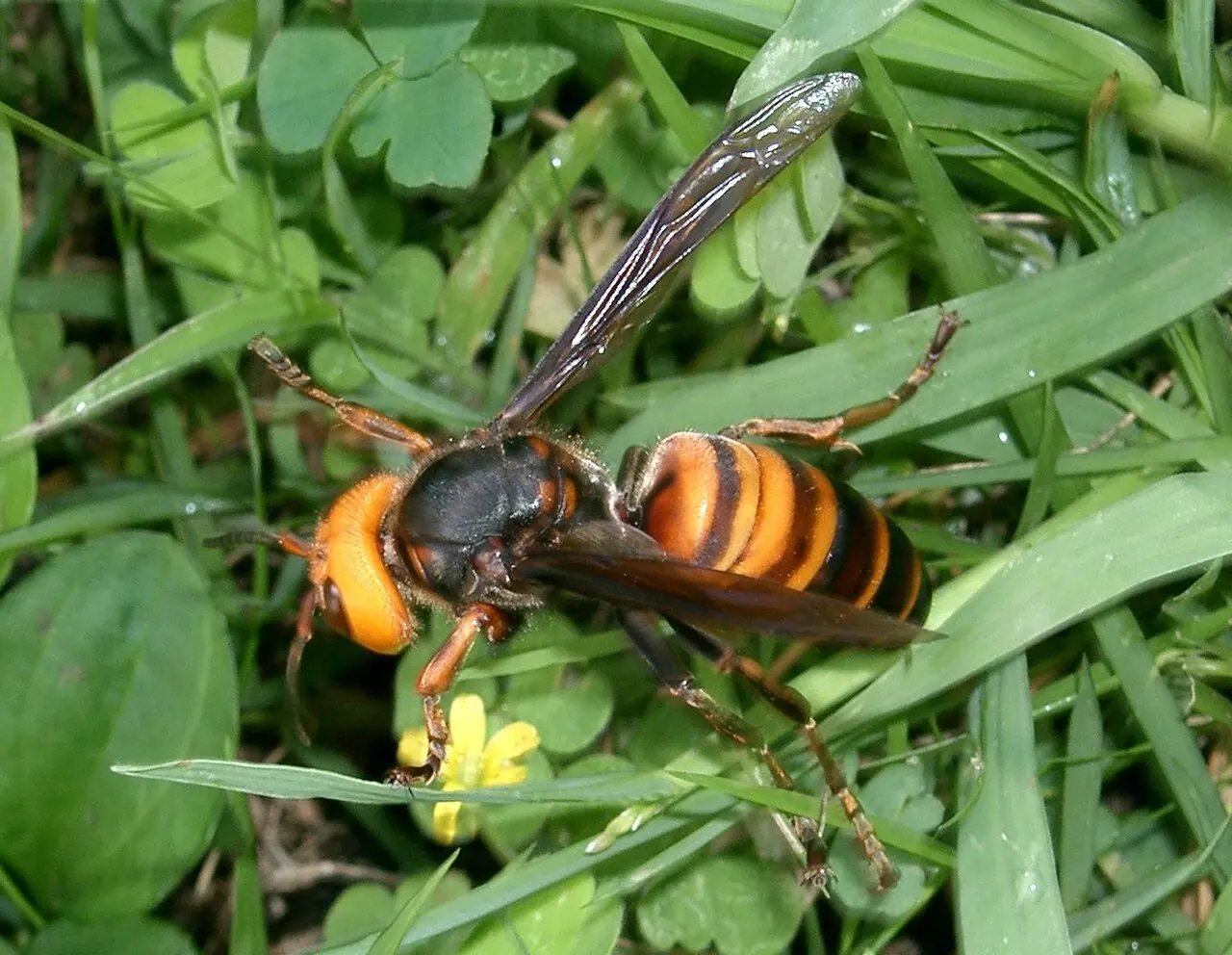
Hornets and other wasps are a different story. The Merck Manual notes that their stings have few or no barbs and do not stay in the skin, so they can sting again and again. When an American research team compared stings under the electron microscope in 1992, they found that wasp lancets do carry small barbs, but when retracted these are tucked behind the smooth edges of the shaft. In honeybees, the barbs stay exposed, and the shaft has barbs of its own, making the sting far harder to pull out.

A sting that keeps on pumping
So what happens when a worker with a stuck sting tries to fly off? According to Snodgrass, the sting is attached to the body by very delicate membranes. As the bee pulls away, the sting tears loose, taking with it the venom sac, the last segments of the abdomen and the end of the gut. The worker, as he put it, inflicts its wound “at the cost of its own life.”
Even then, the sting is not finished. Its muscles keep working on their own for a while, driving the sting deeper and pumping in more venom. In an experiment published in The Lancet in 1996, American researchers found that delaying removal by just a few seconds made the swelling bigger. But when stings were removed two seconds after stinging, it made no difference whether they were scraped off or pinched out. The lesson: don’t worry about technique, just get the sting out fast.
The base of the sting also releases an alarm pheromone that calls other bees to the attack. A study reported in Nature in 1962 identified one of its components as isoamyl acetate, a compound that smells like bananas. That is why, if one bee stings you, it is wise to move away.
Worker bees normally do not reproduce themselves. Losing one worker is thought to be a small price for the colony as a whole if it keeps the nest and its sisters safe.