Why do morning glories bloom in the morning?
Morning light is not the cue. They open about ten hours after dark, which in summer happens to be around dawn.
On summer mornings, morning glories line fences and hedges. In Japanese the flower is called asagao, literally “morning face,” and it is easy to imagine it waking up and opening as the first rays of sun reach it.
But go and look in the dark before dawn, and the flowers are already opening. Kiyotoshi Wada, a professor emeritus at Niigata University in Japan who has studied the plant’s physiology, puts it this way: the morning glory is not a flower that opens in the morning, but a flower that is already open by morning. So what tells it when to bloom?
The cue is sunset
Record the time the flowers open each day, and in July it is a little before dawn. As the season goes on it gets earlier, and by October they open in the middle of the night. The timing does not follow sunrise at all.
Researchers tested this by artificially changing the lengths of light and dark periods. When days are longer than 11 hours, as in a Japanese summer, the flowers open about ten hours after it gets dark. In July, when the sun sets late, ten hours later is around dawn. In autumn, as sunset comes earlier, so does the flowering. Some sources put the figure at about nine hours, so there is some leeway.
Keep the lights on continuously and the buds wilt without ever opening. Swap day and night with artificial lighting, on the other hand, and you can make morning glories bloom in the evening. Curiously, a bud cut the day before it opens and stood in water still responds to light and dark in the same way. It is the bud itself that senses the change.

An inner clock and cool nights
So is darkness simply flipping a switch? In one experiment, pots of morning glories with buds were kept in a completely dark room for three days. Even with no light or dark cues at all, a new flower opened at nearly the same time each day. The plant’s flowering is governed by an internal body clock, and the darkness at sunset is thought to reset that clock.
Temperature matters too. When night temperatures were varied, flowers opened about ten hours after dark at 23°C (73°F) or below, but above 25°C (77°F), the hotter it was, the later they opened. After a sultry night, the flowers open a little later.
Much of this research was done by Junko Kaihara, who studied at Kyoto University. She had been investigating how morning glories open since she was in junior high school, and her work went on to win recognition from specialists.
Opening by untwisting
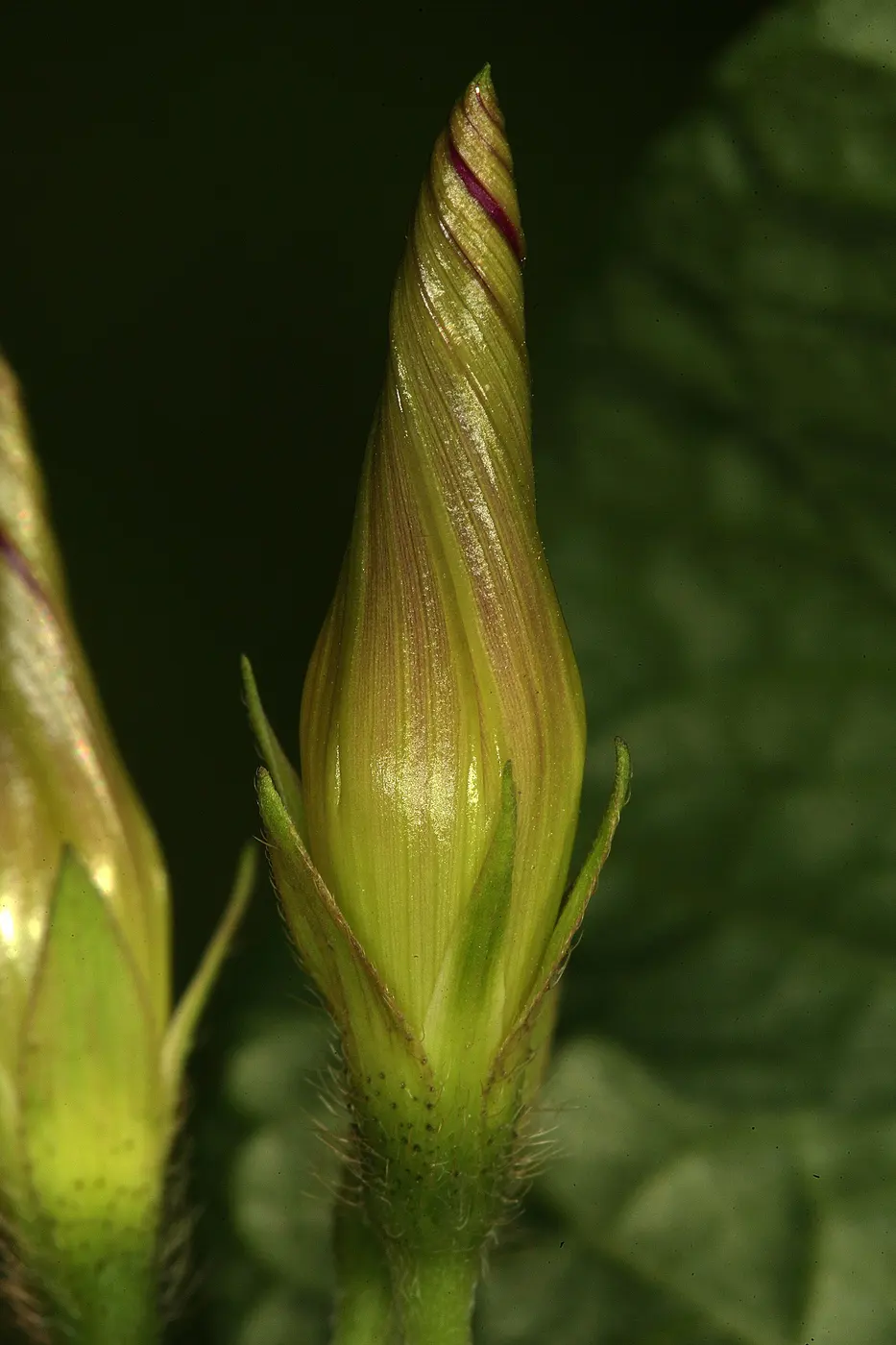
A morning glory bud has its petals wound in a twist, and the flower opens as that twist unwinds.
The flower opens because the petals suddenly grow. Within each petal, the inner side grows faster than the outer side, so the petal curls outward as it expands. The funnel-shaped flower is really five petals fused together, each with a thicker rib running down its center. If you cut away everything except these ribs the night before the flower opens, the ribs still curl outward by the next morning. Opening, in other words, is the ribs growing so that they bend outward.
Wilting by noon is part of the plan
Once open, a flower usually wilts before midday in summer. That is not simple exhaustion. A built-in mechanism actively makes the flower wilt.
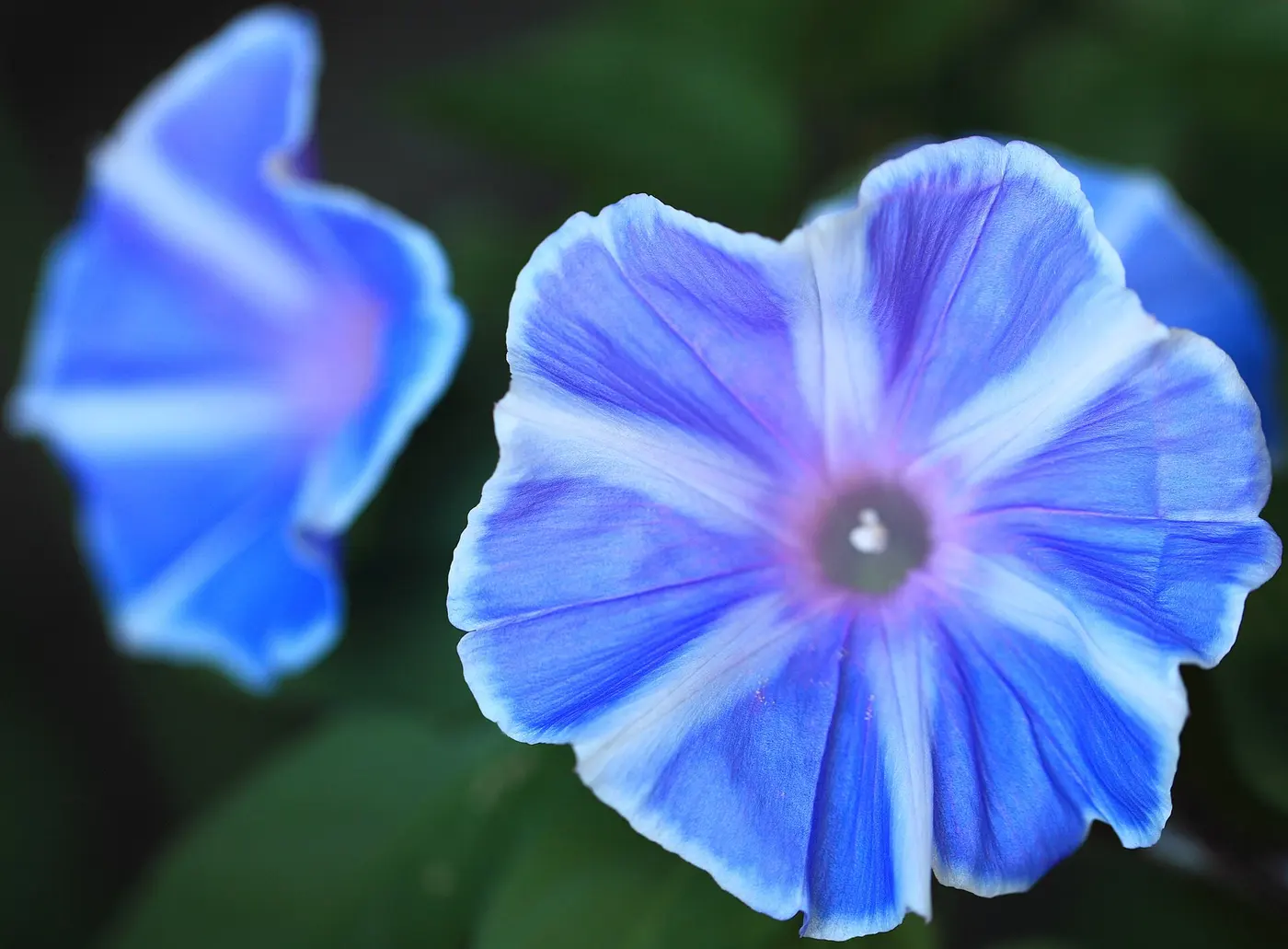

In 2014, a research group from Japan’s National Agriculture and Food Research Organization (NARO) and Kagoshima University announced that they had found a gene, EPHEMERAL1, that makes morning glory flowers wilt. In plants where the gene’s activity was suppressed, the time before the flowers began to wilt roughly doubled, and on the second morning the previous day’s flowers were still open alongside the new ones.
Ordinary morning glories, too, sometimes stay open until evening once autumn temperatures fall. Atsushi Hoshino of Japan’s National Institute for Basic Biology suggests that in cooler weather the wilting mechanism may simply work less well.