Is Japan the only place that sees a rabbit in the Moon?
No. China and the ancient Aztecs of Mexico had moon rabbits too, while other places see a crab, a girl reading a book and more.
On a night with a full moon, dark patches stand out against the Moon’s bright face. In Japan, people have long seen them as a rabbit pounding mochi, sticky rice cakes, with a mallet. In 2026, Japan’s traditional mid-autumn moon-viewing night fell on September 25, and plenty of people will have set out offerings of rice dumplings and gazed up at those markings.
The Moon always keeps the same face toward Earth, so everyone in the world is looking at the same markings. Yet what people see in them varies remarkably from place to place.
The markings are plains of lava
First, a word about the markings themselves. The dark areas are called maria, Latin for “seas,” but there is no water in them. As the Gifu City Science Museum in central Japan explains, some 3 to 4 billion years ago, giant impacts gouged out vast basins on the Moon, and dark lava welled up from inside to fill them, cooling into plains of a rock called basalt. The brighter regions, the highlands, are made of a pale rock called anorthosite, which reflects light well.
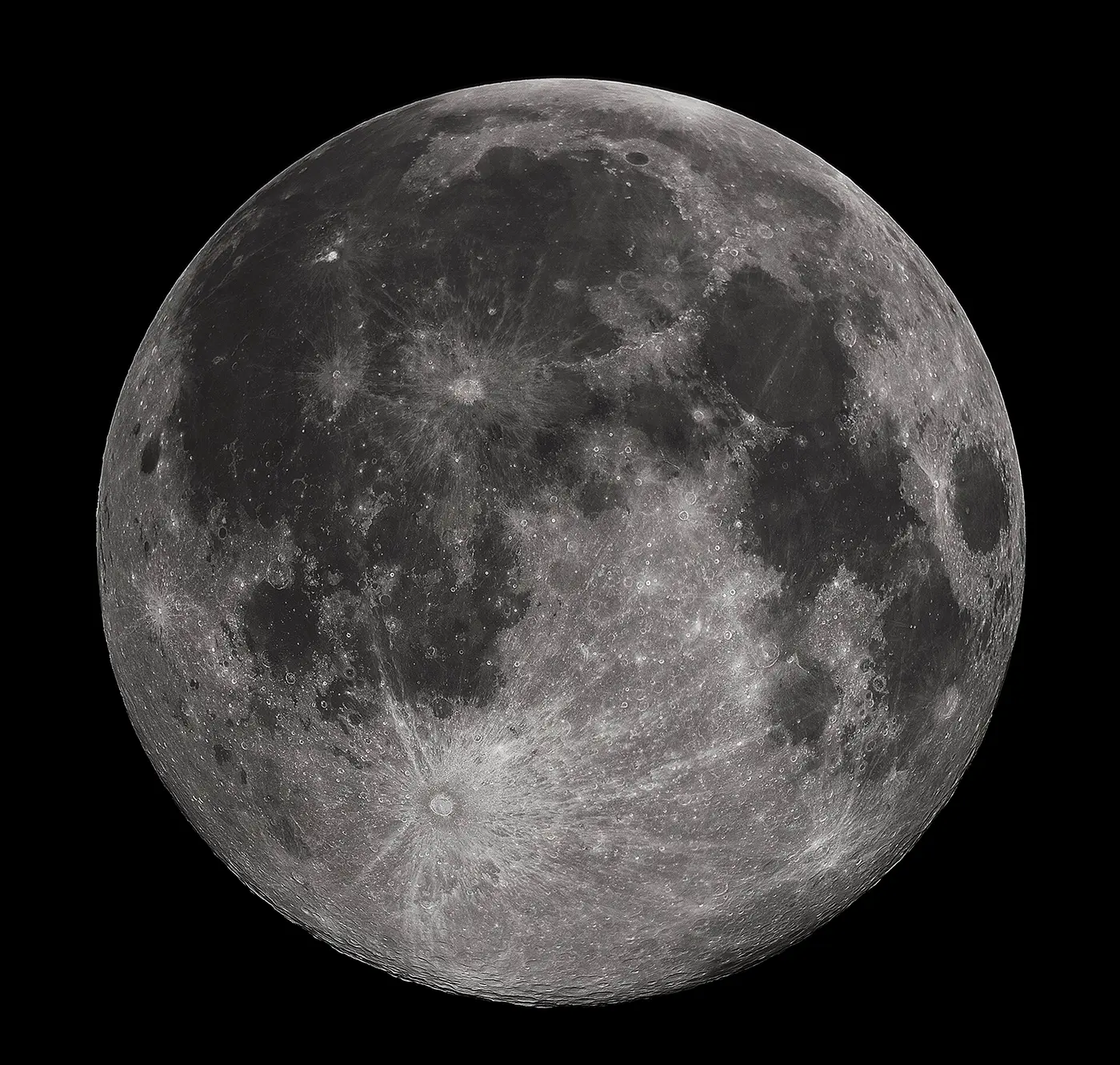

The seas that make up Japan’s rabbit include the Sea of Tranquility, the Sea of Fertility, the Sea of Nectar, the Sea of Serenity and the Sea of Rains. The patchwork of dark plains and bright highlands has long fired people’s imaginations. The human brain tends to fit random patterns to shapes it already knows, so people in each culture have projected familiar animals and everyday objects onto the Moon.
China’s rabbit makes medicine
Japan is not the only place with a rabbit in the Moon. In China, the moon rabbit is called the Jade Rabbit, and it holds a pestle too, but it pounds medicine rather than rice cakes. The story of the moon rabbit is said to have spread in China by the Han dynasty (3rd century BC to 3rd century AD). The rabbit is also known as the white companion of Chang’e, the goddess who drank an elixir of immortality and rose to the Moon.
Japan’s version of the story is said to come from the Konjaku Monogatarishū, a collection of tales compiled in the late Heian period (794–1185). In a tale set in India, a rabbit, a fox and a monkey gather food for a frail old man. The rabbit can find nothing, so it throws itself into a fire to offer its own body as food. The old man turns out to be the god Taishakuten, known in India as Indra, who places the rabbit’s image in the Moon.
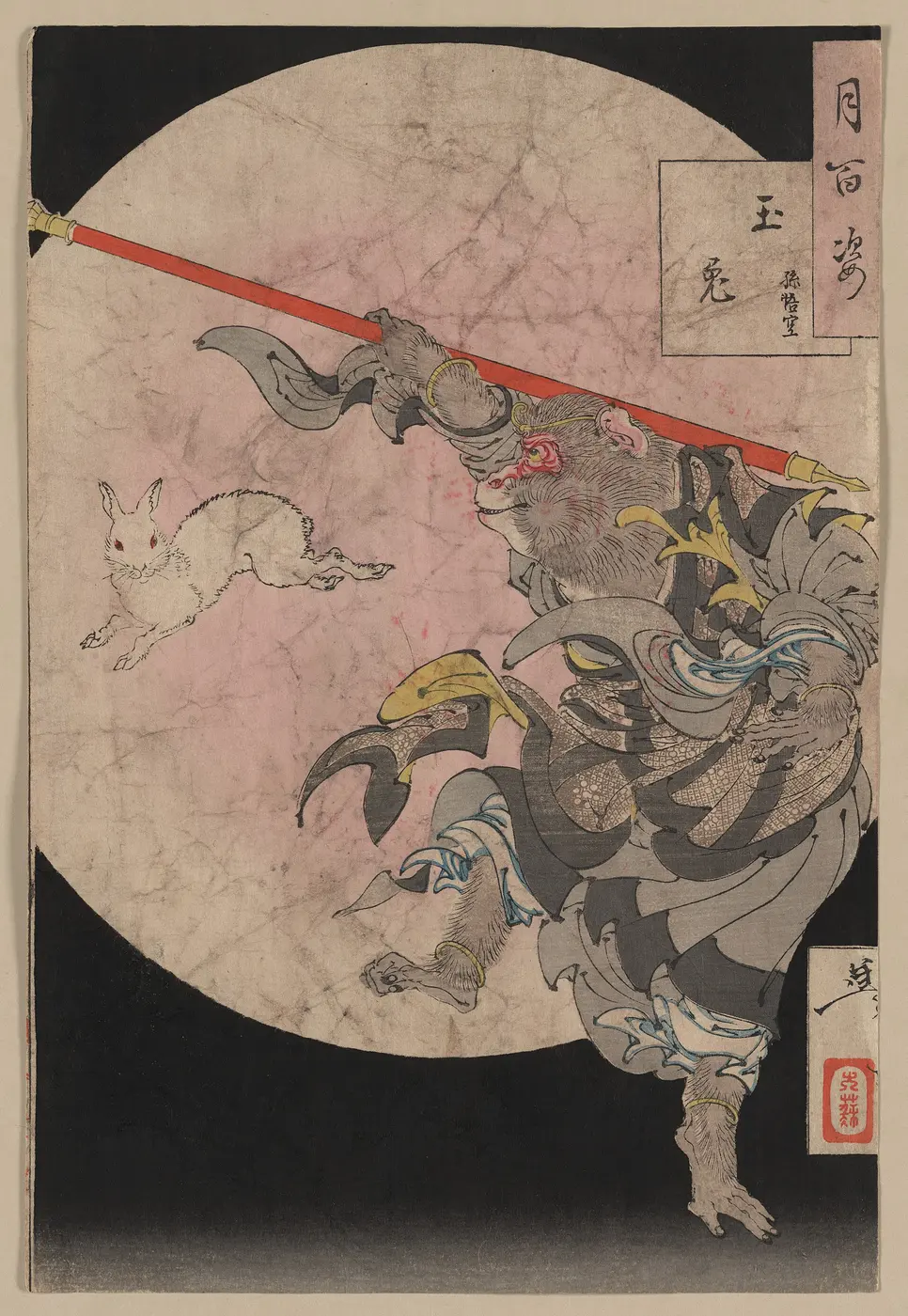

So why does Japan’s rabbit make rice cakes? One theory points to wordplay: the full moon is called mochizuki in Japanese, which sounds like mochitsuki, “pounding rice cakes.” But no one knows for sure.
Across the ocean: a crab, a girl and more
There is a rabbit in the Americas, too. The Florentine Codex, a record of Aztec culture in ancient Mexico compiled in the 16th century by the Spanish friar Bernardino de Sahagún, tells how one god struck the face of another, who had become the Moon, with a rabbit, dimming its brilliance.
Many other places see something else entirely. According to the Gifu City Science Museum, the markings have been seen as a girl reading a book in France and elsewhere, a crab in parts of China, a lion in Arabia, a long-haired woman in North America, and a man carrying firewood in Germany. In Europe there is also a tale that the figure is a man banished to the Moon as punishment for gathering sticks when he should not have. Sources do not always agree on which region sees what, however.
One reason the pictures differ is where you stand. Seen from the Southern Hemisphere, the Moon appears upside down compared with the view from Japan in the north. Turn the markings around, and they can look like something else altogether.