Why was the Mona Lisa stolen?
The thief said he wanted to return it to Italy, but many believe money was a big part of his motive.
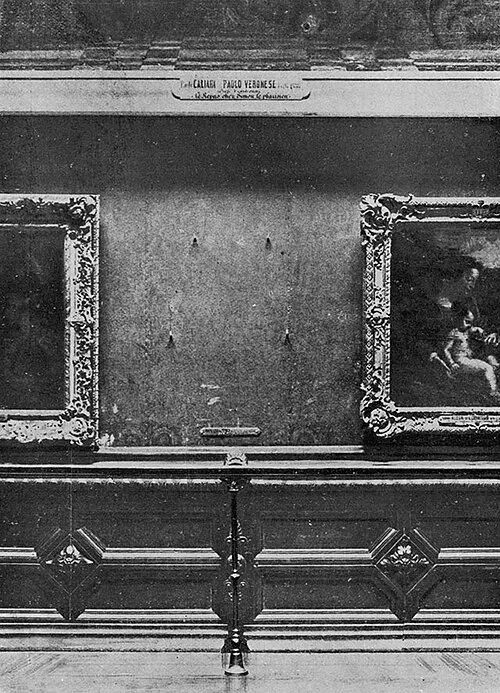
Tuesday, August 22, 1911. At the Louvre in Paris, a painter who had come to work in the Salon Carré gallery stopped in front of a wall, puzzled. Leonardo da Vinci’s Mona Lisa, which should have been hanging there, was nowhere to be seen.
The previous day the museum had been closed. As the search went on, it became clear that the painting had not been taken down to be photographed or restored. It had been stolen. So began the most famous art theft of the 20th century.
Walking out in a white smock
The thief was Vincenzo Peruggia, an Italian-born decorator. After moving to Paris in 1908, he had worked at the Louvre for a time, framing paintings and building the glass cases that protected them. He is believed to have helped make the Mona Lisa’s case, and so knew how to remove it.
According to his own account under later questioning, he struck on Monday, August 21, the museum’s closing day. At about 7 a.m., wearing the same white smock as the museum workers, he entered through the staff entrance. In the deserted Salon Carré he lifted the painting off the wall, removed the frame and case on a nearby staircase, and walked out through a service door with just the painting, which is on a wooden panel. Other accounts say he had hidden inside the museum since the night before, and the details vary from source to source.

Even Picasso was a suspect
The investigation floundered. Police combed the museum and stepped up checks at ports and borders, but found no leads.
Suspicion fell on some surprising people. The poet Guillaume Apollinaire was arrested, and his friend, the young painter Pablo Picasso, was questioned by police. The suspicion is said to have arisen because an acquaintance of Apollinaire’s had earlier walked off with small statues from the Louvre. Neither man had anything to do with the theft, and both were soon cleared.
In fact, Peruggia himself had been interviewed by police. But the officer failed to notice the painting hidden in his room and left. Peruggia’s fingerprint was on the glass case, and he had a previous arrest on record, yet his prints were never checked against it.
“I wanted to return it to Italy”
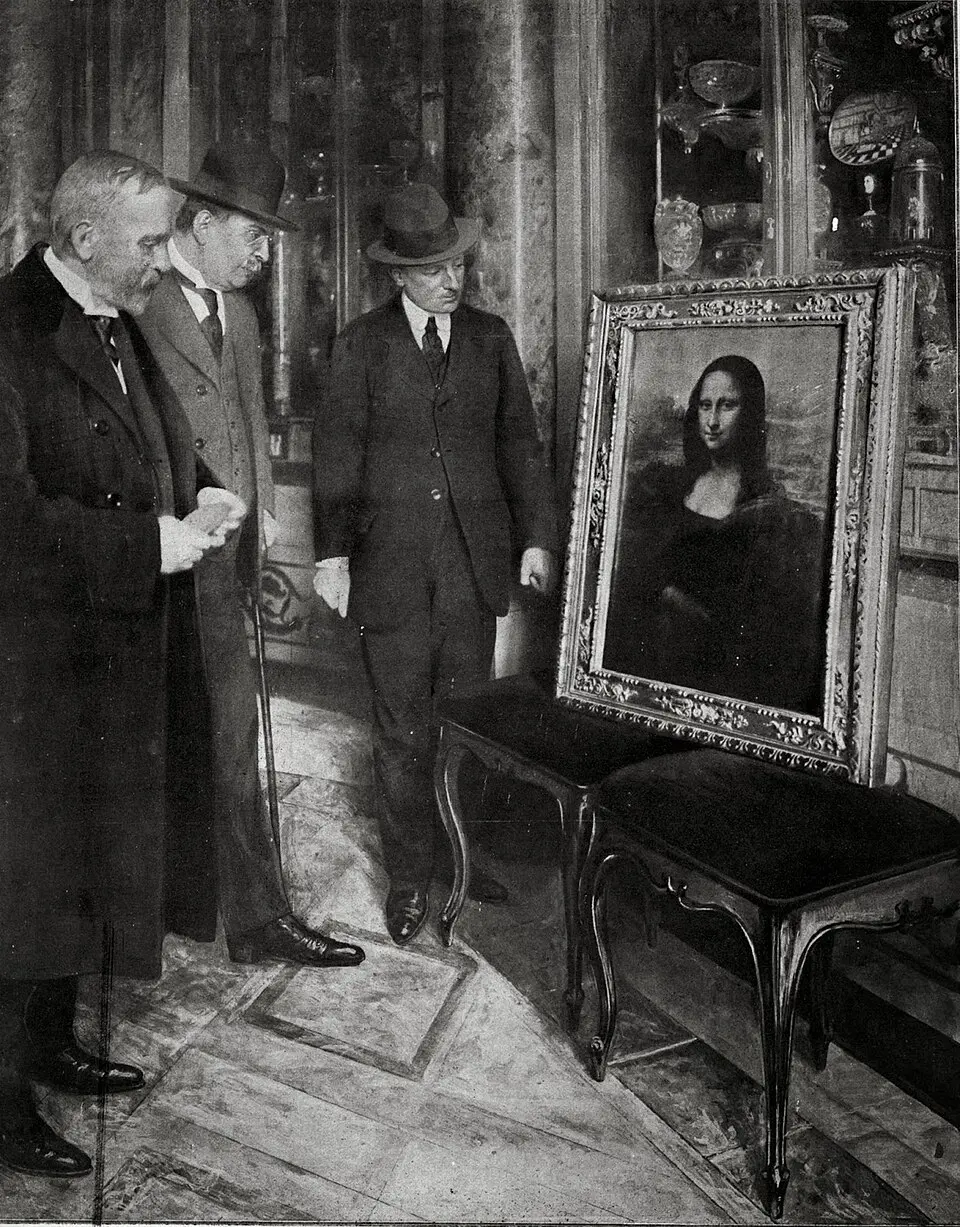
Peruggia kept the painting hidden in a trunk in his Paris apartment for more than two years. Then, in 1913, he took it back to Italy and approached the Florence art dealer Alfredo Geri with an offer to hand it over. Geri called in Giovanni Poggi, director of the Uffizi Gallery, who confirmed it was genuine, and they alerted the police. In December, Peruggia was arrested at his hotel in Florence.
Why had he done it? Peruggia said he had wanted to bring back to his homeland a painting that Napoleon had stolen from Italy. But the Mona Lisa was not loot. Leonardo himself took the painting to France late in his life, and it is thought to have passed into the French king’s hands afterward.
What’s more, Peruggia appears to have expected a reward for the painting. A few months after the theft, he wrote to his father that he intended to make his fortune in Paris. Was his motive really patriotism, or was it money? Among researchers, the prevailing view is that money played a large part.
Still, the court gave some weight to his patriotic motive, and he was sentenced to one year and 15 days. After an appeal, he served only about seven months.

How a theft made a world-famous painting
Before the theft, the Mona Lisa was a celebrated masterpiece among art lovers, but it was not a painting that everyone knew, as it is today. The theft changed that. For more than two years newspapers covered the case, and photographs of the painting spread around the world.
Once recovered, the painting was shown at the Uffizi and elsewhere in Italy, and crowds packed every venue. It returned to the Louvre in January 1914. It was the theft that made the Mona Lisa the most famous painting in the world. Many historians believe exactly that.