Did a wave of molasses really flood a city?
Yes. In 1919 a giant molasses tank burst in Boston, and a dark wave swept through the streets, killing 21 people.
8.7Mliters
Shortly after noon on January 15, 1919, in Boston’s waterfront North End, a huge storage tank suddenly collapsed. The molasses inside burst out and rolled through the streets as a dark, heavy wave. Twenty-one people were killed and about 150 were injured.
A “molasses flood” sounds like a joke, but it was a real and deadly disaster. And according to more recent research, the winter cold helped make it so deadly.
A leaky tank painted brown
Molasses is the thick, dark syrup left over after sugar is extracted from sugarcane. The tank belonged to the United States Industrial Alcohol Company (USIA). According to the Boston Public Library, the company used the molasses to make rum and industrial alcohol for munitions.
The tank had been built in 1915. It stood about 15 meters (50 feet) tall and 27 meters (90 feet) across, and at the time of the disaster it held some 2.3 million gallons (8.7 million liters) of molasses.
According to the City of Boston Archives, molasses seeped from the tank’s seams, and neighbors complained. Instead of fixing the leaks, the company painted the tank brown so they would not show. Children from the neighborhood used to collect the leaking molasses in pails.
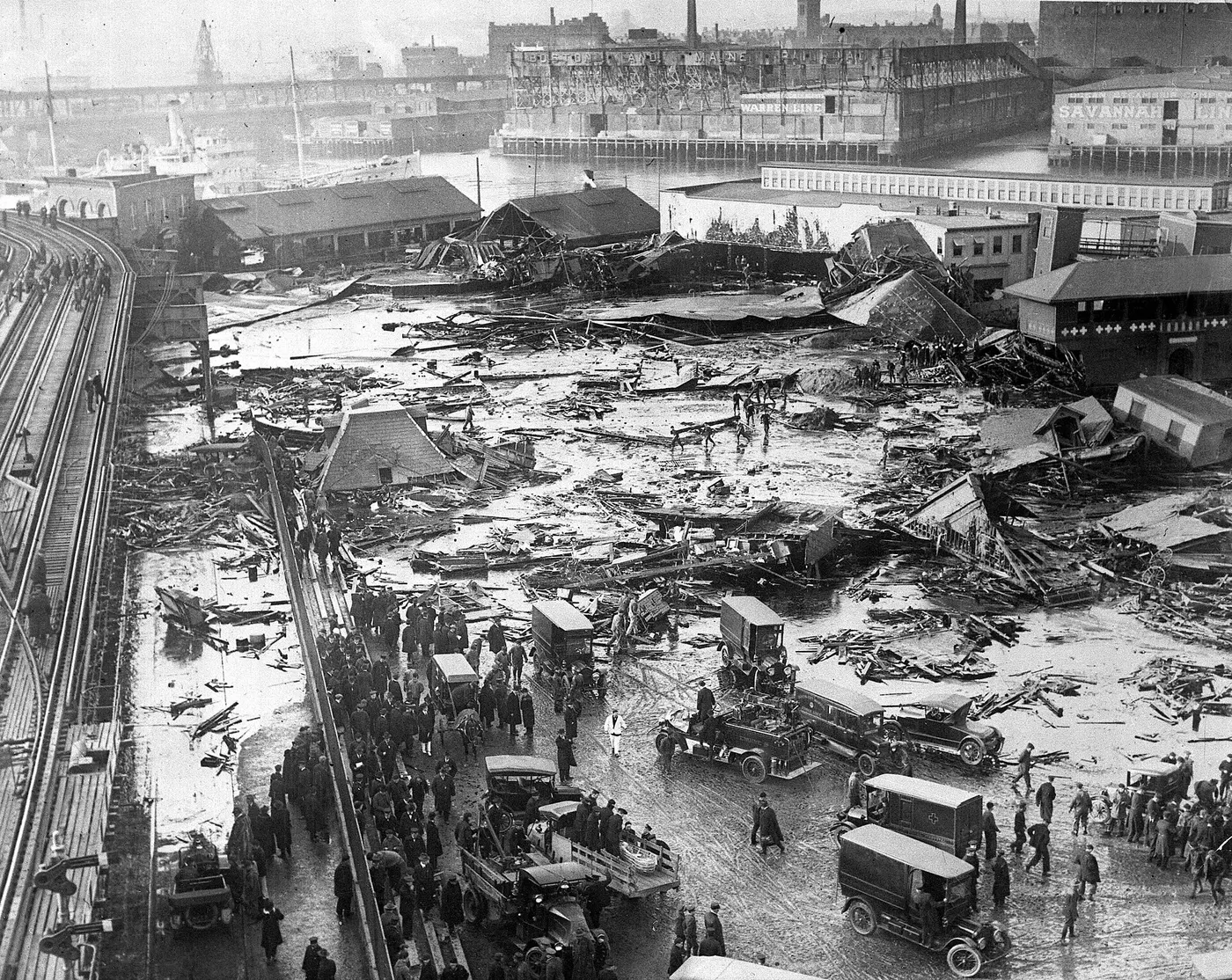

A wave at 35 miles an hour
The molasses that poured from the ruptured tank surged through the streets in a wave estimated at 15 to 25 feet (4.6 to 7.6 meters) high, moving at around 35 mph (56 km/h), faster than anyone could run. According to the Boston Public Library, the flood itself was over in less than five minutes.
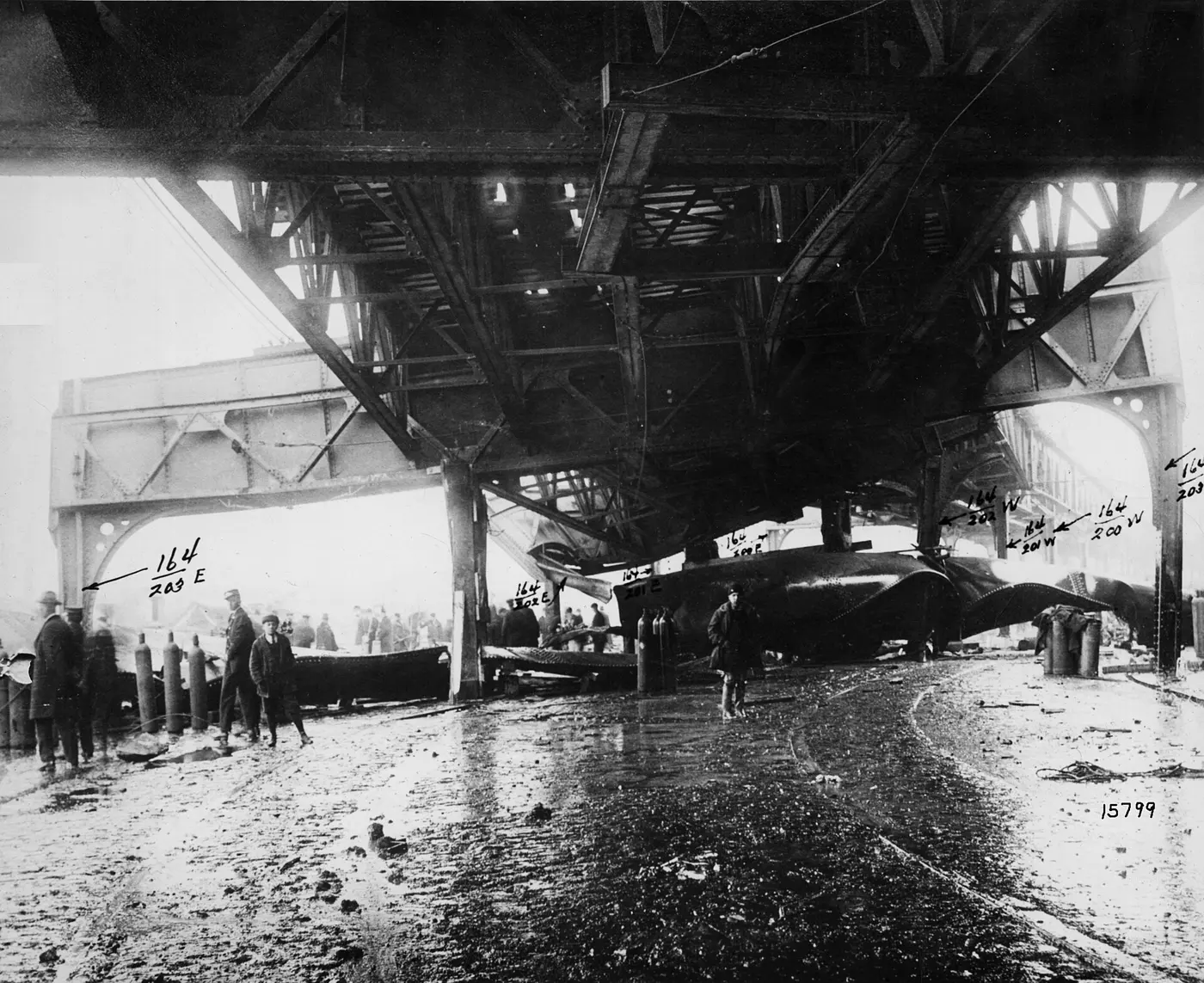
Molasses is about 40 percent denser than water. The heavy wave damaged the elevated railway, pushed buildings off their foundations, and engulfed people and horses. Most of the victims were laborers and drivers working at the nearby paving yard and wharf, and two 10-year-old children were among the dead. The next day the Boston Post described molasses “waist deep” in the street and reported that “horses died like so many flies on sticky fly paper.”
The first rescuers on the scene were more than a hundred sailors from the training ship USS Nantucket, docked nearby. The cleanup took weeks. Crews hosed the molasses away with salt water and spread sand to soak it up.
The cold made it worse
The day of the disaster was unusually mild for January. After a bitterly cold spell, the temperature had reportedly climbed to around 4°C (40°F). The City of Boston also cites the sudden temperature change, and a large new shipment of molasses added to the tank, among the factors behind the collapse.
In 2016, the fluid dynamicist Nicole Sharp and researchers at Harvard University re-examined the disaster using newspapers, maps and weather records from the time, and presented their findings at a meeting of the American Physical Society. Molasses becomes much thicker as it cools. Sharp noted that temperatures dipped just below freezing on the night after the disaster, and that the viscosity of the spilled molasses may have increased by a factor of four or more. The team concluded that this thickening was a major factor in hampering the rescue. Once people were caught in it, the more they struggled, the more firmly they were stuck.

Not a bomb after all
USIA claimed that anarchists had blown up the tank with a bomb. Victims and their families filed suit after suit against the company, and a court-appointed auditor spent years hearing evidence. In 1925 he ruled that the tank had failed because of structural weakness and that the company’s negligence was to blame.
In 2015, a study by a team of structural engineers concluded that the tank’s walls were too thin for the load they carried and that the steel was prone to cracking. The disaster led to stricter building standards in Massachusetts and beyond.