How does a melon get its net?
As the fruit swells, its skin cracks, and the melon seals the cracks with a cork-like tissue. The net is the melon’s own scar tissue.
15 days
In Japan, a perfect muskmelon, grown in a greenhouse and sold in a gift box, is the classic luxury present. Its skin is covered in a fine, raised net that looks almost like lacework. The same pattern is often said to have given the name to melonpan, the popular Japanese sweet bun with a crisscrossed crust.
That net is neither painted on nor present from the start. It forms when the skin splits as the fruit grows, and the melon itself patches up the cracks.
A smooth start
According to a 2024 review in the Journal of the Japan Society for Precision Engineering by Yuri Akiba of the Mount Fuji Research Institute in Yamanashi Prefecture, a muskmelon grows to about the size of a hen’s egg within a week of pollination, and at that point its skin is still smooth, with no net at all. About two weeks after pollination, the skin enters a “hardening” stage in which it becomes stiff and stretches less easily. The flesh inside, however, keeps on growing. The skin cannot keep up, and cracks begin to appear all over its surface.
According to Shizuoka Prefecture, Japan’s best-known greenhouse melon region, the distinctive cracks appear on the fruit about 15 days after pollination, and the net is complete in about a month. When Akiba filmed a melon as it grew, the first cracks appeared near the stem, running around the fruit like lines of latitude on a globe. Next came cracks running from the stem toward the middle, like lines of longitude, and finally finer cracks filled in the spaces between them.
A cork bandage
If the cracks were left open, the fruit would lose water. So the cells beneath them multiply rapidly and build a tissue that seals the wound. According to a 2022 paper by researchers in Israel, the walls of these cells are packed with suberin, a waxy substance abundant in cork, and lignin, the compound that makes wood hard. The tissue keeps the fruit firm while still letting it stretch as it swells, and it waterproofs the skin. The pale, raised ridges of the net are made of this cork-like tissue.
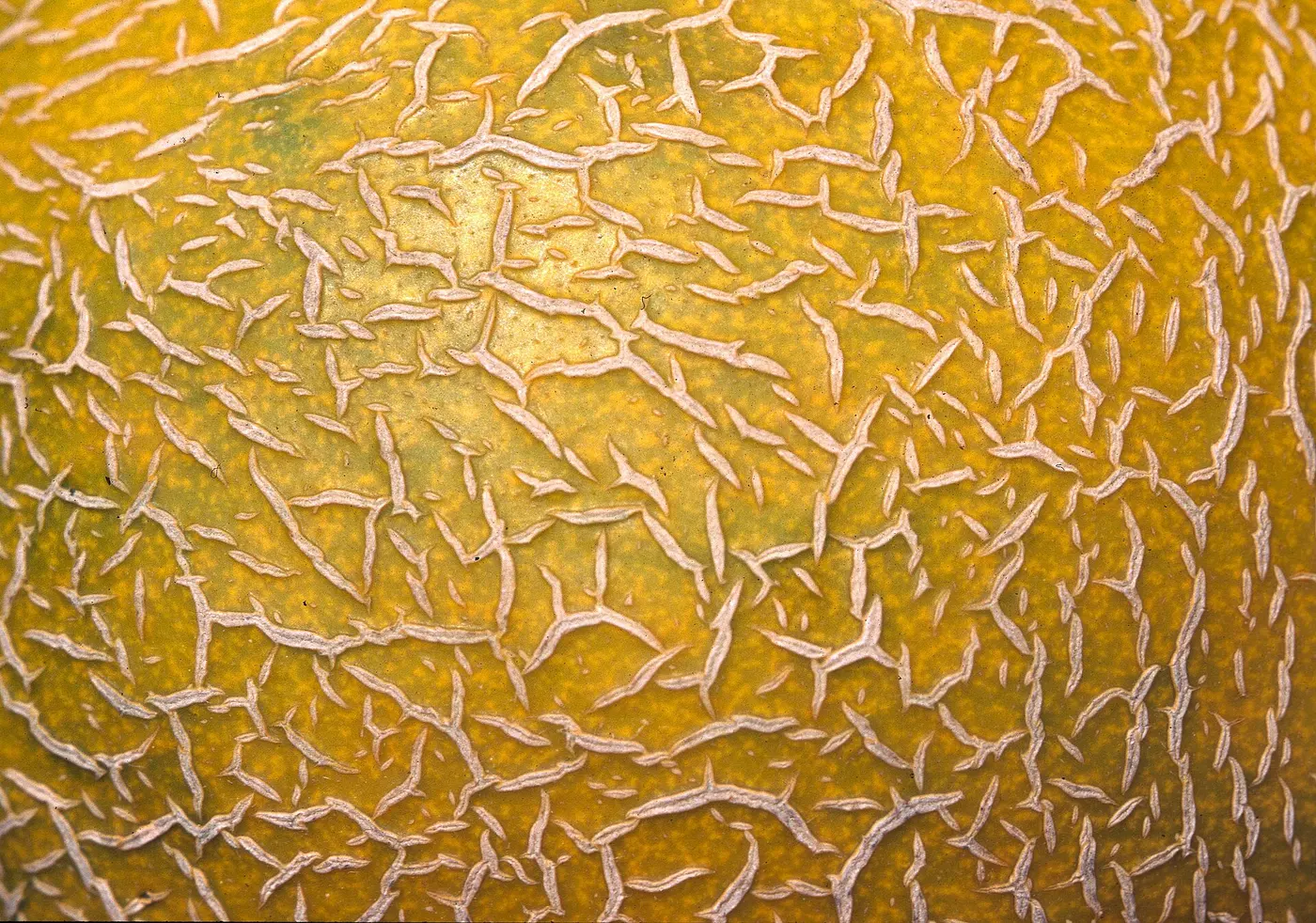

You can see that the net is scar tissue by wounding a melon on purpose. In 2010, the biology club of Hokota Daini High School in Hokota, Ibaraki Prefecture, a major melon-growing area, used a box cutter and sandpaper to scratch characters such as kotobuki (“good fortune”) into the skin of growing melons. The net rose up in exactly the shapes they had carved.
According to Akiba, once a melon is harvested and water stops flowing into it, the fruit stops swelling and no new cracks form. In a sense, the net is a record of the time the fruit spent growing.
The effort behind a perfect net
Shizuoka’s greenhouse melons descend from a variety called Earl’s Favourite, whose seeds were brought to Japan from England in 1925. It was bred in the late 19th century by the head gardener on the estate of the Earl of Radnor, and the Earl liked it so much that it was named for him. According to Shizuoka Prefecture, the variety later fell out of cultivation in England. Shizuoka growers leave only one fruit on each plant, and while the net is forming they water with great care. The prefecture says a high-quality melon has a well-raised net that is even all over.
The net is also at the mercy of temperature and humidity. The Ibaraki Agricultural Center warns that cold nights while the net is forming, humid conditions on cloudy or rainy days, and overwatering can all cause “hiru-net,” in which the skin splits wide open. When the balance between the strength of the skin and the pressure building inside the fruit breaks down, the result is no longer a fine web of cracks but a gash.
Melons without nets
Many melons have no net at all. According to the 2022 paper, wild melons are small, with smooth skin covered by a thick cuticle, the waxy film that coats a plant’s outer surface. Cultivated melons have skins ranging from smooth to heavily netted. When the researchers analyzed 28 varieties, they found that smooth-skinned melons were covered by an ordinary cuticle, while the skins of netted varieties contained large amounts of the building blocks of suberin.
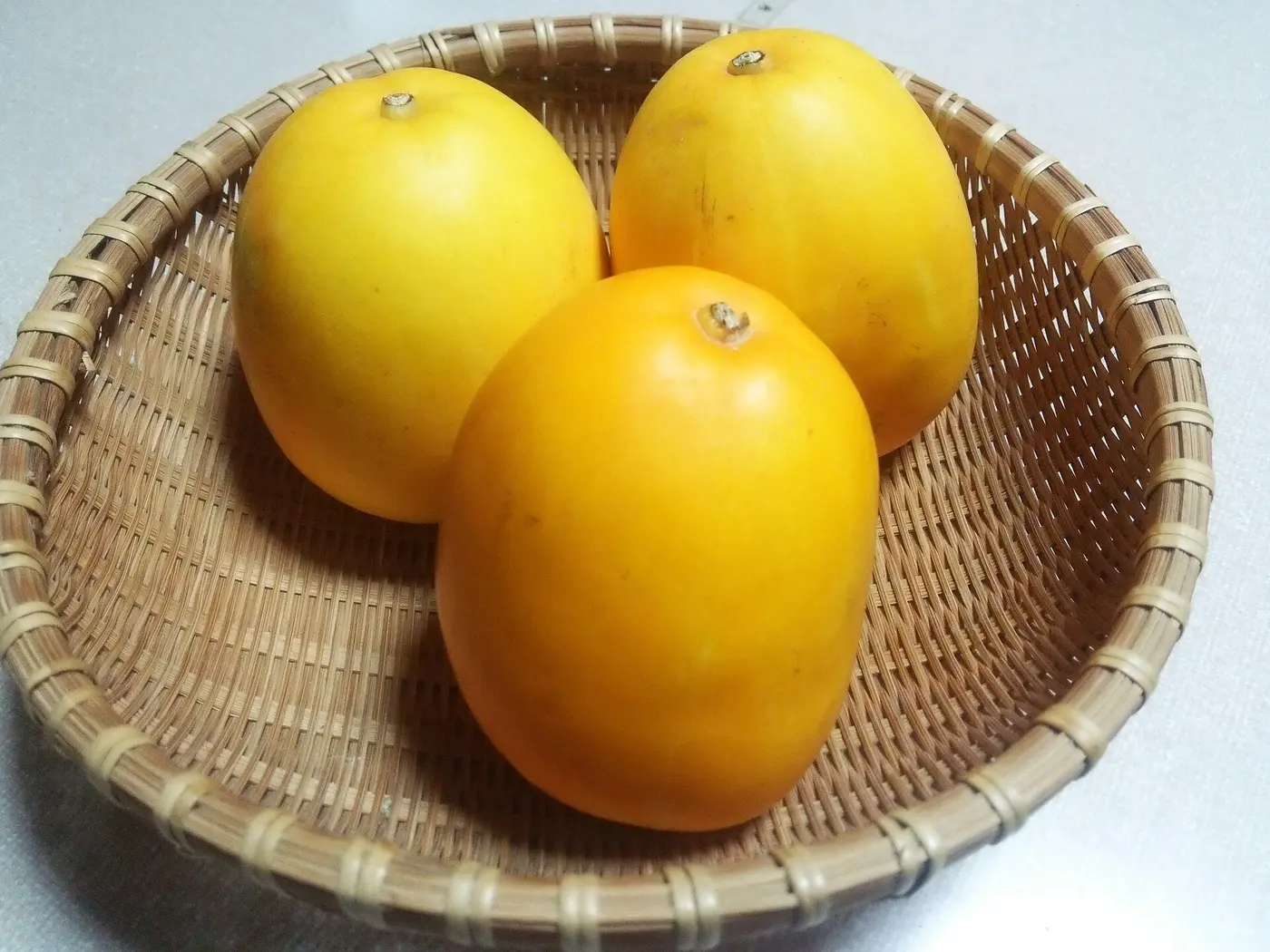

By the way, the “musk” in muskmelon has nothing to do with the net. According to Shizuoka Prefecture, the name comes from the fruit’s rich aroma at peak ripeness, likened to musk. Some Japanese speakers assume the name is “mask” melon, as if the net were a mask, but the pattern and the name are unrelated.