Is London Bridge really in Arizona?
Yes. The London Bridge completed in 1831 was sold to an American businessman in 1968 and rebuilt in the desert town of Lake Havasu City, Arizona.
~10,000stones
On the western edge of Arizona lies Lake Havasu City, a desert town where summer temperatures creep toward 50°C (122°F). Across one of its waterways stands a weathered stone bridge that looks thoroughly out of place. It is called London Bridge.
This is not a bridge named in honor of London. It is the very bridge that spanned the River Thames in London from 1831 until the late 1960s. And for decades, the American who bought it has been dogged by a rumor that he thought he was buying the far more famous Tower Bridge.
A “new” bridge that was sinking
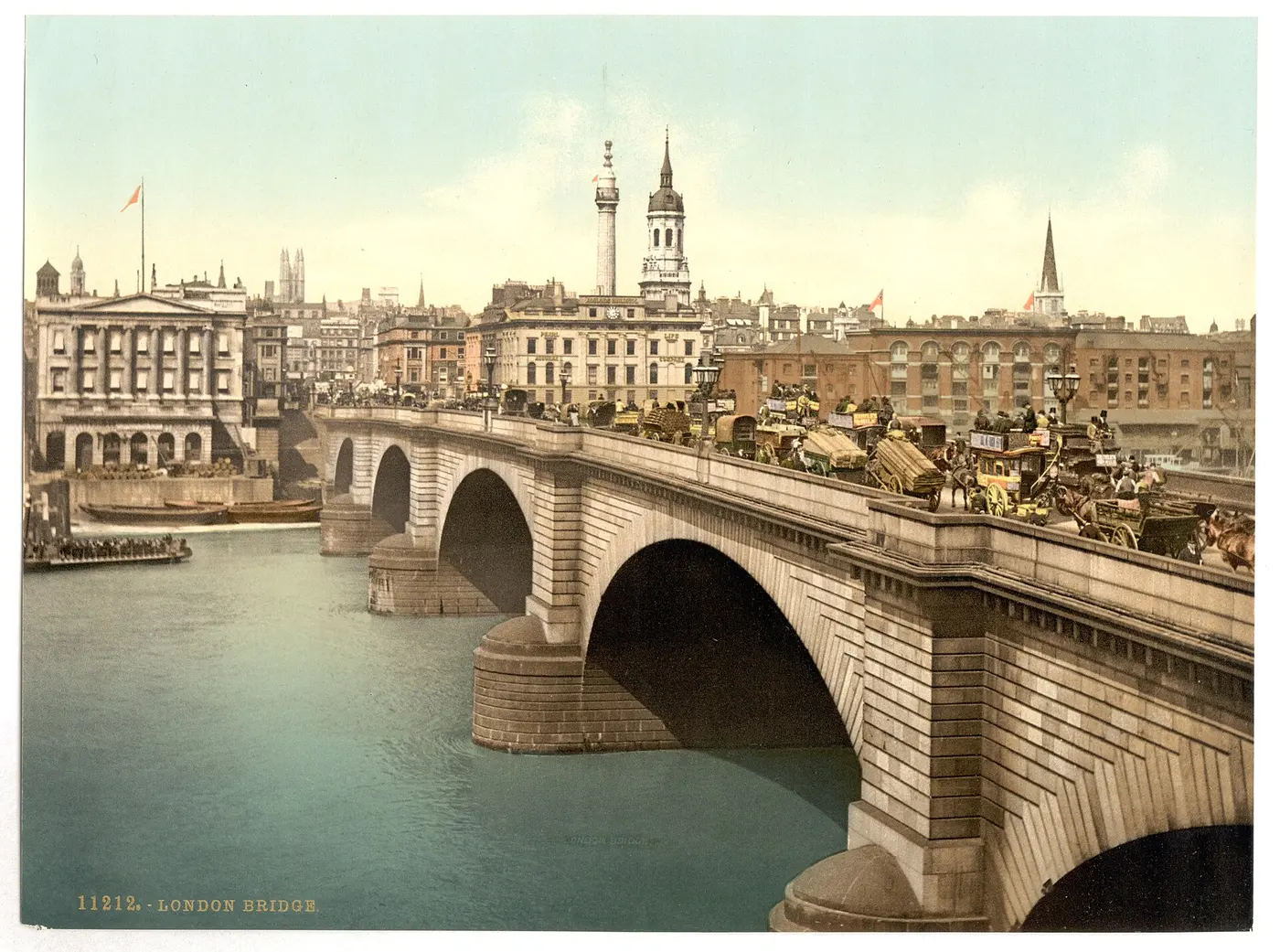
There has been a bridge at this spot in London since Roman times. When the medieval stone bridge of nursery rhyme fame grew too decrepit, a replacement was designed by the Scottish engineer John Rennie, who died before his plan was approved. The new London Bridge opened on August 1, 1831.
In the 20th century, the weight of cars and buses began pressing the bridge into the riverbed. According to Lake Havasu City’s tourism bureau, it was sinking about an inch (2.5 cm) every eight years. In the mid-1960s, the City of London committee responsible for its bridges decided to replace it.
That was when one committee member, Ivan Luckin, a former newspaperman and PR man, suggested selling the old one. In a 2018 BBC article, a former colleague recalled the eyebrows that went up. Asked what it might fetch, Luckin said, “One million.” When someone asked whether he meant dollars, he replied that he was talking about pounds.

A gimmick for a desert town
Luckin flew to New York himself to hold a press conference. As he told a local newspaper in 1983, a reporter challenged him: the bridge was only built in the 1830s, it was not the one with houses on it, and it was not the bridge of the nursery rhyme, so what was so special about it? Luckin shot back that London Bridge was not just a bridge but “the heir to 2,000 years of history,” going back to Roman Londinium.
The man who took the bait was Robert P. McCulloch, an industrialist who had made a fortune from chainsaws and outboard motors. McCulloch had bought land on the shore of Lake Havasu, a reservoir created by damming the Colorado River, and since the 1960s he had been building a town there. Luring people to such a hot, remote place was proving difficult.
The contract was signed in April 1968. The price was £1,029,000, or $2.46 million at the time. According to the tourism bureau, McCulloch arrived at the figure by doubling the estimated $1.2 million cost of dismantling the bridge, then adding $1,000 for each year of his age, $60,000 in all.
Did he think he was buying Tower Bridge?
Ever since, the deal has been shadowed by the story that McCulloch thought he was getting Tower Bridge, the twin-towered drawbridge that opened in 1894 a little way downstream.
The people involved have flatly denied it. When a reporter put the rumor to Luckin in that 1983 interview, he thundered, “Of course not.” McCulloch’s grandson Michael told the BBC that his grandfather and his partner knew exactly which bridge they were buying: “Do you think anyone in their right mind would look at Tower Bridge and think they could take it apart and bring it here?” But because the rumor kept the town in the news, he added, they were happy to let it run.
Numbered stones across the sea
As the bridge came down, its facing stones were numbered one by one. Some were sent to a quarry in Devon, in southwest England, to be sliced thinner and lighter. They then sailed through the Panama Canal to Long Beach, California, and were trucked across the desert. The BBC reports that about 10,600 stones arrived in Lake Havasu City.
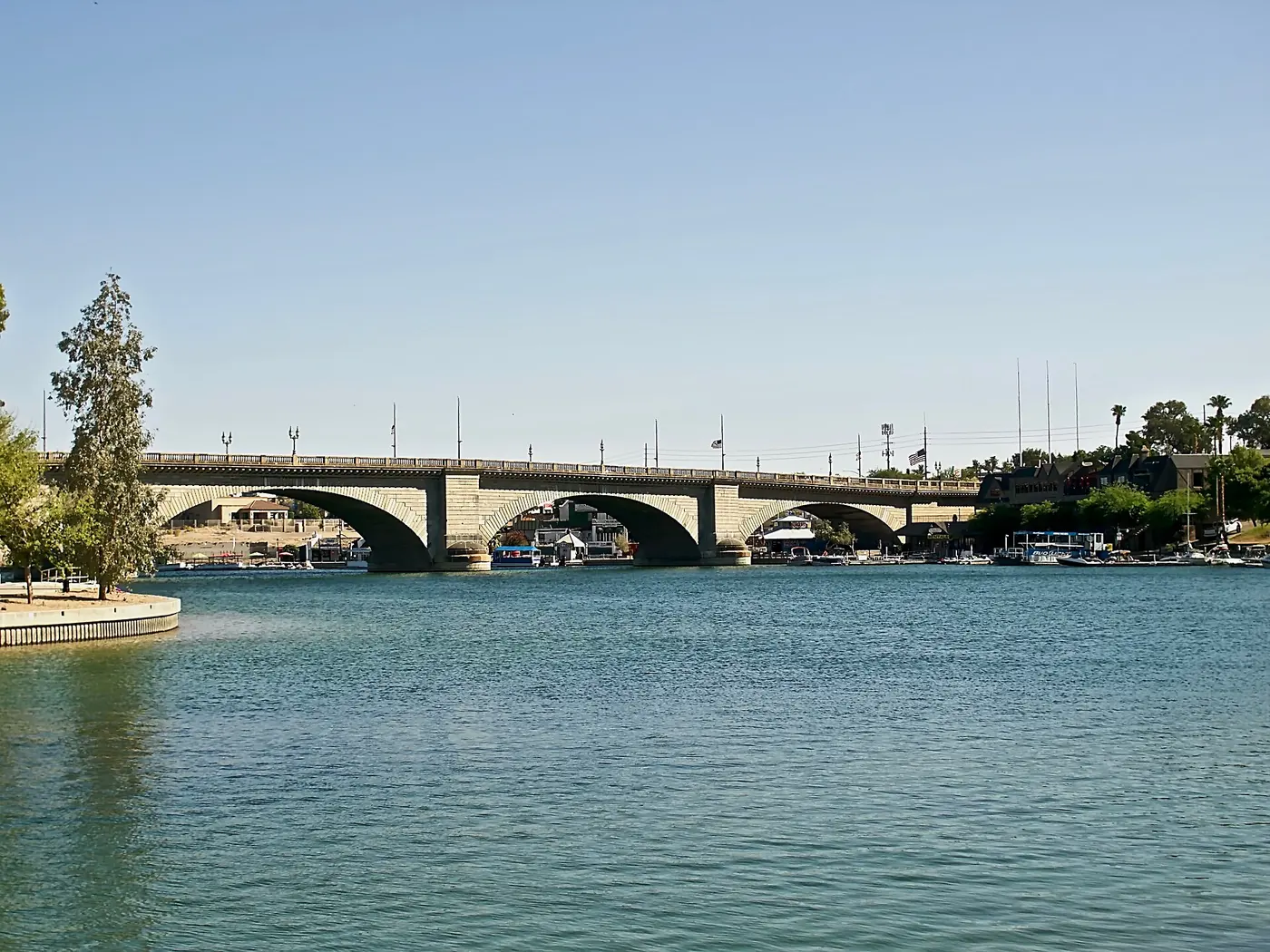

The bridge was first assembled on dry land, with the London stones fixed onto a frame of reinforced concrete. Making it hollow cut its weight from 133,000 tonnes to 33,000. Once it was finished, the sand beneath it was dredged out and lake water let in, creating a brand-new channel for the bridge to cross.
On October 10, 1971, the bridge was dedicated in a lavish ceremony attended by the Lord Mayor of London. It became the town’s great attraction. The BBC, citing Arizona’s tourism office, reported that 3.65 million people visited it in 2017, making it the third most popular attraction in the state after the Grand Canyon and Glen Canyon.