What does “sechi” mean in osechi, Japan’s New Year food?
Sechi means a seasonal turning point. Food offered to the gods on those special days was called osechi, and the word later came to mean New Year food alone.
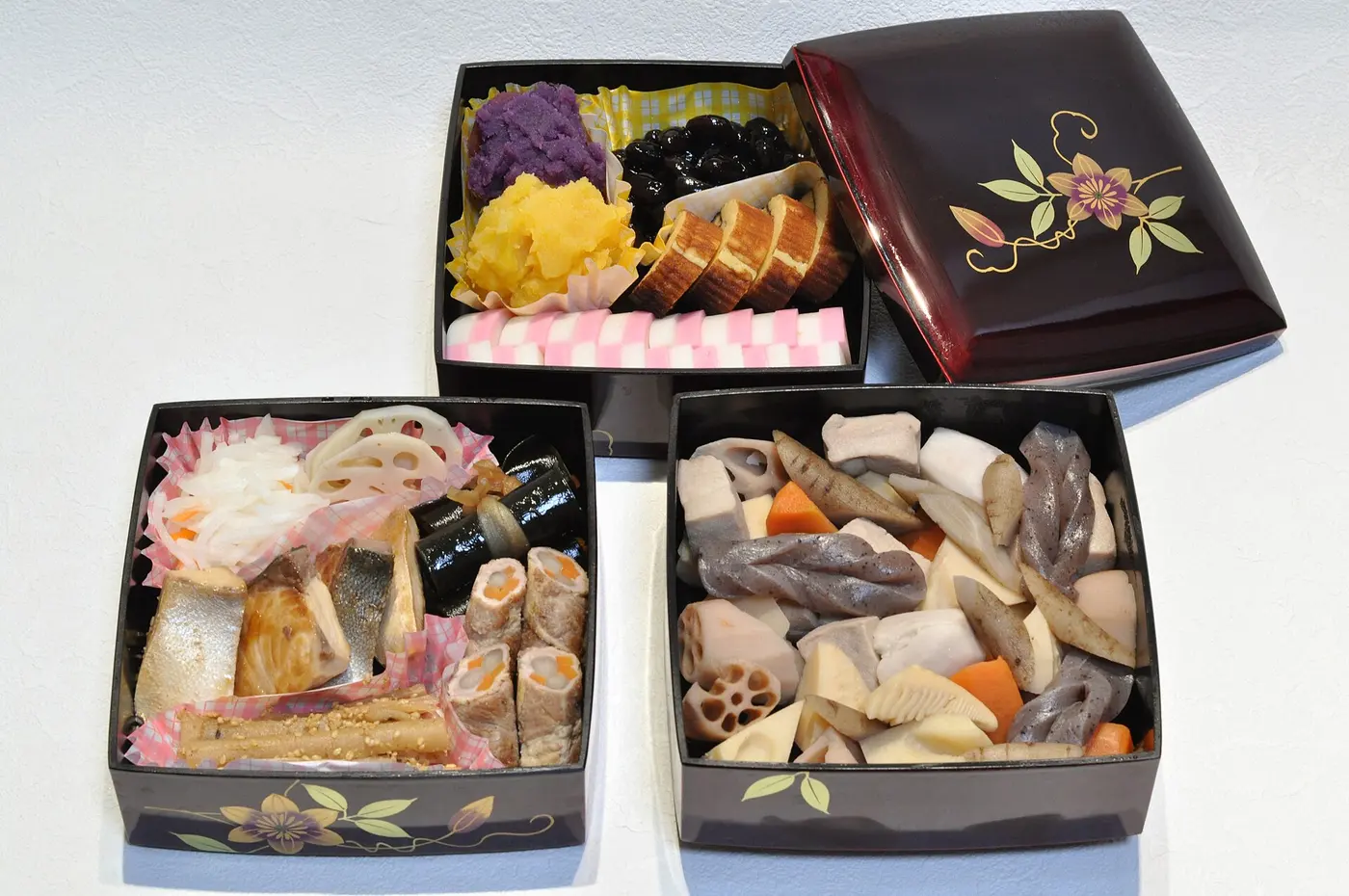
On the morning of January 1, many Japanese families lift the lid on a stack of lacquered boxes to reveal a colorful spread: glossy black soybeans, golden herring roe, slices of sweet rolled omelet, and red-and-white fish cakes. This is osechi ryōri, the centerpiece of the Japanese New Year table.
But what does osechi actually mean? In characters it is written 御節, an honorific o plus sechi, a reading of the character for “joint” or “node.” Follow that sechi back in time, and it leads not only to New Year but to the Doll Festival in March and the Boys’ Festival in May as well.
Sechi: the joints of the year
Sechi refers to special days that mark turning points in the year. The Nipponica encyclopedia compares them to the joints of a bamboo stem, spaced out through the year and serving as punctuation marks in daily life. Such days were also called sechinichi, “sechi days.”
At the imperial court in early times, banquets called sechie were held on these days. There was one on New Year’s Day, and others for the festivals in the fifth and ninth months, at which courtiers were served a meal.
The food offered to the gods or to the emperor on these days was called sechiku, literally “sechi offering.” The Daijisen dictionary lists examples such as the New Year’s Day meal, rice porridge on the 15th day of the first month, mugwort rice cakes on the 3rd day of the third month and chimaki rice dumplings on the 5th day of the fifth month. Osechi is a shortened form of o-sechiku. The modern word sekku, used for seasonal festivals, comes from the same term.
Doll Festival food was osechi too
In other words, osechi was not originally New Year food alone. According to the Britannica International Encyclopaedia in Japanese, osechi ryōri once meant the food prepared for New Year and for the five seasonal festivals.
These five festivals fell on the 7th day of the first month, the 3rd of the third month, the 5th of the fifth, the 7th of the seventh and the 9th of the ninth. The Tokugawa shogunate made them official days of celebration, and they spread among ordinary people. Today they survive as the seven-herb rice porridge eaten on January 7, the Doll Festival on March 3, Children’s Day on May 5 and the Star Festival, Tanabata, on July 7.
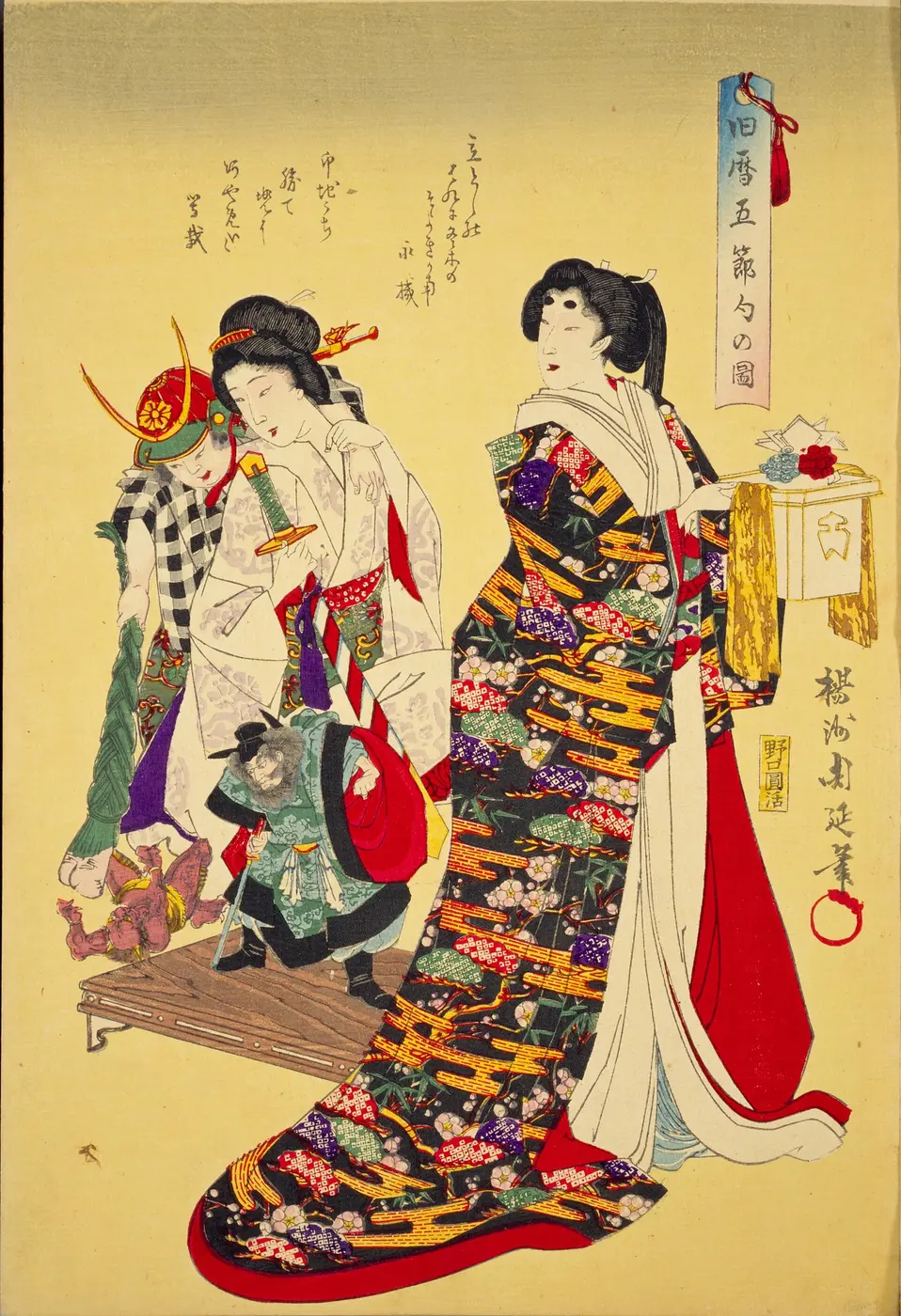

Of all these turning points, New Year was the most important. Britannica notes that in some regions, new straw sandals for New Year were called sechi-zōri, and the rice and firewood set aside for it sechi-gome and sechi-gi. Little by little, sechi came to mean New Year.
A haikai poetry manual from 1651, Gosan, already notes that if you say simply “osechi,” it refers to spring, meaning the New Year season. By more than 300 years ago, then, “osechi” meant New Year food in everyday speech.
It started with simmered vegetables
What went into osechi? According to Britannica, it was originally centered on nishime, vegetables simmered in soy-based broth, such as burdock root, taro, carrot, konjac, daikon radish, grilled tofu and kelp rolls. Over time it grew to include iwai-zakana, celebratory nibbles such as black beans and herring roe; kuchitori, colorful sweet and savory bites such as fish cakes, mashed sweet potato with chestnuts and rolled omelet; and grilled and vinegared dishes.
The three classic celebratory nibbles are said to be black beans, herring roe and tazukuri, small dried anchovies glazed in a sweet sauce, in the Tokyo area, and black beans or tazukuri, herring roe and pounded burdock root around Osaka and Kyoto. The seasoning is fairly strong so that the food keeps well, and it is usually packed into tiered boxes called jūbako.

Good luck through wordplay
Each dish in osechi carries a lucky meaning, usually through a pun. Black beans are mame, which also means “diligent” and “healthy.” Kelp rolls, kobu-maki, echo yorokobu, “to rejoice.” Tazukuri means “making rice fields,” a name said to come from the old practice of using these tiny dried fish as fertilizer for paddies.
Herring roe has an especially interesting story. Herring was once also called kado, and its roe was “kado no ko.” The Heibonsha World Encyclopedia suggests that cooks cleverly renamed it kazu no ko, “many children,” so that it would stand for a thriving family line. Kazunoko was served to Ashikaga Yoshiaki, soon to be shogun, at a banquet in 1568, and to the warlord Toyotomi Hideyoshi in 1594. By the Genroku era (1688–1704), it had become essential at New Year for ordinary people too.