Why does basketball have a 24-second shot clock?
Because of a bit of arithmetic in 1954. The Syracuse Nationals’ owner and general manager divided the 2,880 seconds in an NBA game by 120, the average number of shots taken in a game.
37points
Above every basket in a professional game sits a small clock, ticking down without pause. This is the shot clock, and it tells the team with the ball how long it has left to shoot. If 24 seconds run out without a shot, the ball goes to the other team.
The limit is 24 seconds in the NBA, and in Japan’s B.League and most of the rest of the basketball world too. It is not a round number like 20 or 30. It comes from a quick calculation made in the 1950s by the people running one NBA team.
The 19–18 game
Before the shot clock, there was no limit on how long a team could hold the ball. A team with a lead could simply pass it around and let the clock run. The only way for the trailing team to get the ball back was to commit fouls on purpose, which sent the other side to the free-throw line. Games turned into dreary free-throw contests.
The most extreme example came on November 22, 1950, in Minneapolis. According to Sports Illustrated, the Fort Wayne Pistons’ coach, facing the defending champion Lakers, told his players to hold on to the ball. Fort Wayne won 19–18, a combined 37 points, and it is still the lowest-scoring game in NBA history. According to the NBA, the Lakers’ star center George Mikan scored 15 of his team’s 18 points.
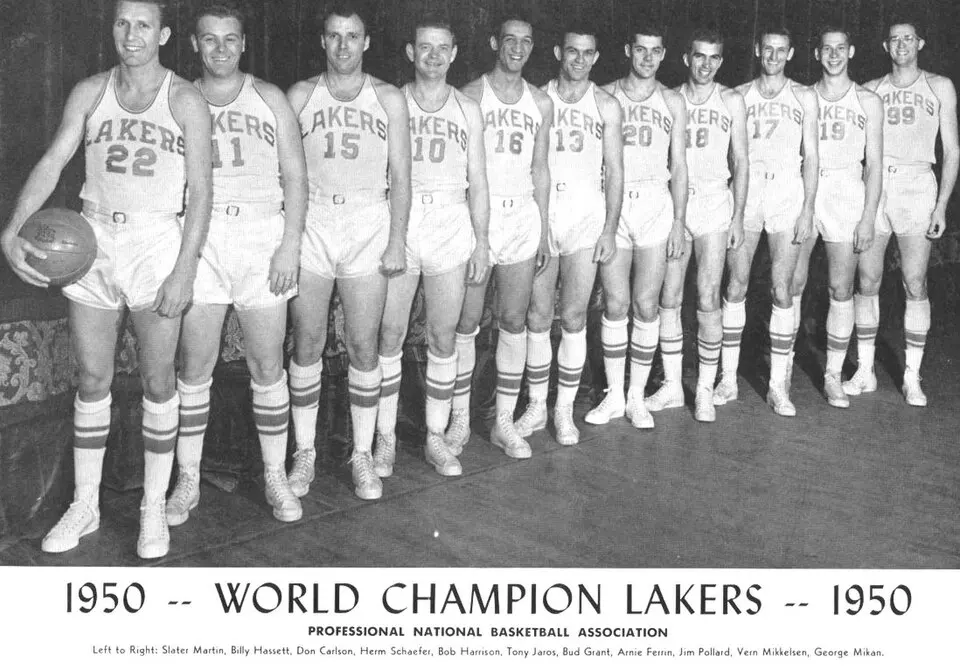

Dolph Schayes, then a star with the Syracuse Nationals, later remembered what those games were like. “The game stunk!” he said. “It was a march from one foul line to the other. Something had to be done.”
Arithmetic at the bowling alley
The people who did something were Danny Biasone, owner of the Syracuse Nationals, and Leo Ferris, the team’s general manager. The idea of a time limit on possessions was not new; according to the Associated Press, it had first been suggested by Howard Hobson, a former coach at Oregon and Yale. What the Syracuse men did was work out how long the limit should be.
As the AP put it, they divided the number of seconds in a 48-minute game, 2,880, by the average number of shots taken in a game, 120. The answer was 24. Biasone reasoned that even if every team used its full time on every possession, each side would still get about 60 shots, and the game would move much faster. According to Sports Illustrated, the figure of 120 came from looking over the previous season’s box scores and picking out the games that had been fun to watch.
The calculation is famously said to have been scribbled on a napkin at Biasone’s bowling alley. Some accounts say it was Ferris who actually did the math, and who deserves the credit is still debated.
A trial run in a hot gym
On August 10, 1954, the 24-second clock was tested for the first time, in a scrimmage of NBA players at a vocational high school gym in Syracuse. Boston Celtics coach Red Auerbach was among those watching.
The NBA adopted the rule for the 1954–55 season, and the effect was immediate. According to the NBA, average team scoring jumped from 79.5 points a game to 93.1. And that season’s champions were Biasone’s Nationals, who beat, of all teams, the Fort Wayne Pistons in the finals. Game 7 ended 92–91.


The world’s standard
Today 24 seconds is the limit under international rules as well. When a monument shaped like a shot clock was unveiled in Syracuse in 2005, Schayes was there. “Without the 24-second clock,” he asked, “would there have been a Michael Jordan?”
Bill Himmelman, for many years the NBA’s official historian, is said to have put it even more grandly. There were only two moments of real importance in basketball history, he said: the moment Dr. Naismith nailed a peach basket to the wall, and the moment they turned on the 24-second clock.