Why is a marathon 42.195 kilometers?
It was the length of the 1908 London Olympic course, which was later adopted as the official standard.
42.195km
A marathon is 42.195 kilometers. The number is familiar by now, but look at it again and it is a strange one. It isn’t a tidy 40 or 42 kilometers; it ends with a small leftover of 195 meters. If someone had worked it out on purpose, it would be an oddly fussy result. So how did it come about?
In fact, nobody really “decided” on this number at all. It was simply the length a course happened to have at one particular race, and that length became the world standard.
The first marathon was “about 40 kilometers”
The marathon takes its name from an ancient Greek legend. In 490 BCE, when the Athenian army defeated the Persians at the Battle of Marathon, a messenger is said to have run all the way to Athens to announce the victory, delivering the news and then dropping dead. The story was written down several hundred years after the battle, however, so whether it really happened is uncertain.
Still, the legend was full of romance. When Athens was chosen to host the first modern Olympic Games in 1896, a race from Marathon to Athens was added at the suggestion of the French linguist Michel Bréal. The distance was about 40 kilometers. The winner was a Greek water carrier, Spyridon Louis.
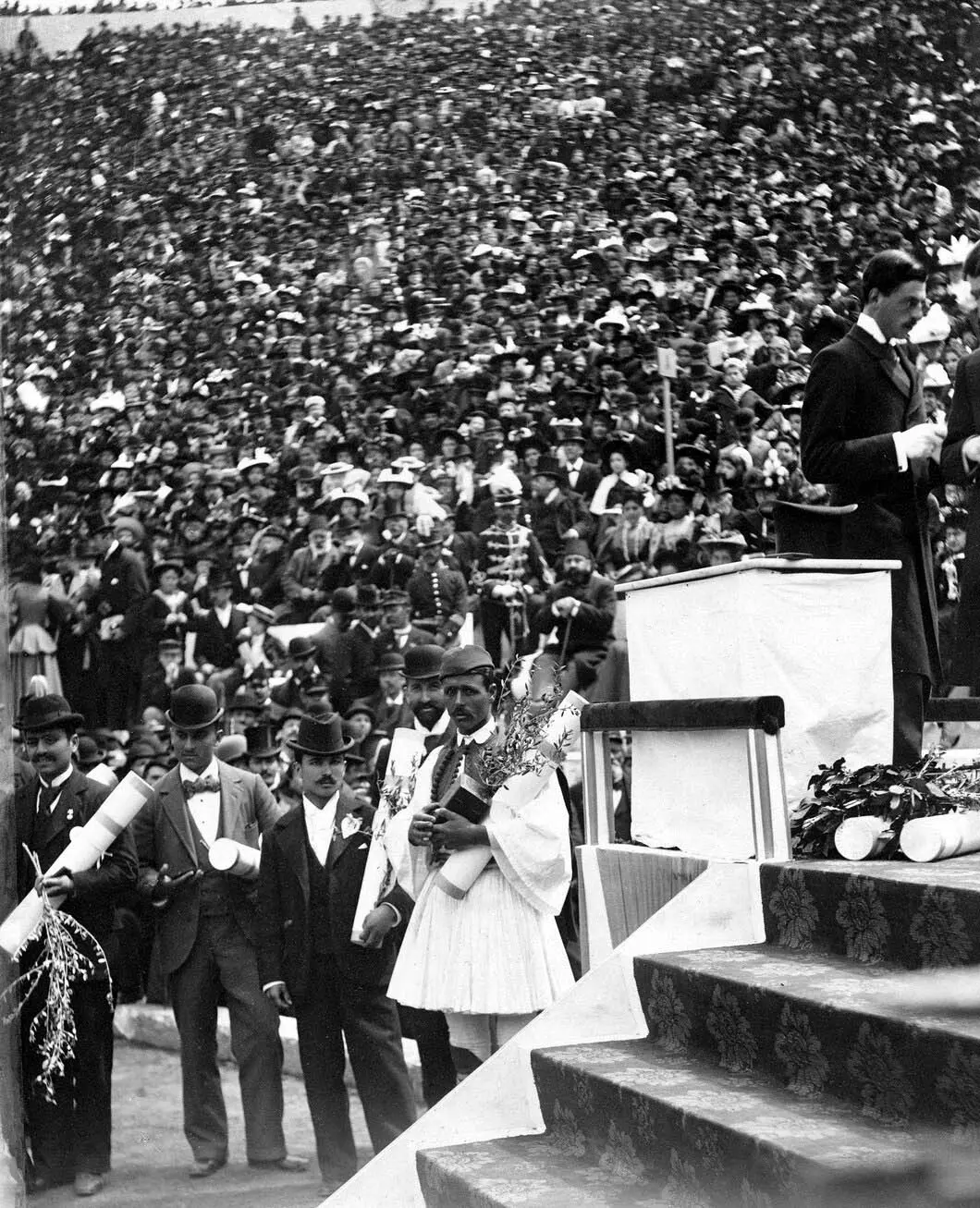

For some time afterward, the marathon distance varied from race to race. The only rule was that runners would cover roughly 40 kilometers, and the course could be longer or shorter depending on the route.
1908: from a castle to a stadium
The turning point came at the 1908 London Olympics. The course began on the grounds of Windsor Castle and finished at the White City Stadium, newly built in west London. Once inside the stadium, runners ran on the track and finished in front of the royal box.
The distance measured this way came to 26 miles 385 yards. Converted to metric, that is 42.195 kilometers.
The 1908 marathon is also remembered for its dramatic finish. Italy’s Dorando Pietri, the first runner back into the stadium, was so exhausted that he collapsed several times and was helped up by officials before crossing the line. He was ultimately disqualified for receiving assistance, but in recognition of his courage, Queen Alexandra presented him with a special cup.
Was it really “for the royals”?
There is a well-known story about the London distance. The start was supposedly placed beneath the castle nursery windows so the royal children could watch, or the finish was moved in front of the royal box so the Queen could see it better. Either way, the story goes, the course got longer, leaving that odd number.
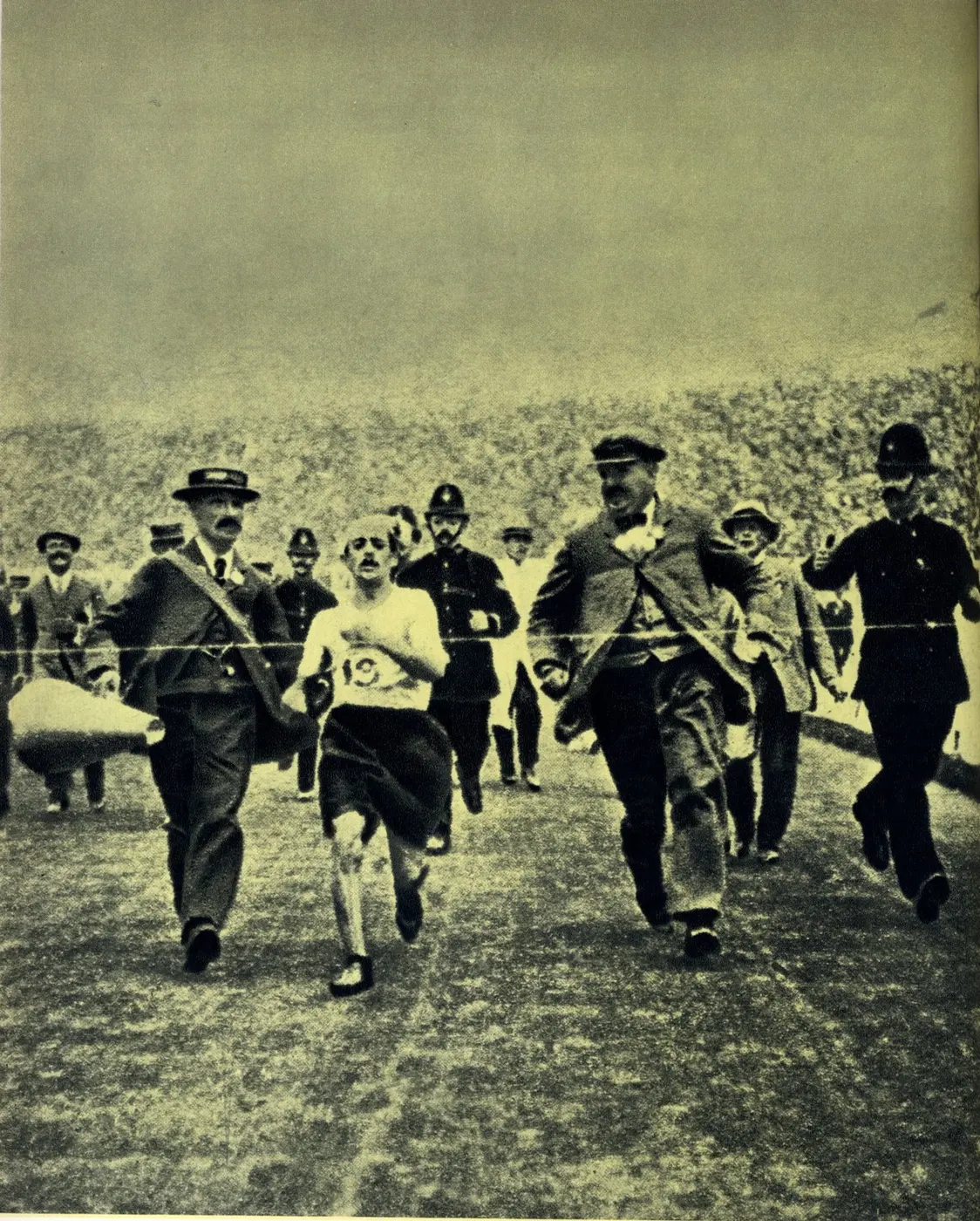

It is true that the race started near the castle and finished in front of the royal box. But according to research by the Olympic historian Bob Wilcock, the tale that “a royal request added 385 yards” is heavily embellished. In reality, the course plans changed several times, and when the entrance through which runners entered the stadium was changed, the distance they had to run on the track to reach the royal box came out to 385 yards. That seems closer to the truth. Consideration for the royal family certainly played a part, but the odd number is thought to be the result of many different factors piling up.
Standardized 13 years later
Even the London distance did not catch on right away. The 1912 Stockholm Games used about 40.2 kilometers, and the 1920 Antwerp Games about 42.75 kilometers; the distance kept wobbling.
The marathon was standardized at 42.195 kilometers in 1921, when the International Amateur Athletic Federation (now World Athletics) adopted the London distance as the official standard. Why London was chosen out of all the races is not clear. One theory is that it was the race that had become world-famous thanks to Pietri’s heartbreak.
42.195 kilometers was not born from a calculation. It was the measured length of one particular course, run once.
The finish line that runners around the world aim for today is a direct copy of a route through London from nearly 120 years ago.