Does soil really change the color of hydrangeas?
Yes. In acidic soil, aluminum dissolves, travels up from the roots and binds with the flower’s pigment, turning it blue.
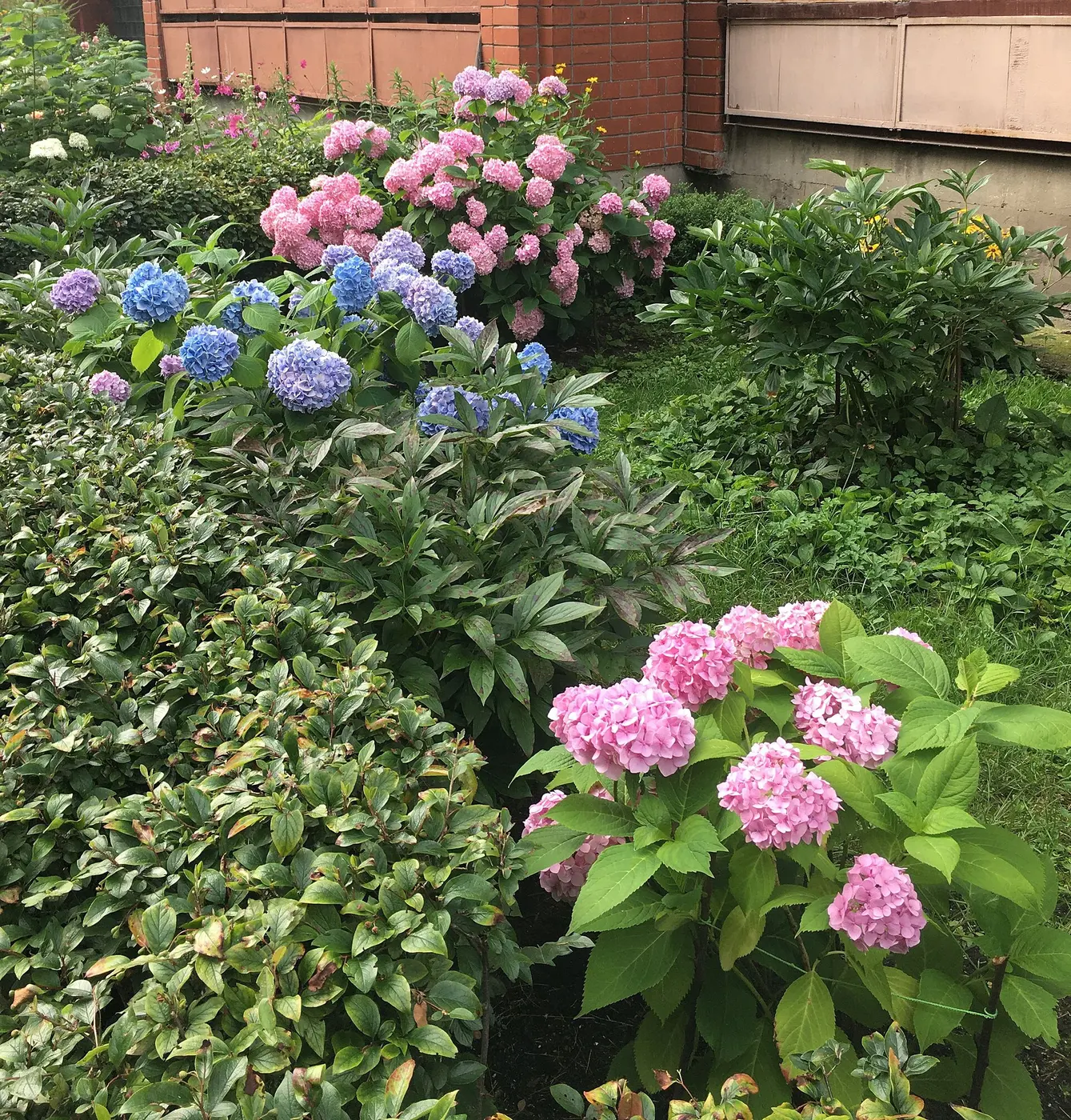
In Japan’s rainy season in June, temple grounds and park slopes fill up with hydrangeas in blue, purple and pink. One garden glows a clear sky blue, the next a vivid pink. Gardeners everywhere tell stories of a plant that changed color after it was moved.
“Hydrangea color depends on the soil” is a familiar saying, and it is true. But the soil itself is not doing the coloring. The real artist is a metal that travels from the soil, through the roots, and into the blooms.
Aluminum makes the difference
That metal is aluminum. Most soils contain plenty of it, but usually in forms that do not dissolve easily in water. When soil turns acidic, aluminum dissolves and becomes much easier for roots to take up.
According to the University of Georgia’s extension service, a soil pH of 5.5 or lower makes aluminum available to the roots and favors blue flowers. At pH 7.0 or higher, in neutral or alkaline soil, aluminum is locked away and the flowers tend to turn pink. A small amount of aluminum produces something in between: violet.
If that sounds backward, you are not alone. Litmus paper from school chemistry turns red in acid and blue in alkali, the exact opposite of a hydrangea. That is because a hydrangea is not reporting the soil’s pH directly. It is reporting how much aluminum the soil’s acidity lets through.

Blue takes a team of three
So what does aluminum actually do inside the flower? A research group led by Professor Kumi Yoshida at Nagoya University in Japan has spent years working out the answer.
The color comes from a pigment called delphinidin 3-glucoside, one of the anthocyanins, the same family of pigments that colors blueberries. When the team compared blue and red flowers, they found the pigment was exactly the same in both. What differed was the amount of aluminum and of a second ingredient called a co-pigment. Blue cells were rich in both.
Mix the pigment, aluminum and a co-pigment called neochlorogenic acid in a test tube and you get the very same hydrangea blue. The three join in a 1:1:1 ratio to form a single blue molecule. In 2019, the team flash-froze slices of blue flower tissue and mapped the chemicals inside, showing that the blue molecule and the aluminum sat only where the blue cells were. Red tissue contained almost none of either.
Acidity inside the cell matters too. Measurements presented by the Japanese Society of Plant Physiologists put the pH inside the vacuole, the cell’s fluid-filled storage compartment, at about 4.1 in blue cells and about 3.3 in red ones. Blue appears only when several conditions line up at once.
Those aren’t petals
There is one more twist. The colorful parts we have been calling flowers are not, strictly speaking, petals. As Nagoya University points out, they are sepals, the leaf-like parts that normally sit outside a flower, belonging to showy “decorative flowers.”
The lacecap hydrangea, a form that grows wild in Japan, makes this easy to see. A cluster of tiny bead-like flowers sits in the middle, ringed by decorative flowers with large, petal-like sepals. The familiar mophead hydrangea, with its big round ball of blooms, is a garden variety developed in Japan from the lacecap, made up almost entirely of decorative flowers.
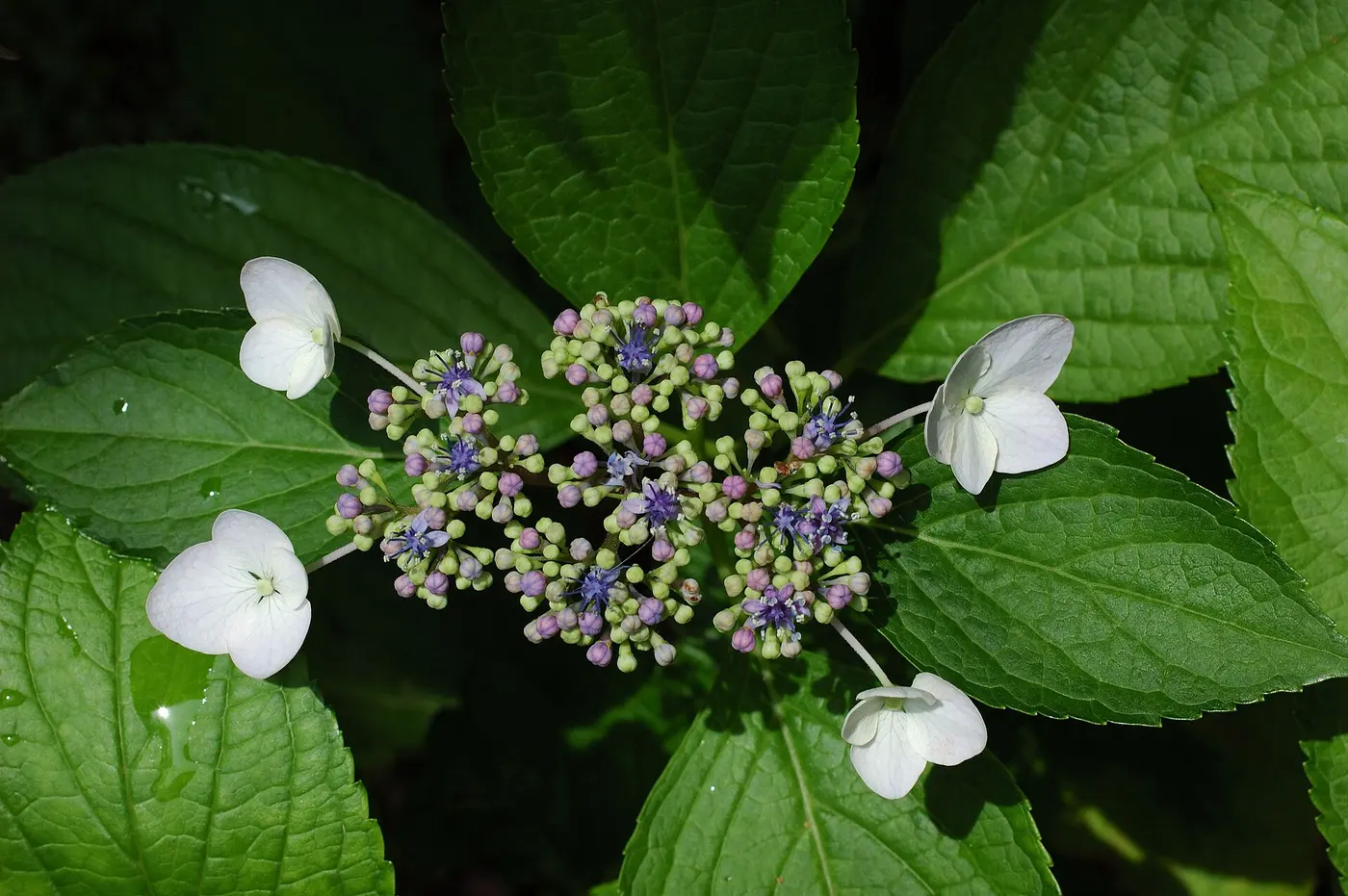

The color also shifts as the blooms age. Japan’s largest dictionary, the Nihon Kokugo Daijiten, notes that the sepals grow bluer or redder depending on the soil and the number of days since flowering. It is no surprise that one Japanese nickname for the hydrangea is shichihenge, “seven transformations.”
White stays white
Can every hydrangea be recolored by the soil? No. The color change applies to hydrangeas that bloom blue or pink. White-flowered varieties stay white whatever the soil chemistry.
For blue or pink types, gardeners can nudge the color. To make flowers bluer, they add a soil acidifier that supplies aluminum, or aluminum sulfate. To make them pinker, they add lime to raise the pH. Patience is required: with granular products, a noticeable change can take about a year.
Ever wonder why so many potted hydrangeas in shops are pink or red? The gardening magazine Fine Gardening explains that many container-grown plants have little or no aluminum in their potting soil. Plant one out in acidic garden soil, and it may start blooming blue or purple.