Was chocolate originally a drink?
Yes. For thousands of years, cacao was consumed mainly as a bitter drink.
5300years ago
Peel back the foil, snap off a square, and let it melt slowly on your tongue. For most of us, that is what chocolate is: a sweet you eat, a solid little bar that softens at body temperature.
Trace the history of cacao and people far enough back, however, and the solid bar turns up only at the very end of the story. For thousands of years before that, chocolate was something you poured into a cup and drank. And it tasted nothing like the hot cocoa we know today.
It began in a South American forest
The cacao tree is thought to have originated in the upper Amazon basin of South America. In 2018, researchers reported finding cacao starch grains, cacao DNA, and traces of theobromine, a compound characteristic of cacao, on pottery and stone tools roughly 5,300 years old at the Santa Ana–La Florida site in southeastern Ecuador. That is more than 1,500 years older than the earliest evidence previously known from Central America, and it rewrote the opening chapter of chocolate’s story.
From there, cacao made its way north into Mesoamerica, the cultural region spanning much of present-day Mexico and Central America, and a true culture of “drinking chocolate” blossomed. At the Puerto Escondido site in Honduras, cacao compounds have been detected in pottery dated to around 1500 BCE. Through the later Olmec, Maya, and Aztec civilizations, cacao remained a very special drink.
Bitter, frothy, and fit for kings
Ancient peoples fermented cacao beans, roasted them, ground them on a stone slab, and mixed the paste with water. According to accounts, they sometimes added maize (corn) flour, chili peppers, vanilla, or fragrant flowers. There was no sugar yet, so the drink must have been quite bitter and spicy—a long way from anything we would call a treat.
What people prized most was the foam on top. By holding one vessel high and pouring the liquid forcefully into another, they whipped up a thick, billowing head of froth. Maya pottery has even been found bearing the written glyph for cacao, a sign of how much the drink mattered.
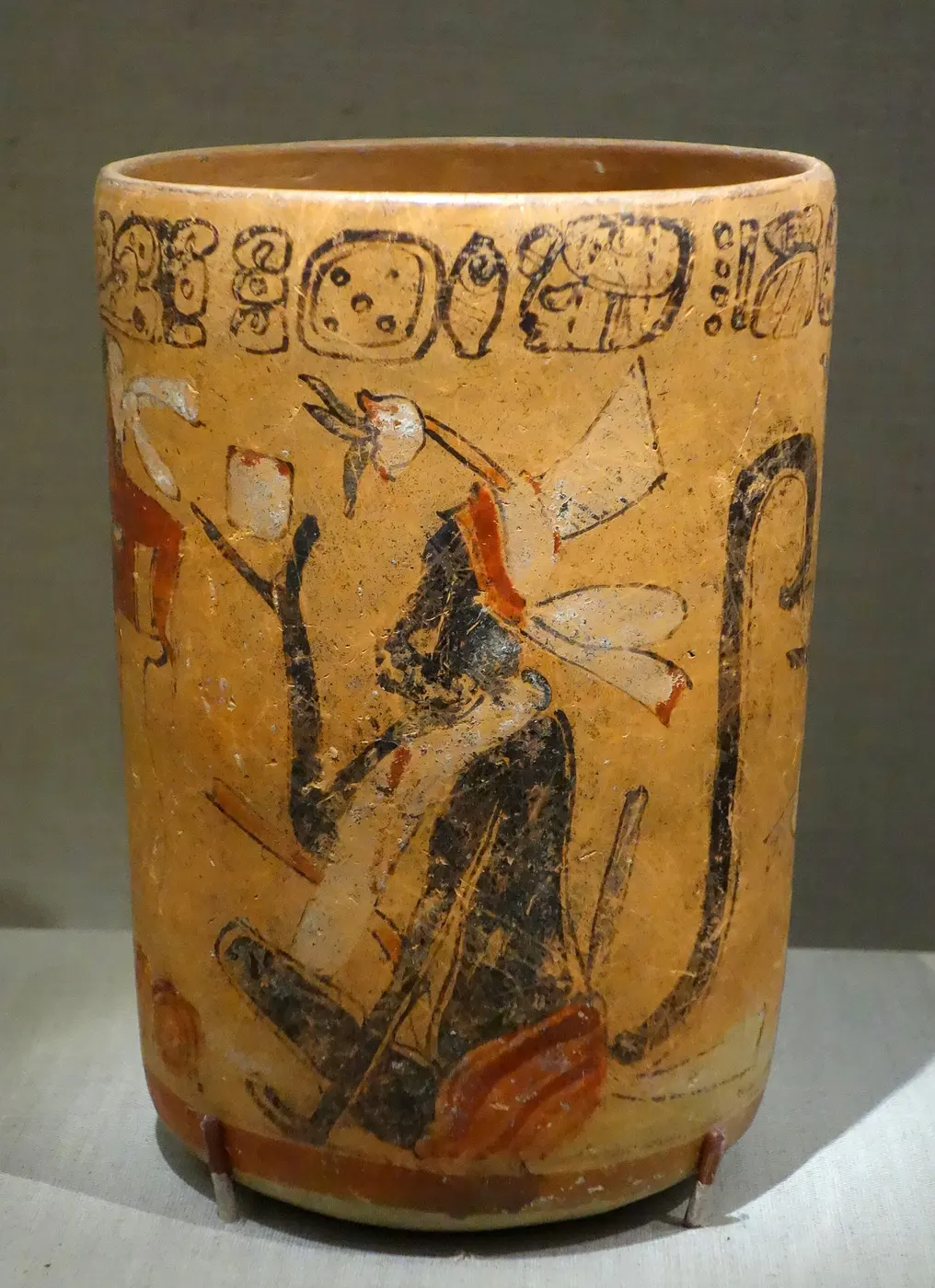

For the Aztecs, cacao beans were not just an ingredient; they were also money in their own right. People used them to buy goods, and they were even collected as taxes. As a drink, cacao was mostly reserved for royalty, nobles, and warriors. It was a luxury you could fairly call “drinkable money”—imagine sipping a cup of coins.
Europe adds the sugar
In the 16th century, the Spanish conquerors of the Aztec Empire encountered this drink. They are said to have been taken aback by its bitterness at first, but over time a new way of drinking it caught on: sweetened with sugar and cinnamon and served warm. Sweet hot chocolate became fashionable among Europe’s royalty and aristocracy through the 17th century, and shops known as “chocolate houses” opened in London and other cities. Even then, though, chocolate was still strictly something you drank. Europe had fallen for it, but nobody was biting into it yet.
Eating chocolate is not yet 200 years old
The turning point came in the 19th century. In 1828, the Dutchman van Houten patented a method for pressing cocoa butter, the fat, out of ground cacao. The solids left behind could be ground into cocoa powder, which dissolved far more easily in water or hot water and made chocolate much simpler to prepare as a drink.
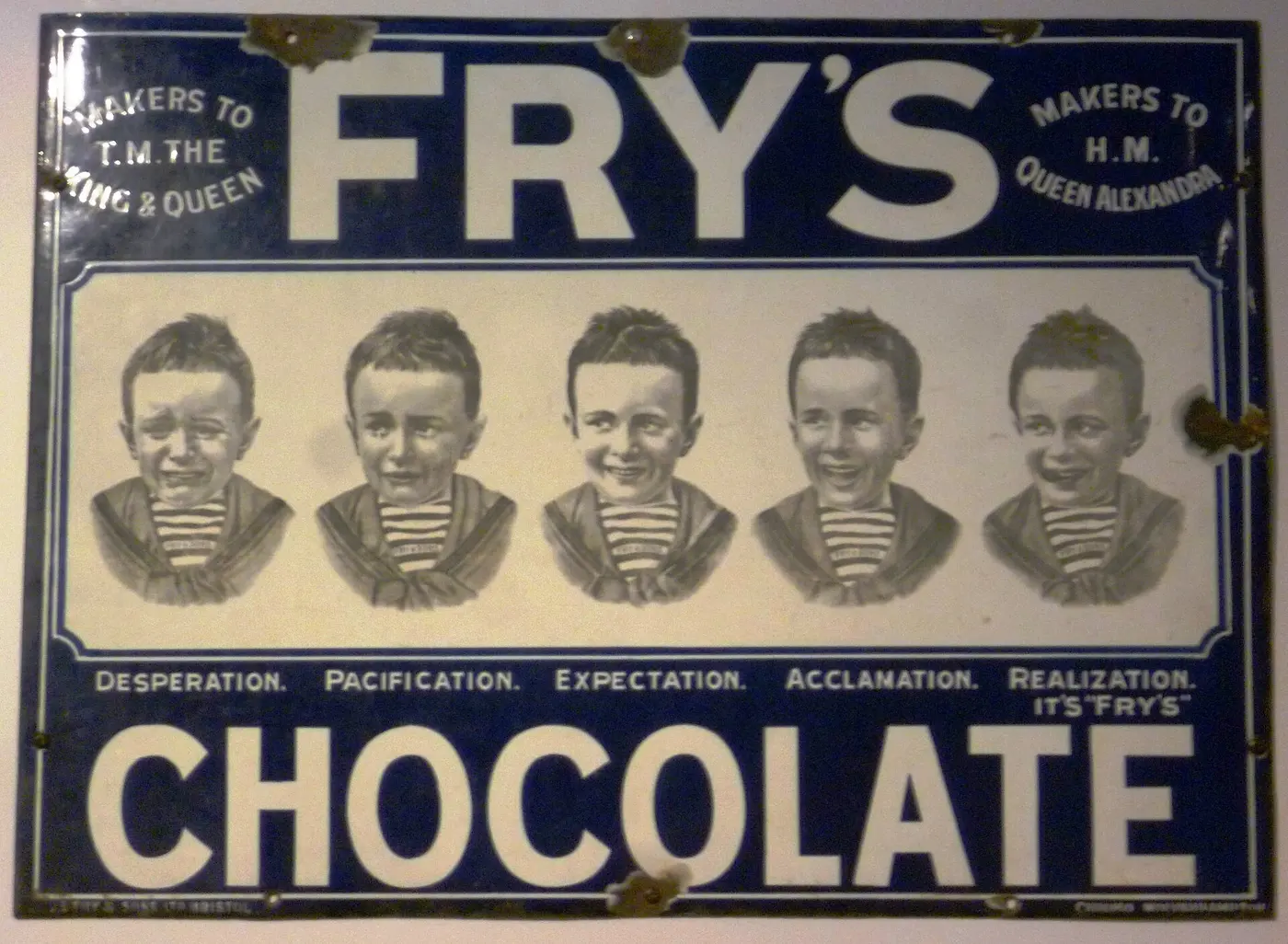
But it was the pressed-out cocoa butter that opened the door to chocolate you could eat. Around 1847, the British firm Fry’s mixed cacao with cocoa butter and sugar, poured the mixture into molds, and began selling solid chocolate. This is regarded as the forerunner of the chocolate bar. For the first time, chocolate was something you could hold in your hand.

In 1875, the Swiss chocolatier Daniel Peter perfected milk chocolate using condensed milk made by his neighbor, Henri Nestlé. Then in 1879, Rodolphe Lindt invented “conching,” a process of kneading the chocolate mass for hours on end, which gave chocolate its smooth, melt-in-the-mouth texture. In just a few decades, the chocolate we know today took shape—a blink of an eye after thousands of years in a cup.