How do batteries make electricity?
Chemical reactions inside make substances trade electrons, and that electron flow is drawn off as electricity.
1.5V
TV remotes, wall clocks, flashlights. Batteries quietly do their work all around our homes. They produce electricity without being plugged into anything, but what is actually happening inside those little cylinders?
The answer is chemistry. A battery is a device that harnesses reactions in which substances exchange electrons, and draws off their energy as electricity.
It started with a frog’s leg
The story of the battery begins in late 18th-century Italy, with a frog’s leg that moved. Luigi Galvani, an anatomist in Bologna, noticed that when metal touched the leg of a dissected frog, its muscle twitched. He believed that the animal’s body itself held electricity, and called it “animal electricity.”
Another Italian, the physicist Alessandro Volta, disagreed. Volta argued that the electricity came not from the frog but from two different metals in contact with something moist between them. In 1800, he unveiled a device made of discs of zinc and copper (or silver) stacked in many layers, separated by cloth or cardboard soaked in salt water. This “voltaic pile” was the first battery that could deliver a continuous electric current. The unit of voltage, the volt, is named after him.
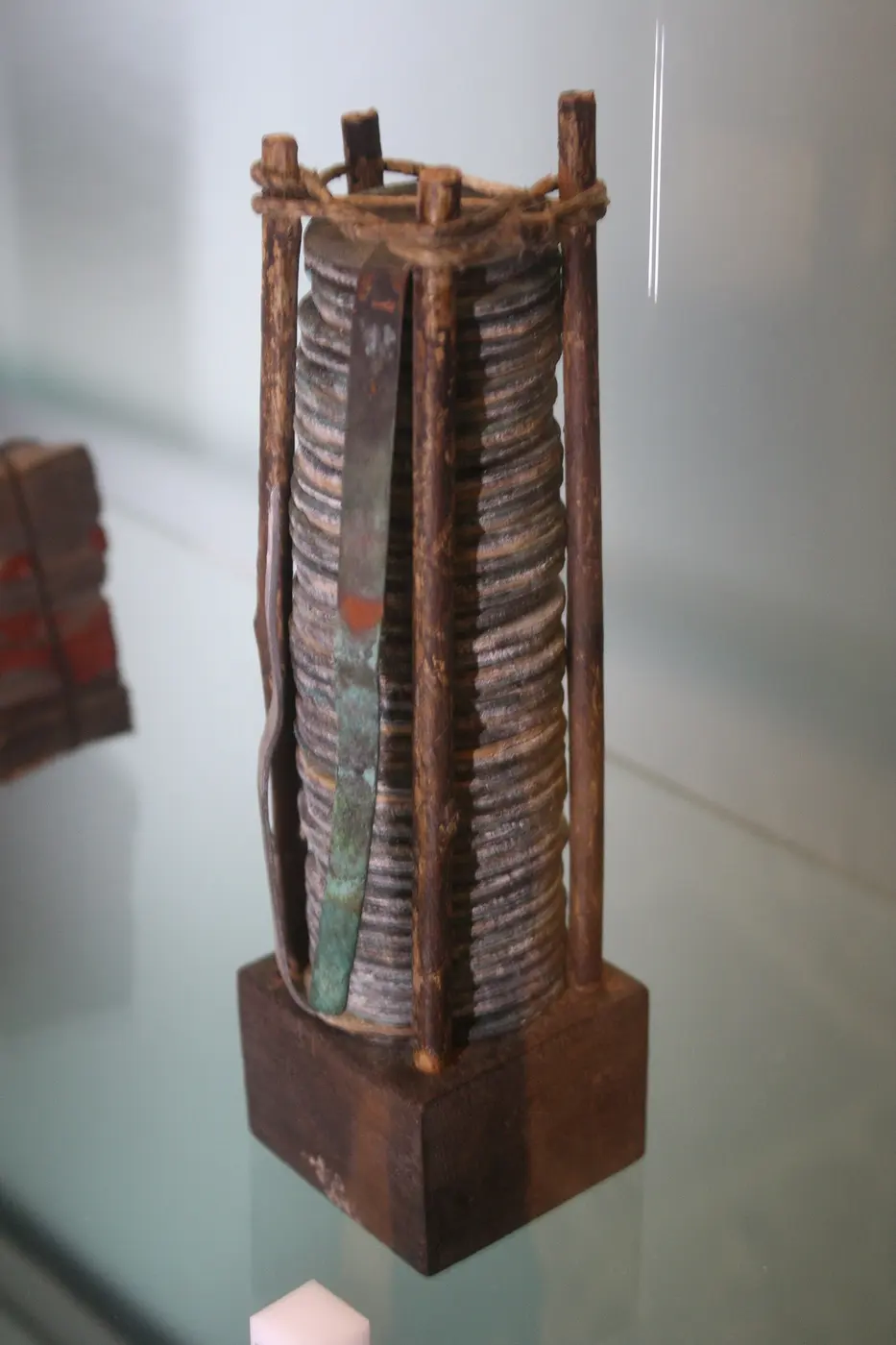

Volta’s battery transformed science almost overnight. That same year, an experiment in Britain succeeded in using electricity to split water into hydrogen and oxygen, and a few years later Humphry Davy used electricity to isolate sodium and potassium for the first time.
Sending electrons on a detour
So what goes on inside a battery?
Some substances give up electrons easily, while others readily accept them. Zinc, for example, is a metal that gives up electrons easily. Losing electrons is called “oxidation,” gaining them is called “reduction,” and the two always happen together.
If you simply mixed a substance eager to give up electrons with one eager to take them, the electrons would pass directly from one to the other and the energy would escape as heat. So a battery keeps the two in separate places, connected by a liquid or paste called an electrolyte that lets only ions through. The electrons then have no choice but to take a detour through a wire connected outside the battery, from the negative terminal to the positive one. That detour is the flow of electricity we use. Along the way, the electrons light up bulbs and turn motors before reaching the other terminal.
A battery’s voltage depends on which substances are combined. Ordinary alkaline and zinc-carbon (manganese) dry cells produce 1.5 volts, while the lithium-ion batteries in smartphones produce about 3.6 to 3.7 volts per cell. Japan’s Akira Yoshino made major contributions to developing the lithium-ion battery and shared the 2019 Nobel Prize in Chemistry.
Japan’s cold-proof dry cell
Volta’s battery, and many of the improved batteries that followed, were “wet cells” containing liquid. They spilled easily and could freeze in the cold, which made them inconvenient to carry around. So in the late 19th century, “dry cells,” in which the liquid was turned into a paste or soaked into something, appeared in several countries at around the same time. Germany’s Carl Gassner and Denmark’s Hellesen both obtained patents for dry cells in the 1880s.
In Japan, Yai Sakizō, a native of Nagaoka in Niigata Prefecture, completed a dry cell in 1887. Yai, however, couldn’t immediately afford the cost of applying for a patent, and his application is said to have been delayed.
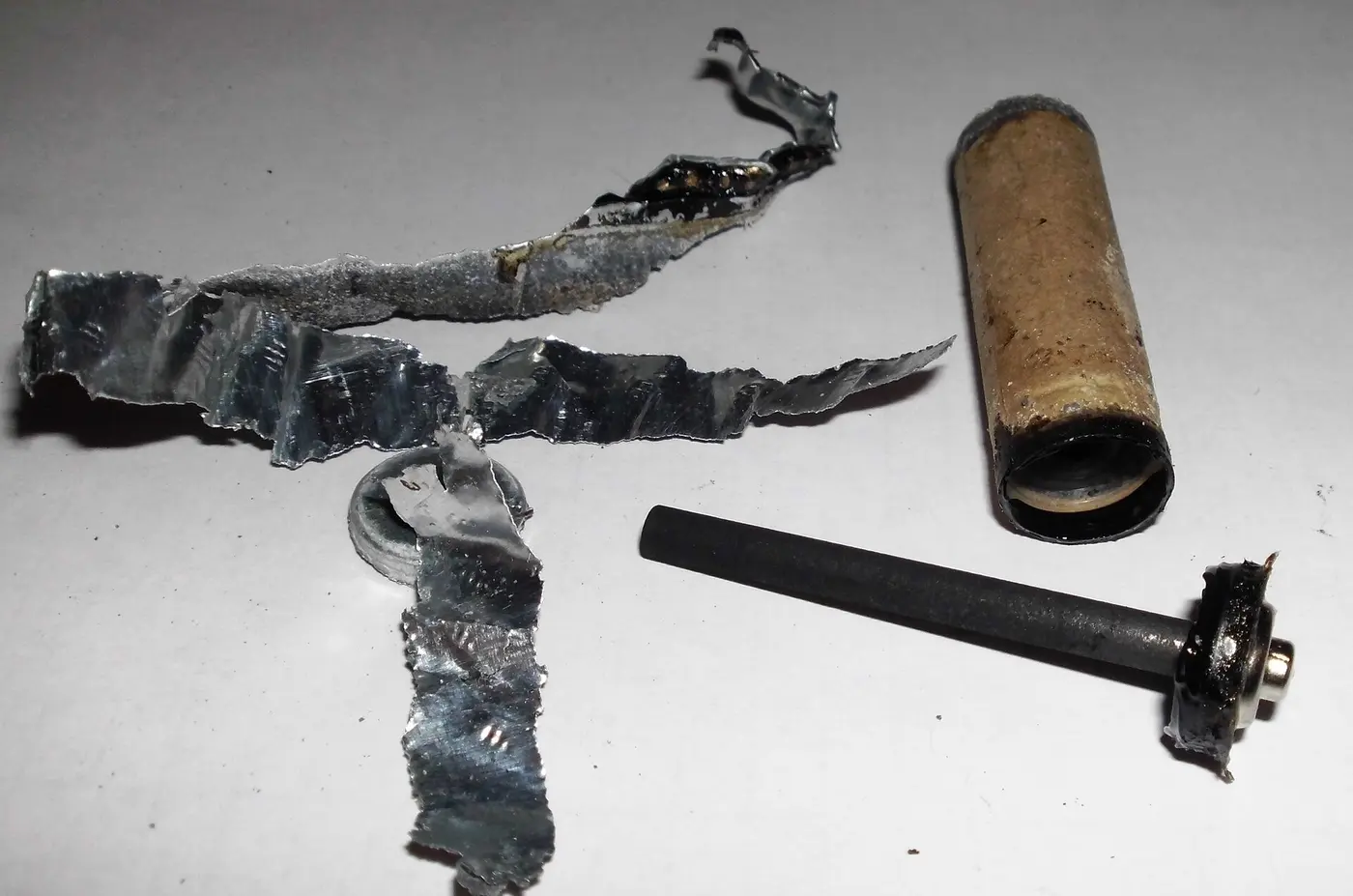

Yai’s dry cell shot to fame during the First Sino-Japanese War, which began in 1894. In the winter cold of Manchuria, conventional liquid batteries froze and stopped working, while Yai’s dry cells are said to have been the only ones that kept going, and his reputation spread. Yai later founded a company and established a design with a cylindrical metal case, the forerunner of today’s dry cells.