Where are eels born?
Near undersea mountains west of Guam, over 2,000 km south of Japan. Wild eggs were first found there in 2009.
In Japan, eel grilled in a sweet soy glaze is a summer tradition, eaten across the country on a midsummer day known as Doyo no Ushi no Hi. The Japanese eel lives in ordinary rivers, lakes and estuaries. Yet however hard you search those rivers, you will never find an eel egg or a newborn eel.
So where do eels come from? That simple question went unanswered for an astonishingly long time.
A puzzle that stumped Aristotle
The ancient Greek philosopher Aristotle wrote in his History of Animals that eels arise spontaneously from mud. Nobody had ever found a parent carrying eggs, or a freshly hatched young eel.
The first real clues came in the twentieth century. Starting in 1904, the Danish marine biologist Johannes Schmidt surveyed the Atlantic, collecting the transparent, flattened larvae of eels known as leptocephali. By following the trail toward ever smaller larvae, he worked out that Europe’s eels are born in the Sargasso Sea, a stretch of the North Atlantic around Bermuda.
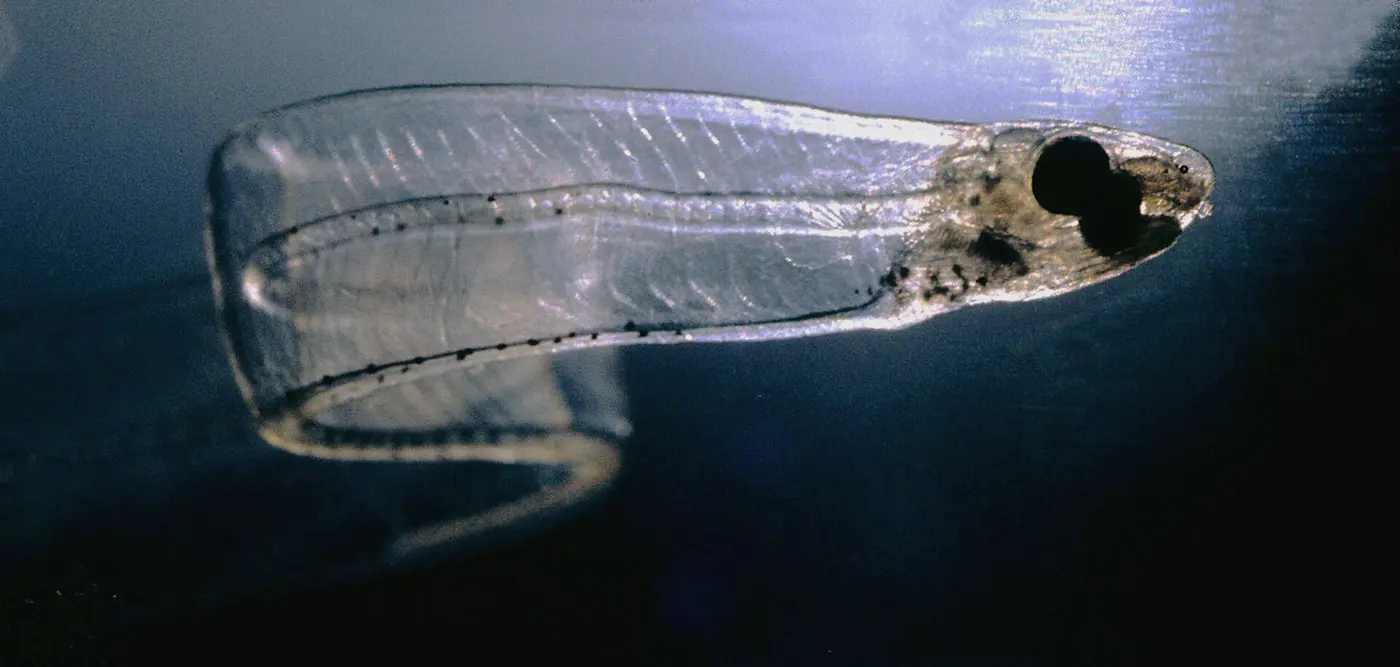

Tracing the larvae back
Inspired by Schmidt, Japanese researchers set out to find the Japanese eel’s birthplace. Serious surveys aboard the University of Tokyo research vessel Hakuho Maru began in 1973, turning up larvae about 50 millimeters long east of Taiwan and about 40 millimeters long east of Luzon in the Philippines.
Larvae grow as ocean currents carry them, so the smaller the larva, the closer it should be to where it hatched. The researchers pushed their search southeast, back up the currents. In 1991 they collected about 1,000 larvae only around 10 millimeters long west of the Mariana Islands, all but pinning down the spawning area.
Katsumi Tsukamoto of the University of Tokyo and his colleagues then proposed that the eels spawn beside a chain of seamounts called the West Mariana Ridge, all at once, around the new moon. On the day of the new moon in June 2005, they caught 130 larvae just two days or so after hatching, narrowing the spawning site down further.
2009: the eggs at last
In 2008, a Japanese Fisheries Agency research vessel also managed to catch adult eels that had already spawned, close to the spawning area. All that remained was to find the eggs themselves.
Then, before dawn on May 22, 2009, two days before the new moon, the Hakuho Maru collected 31 fertilized Japanese eel eggs near the southern end of the West Mariana Ridge. It was the first time anyone had found the eggs of wild freshwater eels. The spot lies around latitude 15 degrees north, out in the ocean west of Guam, more than 2,000 kilometers (1,200 miles) from Japan.
The eggs measured about 1.6 millimeters across and were estimated to have been spawned on the night three days before the new moon. They turned up in a tiny patch only about 10 kilometers square, where a line of seamounts meets a front between saltier and less salty water. The ocean there is 3,000 to 4,000 meters deep, but newly hatched larvae were concentrated at around 160 meters, and the eggs are thought to be spawned at a depth of about 200 meters (650 feet).
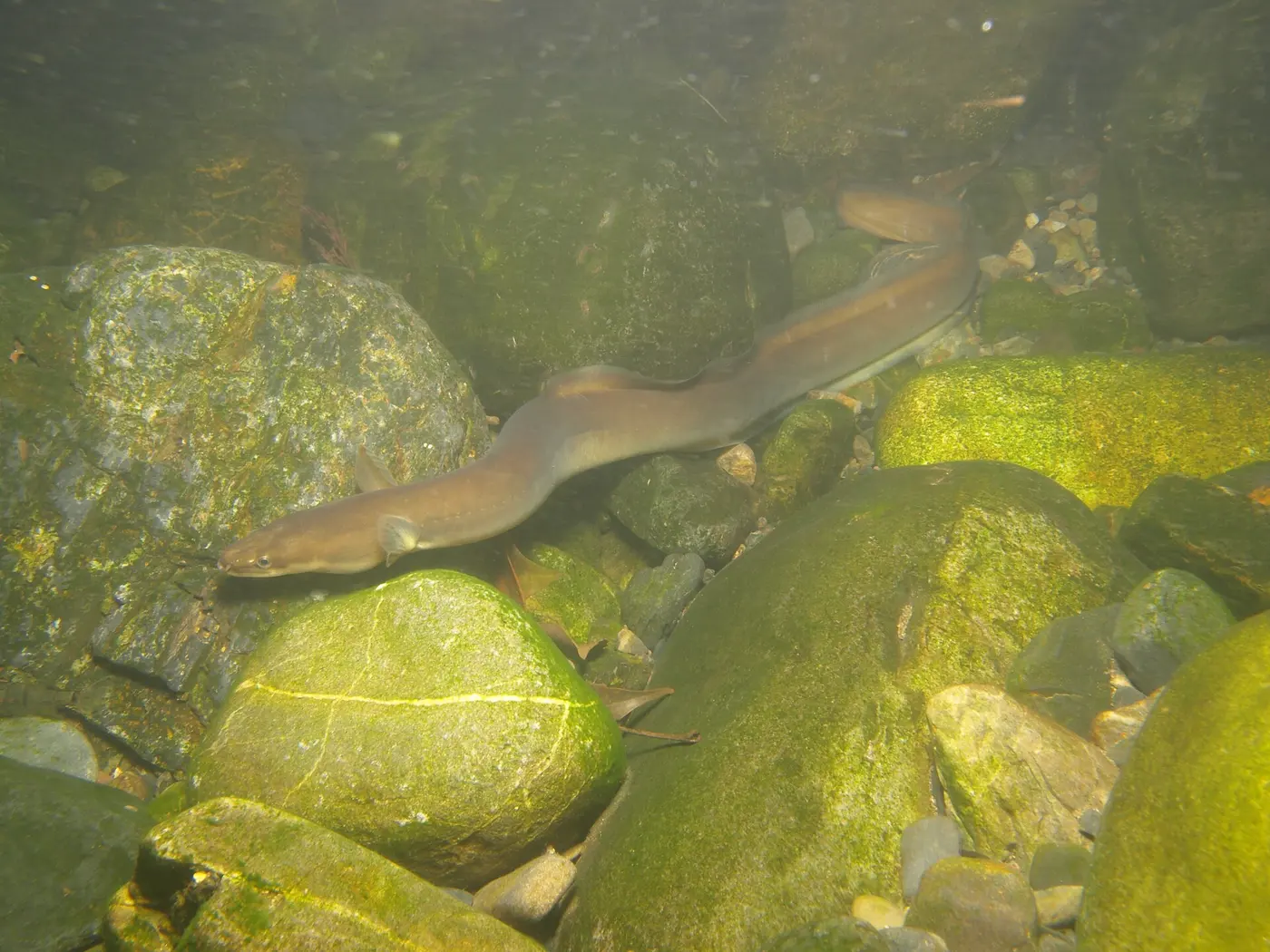

Riding the currents, and back to the seamounts
From there, the young eels set off on a long journey. The eggs hatch in about a day and a half, and the leptocephali are carried west by the North Equatorial Current, then switch to the Kuroshio, the warm current that flows north past Japan, off the Philippines. Along the way they transform into slender “glass eels,” which reach river mouths in Japan, China, Taiwan and Korea between winter and spring.
Males spend several years in rivers and estuaries, females about ten. Eventually they turn into silvery “silver eels,” head back down to the sea and make for the seamounts where they were born.
Eels are in serious decline today. Japan’s Ministry of the Environment classed the Japanese eel as endangered in 2013, and the International Union for Conservation of Nature (IUCN) listed it as endangered in 2014. In the Atlantic, satellite tags in 2022 tracked adult European eels heading into the Sargasso Sea, yet even then, no wild eggs or spawning adults had ever been found there.