Do clownfish change from male to female?
Yes. Clownfish mature as males first. When the largest fish in the group, the female, disappears, her male partner turns into a female.
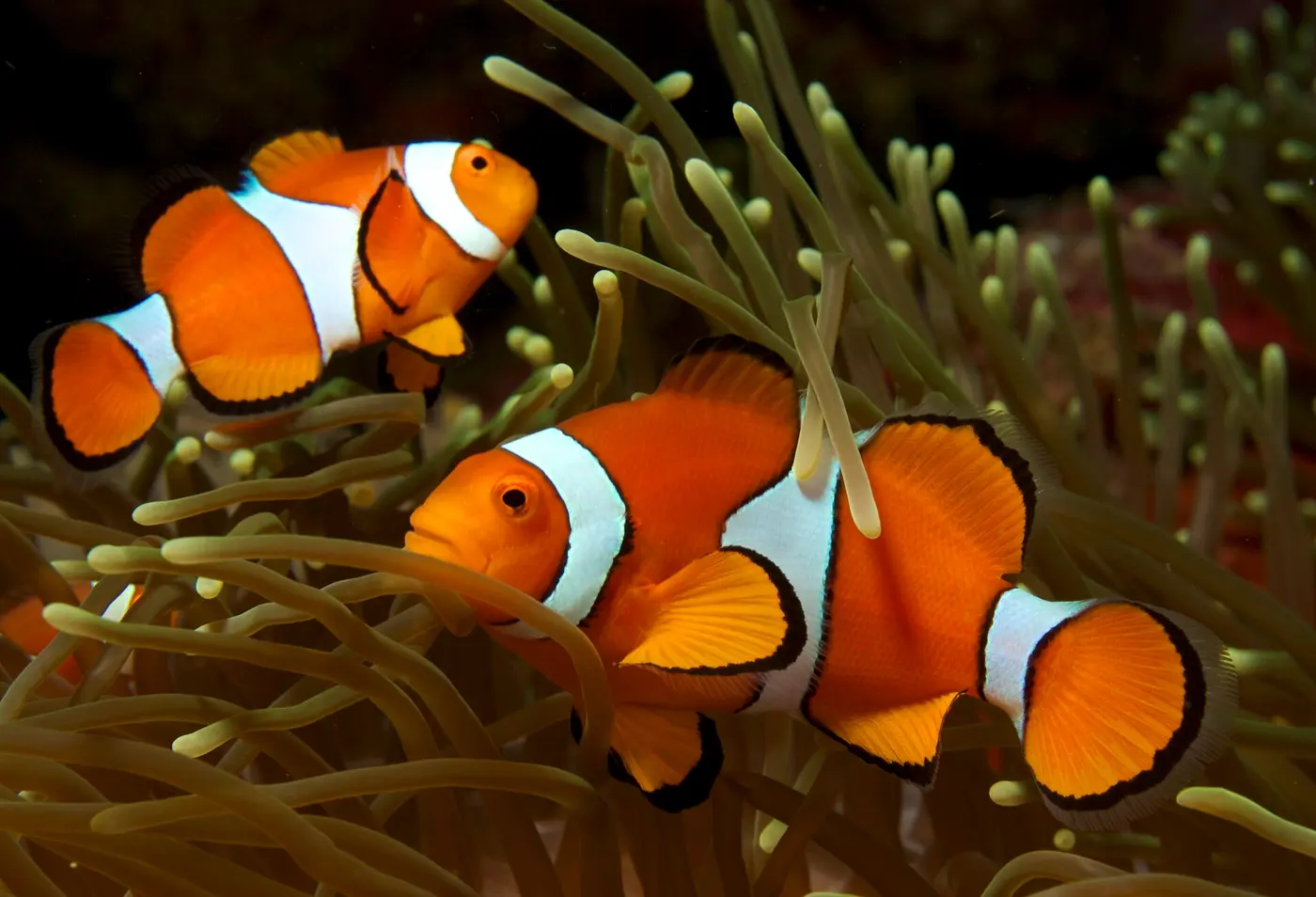
An orange body with three white bands: the ocellaris clownfish, also known as the false clownfish, became a star thanks to Disney and Pixar’s 2003 film Finding Nemo. Early in the movie, Nemo’s mother, Coral, is lost, and his father, Marlin, raises their only son on his own.
Had the same thing happened to a real clownfish family, the story would have taken a very different turn. Clownfish and their relatives grow up as males and can later turn into females. With the mother gone, Marlin himself would eventually have become female.
A pecking order by size
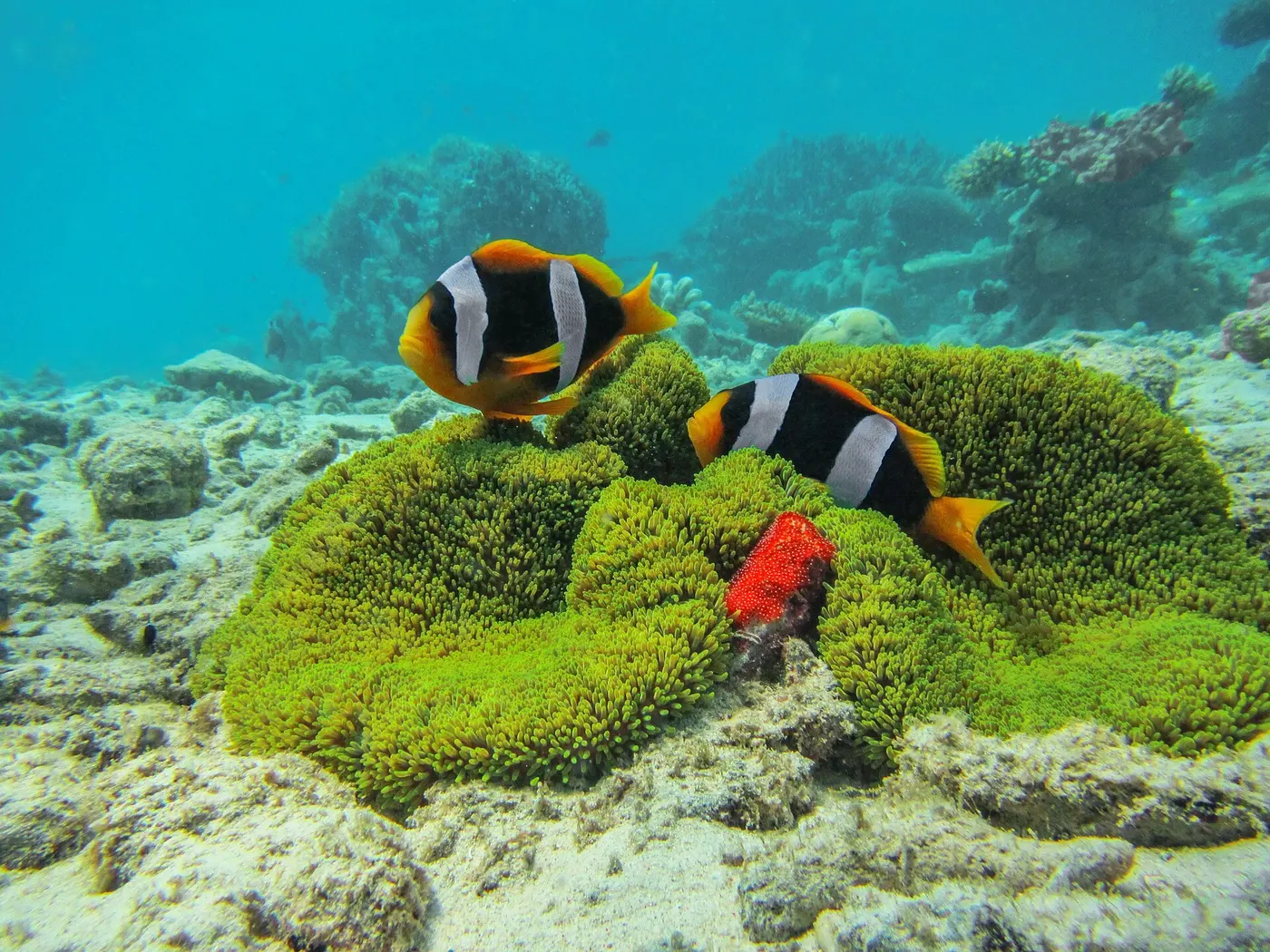
According to a 2023 review by researchers at the Okinawa Institute of Science and Technology (OIST) in Japan, there are 28 species of anemonefish, and every one of them is a protandrous hermaphrodite, meaning it changes sex from male to female. They live in warm waters across the Indian and Pacific Oceans, as far north as Japan’s Ryukyu Islands, and make their homes in about 10 species of large sea anemones.
The group living in a single anemone is made up of a breeding pair and a few smaller young fish. The largest is the female, the second largest is the male, and the rest are non-breeders waiting their turn. Studies in Papua New Guinea of Amphiprion percula, a very close relative of the false clownfish, found that groups have between zero and four non-breeders, and that group members are not related.

To keep the peace, the fish lower down hold back their own growth. In a 2003 paper in Nature, Peter Buston, then at Cornell University, reported that clownfish adjust their growth rate to maintain a well-defined size difference from the fish just above them in rank. In wild groups, each fish is thought to stay at about 80 percent of the length of the one above it. A fish that grows too big risks being evicted.
When the female disappears
A study published in Nature in 1977 by Hans Fricke and Simone Fricke reported that in anemonefish, the female keeps other fish from becoming female by dominating the male aggressively. When she disappears, her male partner turns into a female, and the largest non-breeder matures to become the new male.
Researchers have also timed the change. A team led by scientists at King Abdullah University of Science and Technology in Saudi Arabia removed females from wild groups of a Red Sea anemonefish and tracked the males left behind. Their 2016 report found that the males’ gonads already contained some ovarian tissue. Two to four weeks after the female’s removal, gene activity in the brain had changed; then the ovarian tissue in the gonads grew, and by day 50 the testicular tissue was completely gone. In this species, because the testes disappear, the change cannot be reversed.
Intriguingly, one male whose group had dwindled until he was the only fish left in the anemone was still male 35 days after his female was removed. The authors suggest that a male needs a lower-ranking fish around in order to complete the change.
Partners with an anemone
A sea anemone’s tentacles are lined with stinging cells. Anemonefish shelter among them, safe from predators. In return, they chase off fish that come to nibble the tentacles, supply nutrients, and fan the water with their fins, bringing the anemone extra oxygen.
The fish avoid being stung thanks to the mucus coating their skin, though exactly how it works is still being studied. They may cloak themselves in the anemone’s own mucus to pass as part of the host, or produce a mucus of their own that lacks the sugars that trigger the stinging cells. Eggs are laid by the hundred on rock near the anemone, and the male does most of the work of looking after them, keeping them clean and well supplied with fresh water.