Are Japan’s snow monkeys the only monkeys that take hot baths?
Among wild monkeys, hot-spring bathing is known only from one troop of Japanese macaques at Jigokudani in Nagano, and the species itself lives only in Japan.
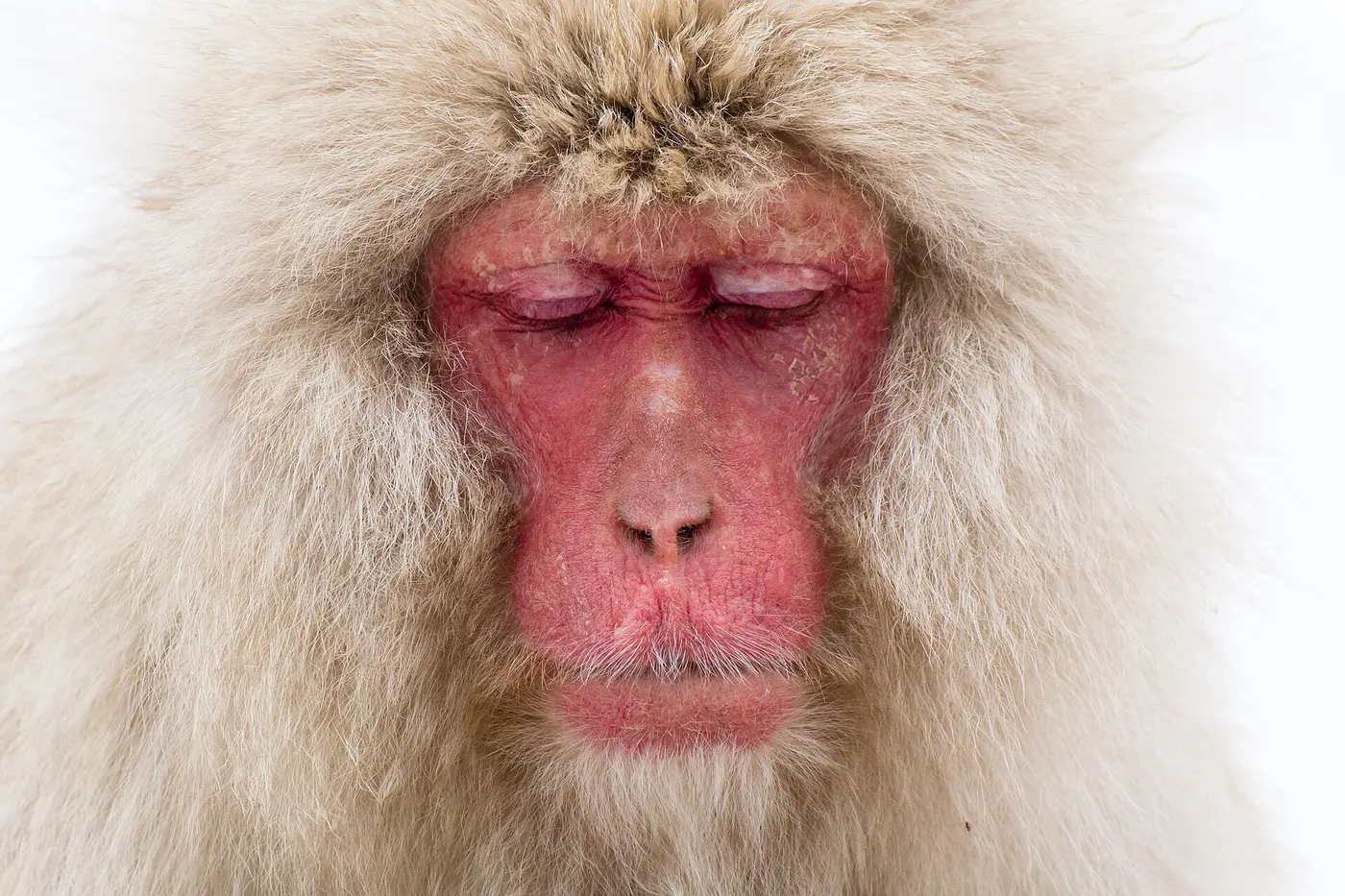
A monkey soaks in a steaming pool, snow on its head and eyes closed in contentment. The Japanese macaques of Jigokudani Yaen-koen, a monkey park in the town of Yamanouchi in Nagano Prefecture, are known abroad as “snow monkeys,” and every winter visitors come from all over the world to watch them bathe.
Are there hot-tubbing monkeys anywhere else? According to Kyoto University’s Primate Research Institute, hot-spring bathing is a rare behavior seen only in the monkeys of this area, and Jigokudani is the one place where it can be observed. In fact, the Japanese macaque itself is found nowhere but Japan.
The world’s most northerly monkey
Japanese macaques live in mountain forests throughout Japan, except Hokkaido in the north and Okinawa in the south. Their range runs from the island of Yakushima, off southern Kyushu, to the Shimokita Peninsula at the northern tip of Japan’s main island, Honshu.
Most nonhuman primates live in warm tropical and subtropical regions. The Japanese macaque is the exception: no other monkey lives farther north. Because the Shimokita Peninsula marks the northern limit of primates’ natural range anywhere in the world, its monkeys and their habitat were designated a national natural monument in 1970.
To survive the cold, Japanese macaques are thought to rely on a long, dense winter coat. Jigokudani, whose name means “Hell’s Valley,” after the hot-spring steam rising from its cliffs, lies in a gorge 850 meters (2,800 feet) above sea level. In winter it is buried under more than a meter (3 feet) of snow, and lows fall below −10 degrees Celsius (14 degrees Fahrenheit). The park describes it as every bit as harsh as the monkeys’ northern limit at Shimokita.

It started with one young monkey
The monkeys’ bathing habit began by chance.
In the 1950s, forests in the area were cleared for ski resorts and other development, and monkeys driven from their habitat began raiding fields and orchards. Local people started feeding the monkeys, and in 1964 Jigokudani Yaen-koen opened as a monkey park.
According to Kyoto University, monkey bathing was first observed on a snowy day in 1963. A young female was seen in the outdoor bath of Korakukan, a local inn whose staff had been feeding the troop. The behavior gradually spread to other monkeys, and because monkeys sharing a bath with guests raised hygiene concerns, a separate outdoor pool just for the monkeys was eventually built in the park. By 2003, one in three females in the troop was bathing regularly. Adult males, however, rarely get in.
In 1970 a bathing monkey appeared on the cover of the American magazine Life, and Jigokudani became famous overseas. Monkeys in captivity are a different story: at the Hakodate Tropical Botanical Garden in Hokkaido, for instance, the macaque enclosure gets its own hot-spring pool each winter.
A soak that lowers stress
Do the monkeys really bathe to warm up? Because they bathe more in winter, people long assumed so, but there was no physiological data to show what was going on inside their bodies.
A team led by Rafaela Takeshita at Kyoto University’s Primate Research Institute set out to check, studying 12 adult females. During the spring birth season and the autumn-to-winter mating season, the researchers recorded how long each monkey spent in the water. In the coldest weeks they also collected the monkeys’ feces and measured glucocorticoids, hormones that rise under stress.
The females bathed more in winter than in spring, especially during the coldest spells. And in winter, stress hormone levels were lower in weeks when a monkey bathed than in weeks when it didn’t. The team suggested that bathing reduces the energy drain of the cold and so eases winter stress. The findings were published in 2018.
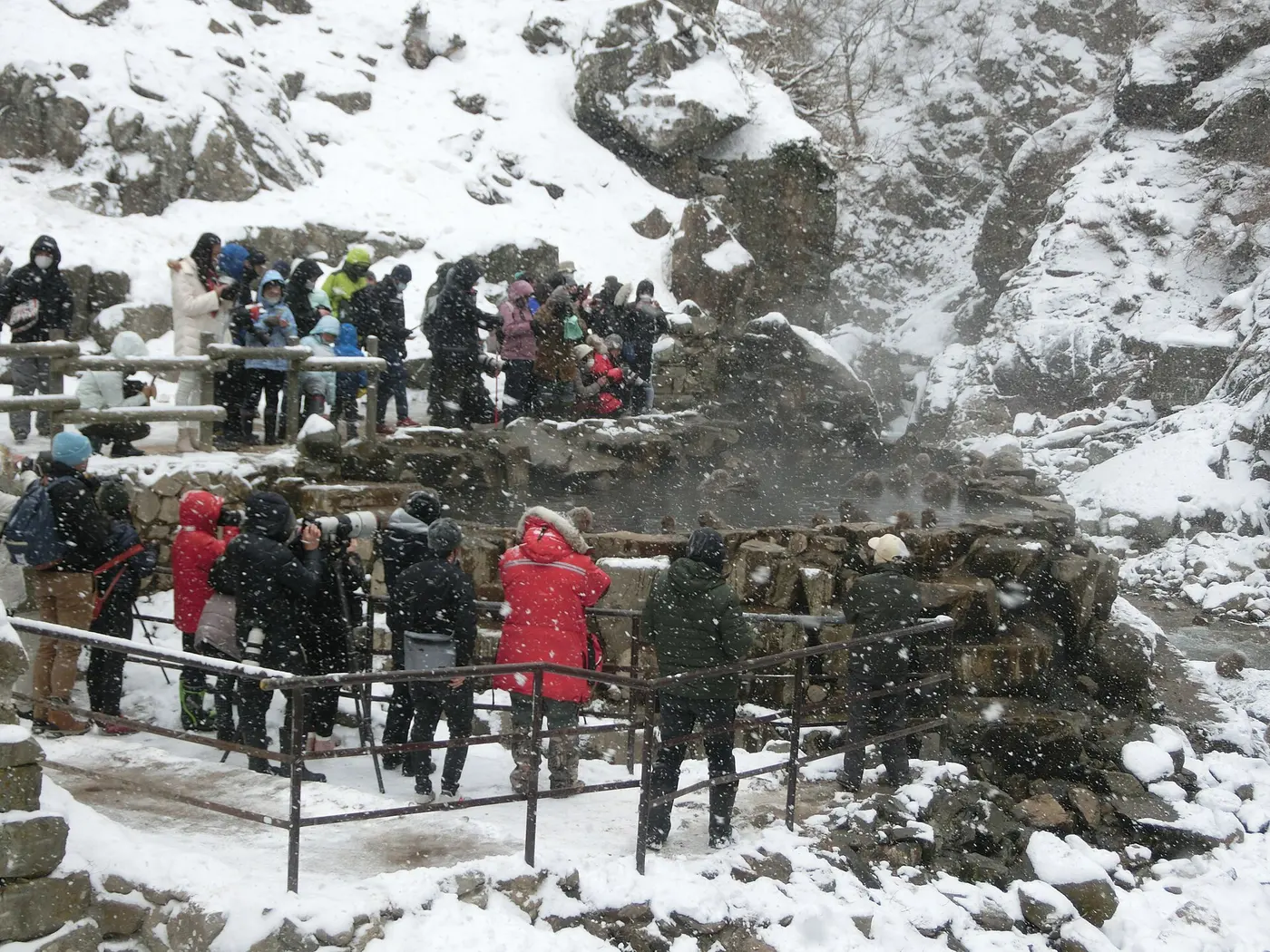

Interestingly, higher-ranking females got to spend longer in the water, yet they also got into more fights, so their stress hormone levels were actually higher than those of lower-ranking females. And the roughly 500 tourists who visit each day didn’t seem to raise the monkeys’ stress levels at all.