Can catfish predict earthquakes?
Nobody has shown that they can. Some experiments seemed to score hits, but the results can’t be told apart from coincidence, and there is no evidence that catfish could be used to forecast quakes.
16years
“When the catfish stirs, an earthquake follows.” People in Japan have said so for centuries. Some go further: a giant catfish lives beneath the ground, and when it thrashes about, the earth shakes.
It would be easy to laugh this off. Yet from the 1930s into the 1990s, Japanese researchers kept catfish in tanks and compared their behavior with the seismograph. What did they find?
From dragon to catfish
The catfish was not always the culprit. According to a 2004 report by an expert panel of Japan’s Central Disaster Management Council, a calendar said to date from the late 12th century shows a dragonlike “earthquake bug” coiled around the provinces of Japan. As late as the early 17th century, the creature thought to shake the land was usually a dragon or a great serpent.
The oldest known document that clearly links catfish to earthquakes is a 1592 letter from the warlord Toyotomi Hideyoshi. As work began on his new castle at Fushimi, he told his deputy in Kyoto to take the namazu, the catfish, seriously; in other words, to make the building earthquake-proof.
Over time, a fuller story took shape: the deity of Kashima Shrine, northeast of Tokyo, kept the giant catfish pinned down with a sacred “keystone,” the kaname-ishi. According to the Japanese encyclopedia Nipponica, the real stone in the shrine grounds is only about 25 cm (10 inches) across, though it is said to reach deep into the earth.
The Ansei earthquake and the catfish prints
On the night of November 11, 1855, a powerful earthquake struck directly beneath Edo, as Tokyo was then called, killing around 10,000 people in the city.
The very next morning, a print called “The Old Catfish,” with text by Kanagaki Robun and a picture by Kawanabe Kyōsai, went on sale and reportedly sold several thousand copies. It was the first of a flood of color woodblock prints featuring catfish, known as namazu-e. According to the report, hundreds of designs were produced and about 200 survive. Because they were printed without the shogunate’s permission, the woodblocks were confiscated about two months after the quake, as one Japanese earth-science dictionary notes.


A chronicle of the disaster tells of a man named Shinozaki who went eel fishing on the night of the earthquake, found only frantic catfish, remembered the old saying and hurried home to carry his belongings into the yard. That night the quake hit; his house collapsed, but his possessions were saved. Even the government report adds, “if this story is true.”
Knocking on the table
Among the first scientists to test the belief experimentally were Shinkishi Hatai and Noboru Abe of Tohoku Imperial University. From October 1931 to May 1932, at the Asamushi Marine Biological Station in northern Japan, they kept catfish in tanks and tapped gently on the table three times a day. Normally the fish ignored the taps; if they jumped or swam about, the researchers forecast an earthquake within hours. Checked against the seismograph records, their paper reported, the forecasts came true about 80 percent of the time, a success rate they called “astonishingly high.”
In 2018, though, Heiko Woith and colleagues at the GFZ German Research Centre for Geosciences pointed out a catch: 178 earthquakes were recorded during the 210 days of observation. With a quake on most days anyway, an 80 percent hit rate could easily have been luck. Of the more than 700 reports of strange animal behavior before earthquakes that Woith’s team reviewed, most were one-off observations or stories told in hindsight.
Sixteen years in Tokyo
The longest test was run by the Tokyo Metropolitan Fisheries Experimental Station, which monitored catfish from 1976 to 1992. According to a 2003 summary by researchers at Tokai University, the team assumed that the fish might respond to some signal from underground. So the tank water came from a deep well, the overflow drained straight into the ground, the building stood 200 meters (650 feet) from any other facility, and a vibration sensor counted the fishes’ movements.
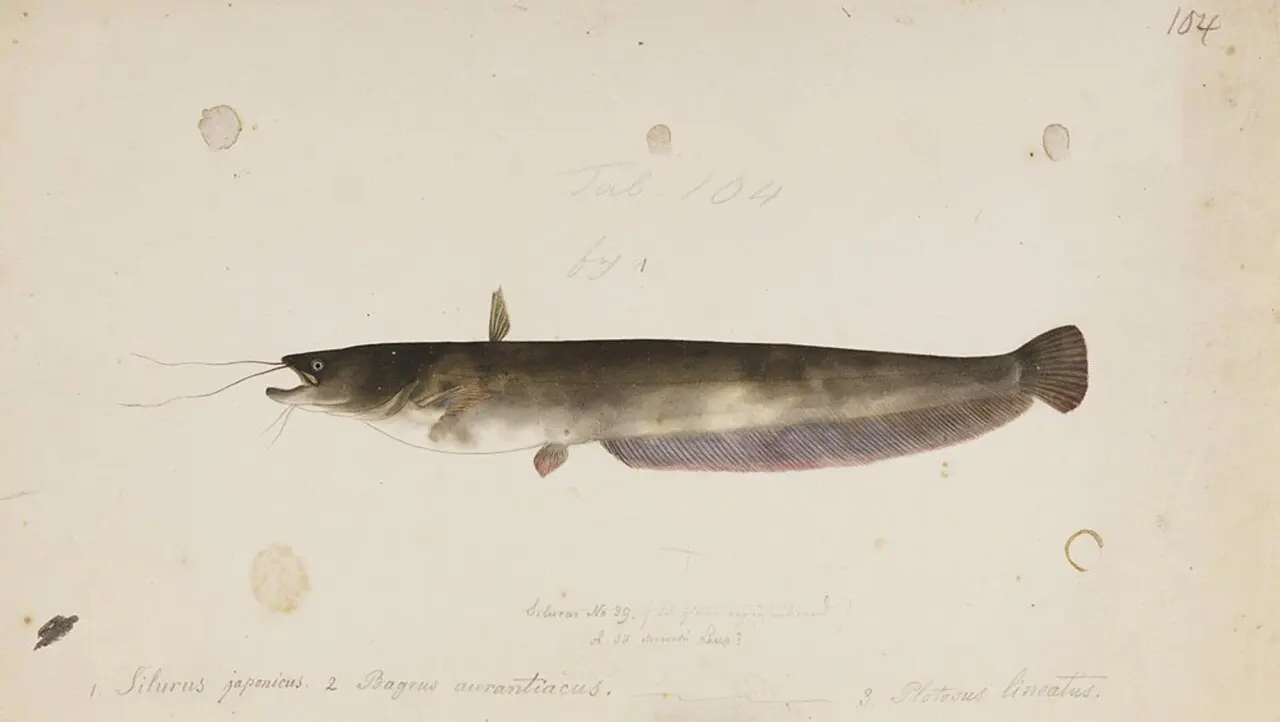

There were striking moments. Before a quake struck about 90 km (56 miles) beneath the sea off the Miura Peninsula on February 2, 1992, the catfish had been unusually active for about a week. In 1994, a researcher at Japan’s National Research Institute for Earth Science and Disaster Prevention and a colleague reported that the fishes’ restlessness closely tracked electrical disturbances recorded in the ground in Ibaraki Prefecture, about 80 km (50 miles) away. That is intriguing, because catfish hunt in the dark by sensing the faint electric fields given off by their prey.
The same report admitted, however, that there was no agreed definition of “abnormal” behavior. The catfish were said to match earthquakes 50 to 60 percent of the time, which means they showed nothing unusual before the rest. The study ended in 1992, and catfish never became part of Japan’s earthquake warnings. As the Tokai University researchers put it in 2003, there is no solid evidence that animal behavior foretells earthquakes, but nothing that rules it out completely either.