Was Edo the biggest city in the world?
Probably among the biggest. Eighteenth-century Edo is estimated at around a million people, but samurai were never counted, so the total is an estimate.
500,000
Edo, the city that became Tokyo, is often described as a “city of a million” in the 18th century. It is said to have been bigger than London or Paris at the time, making it the largest city in the world.
Yet no one in Edo ever conducted a census of the whole population. So where does the figure of a million come from? Dig a little and it turns out that some of Edo’s residents were carefully counted, and others were not counted at all.
Only townspeople were counted
The people whose numbers were recorded in Edo were the chōnin, the merchants, artisans and laborers who lived in the townspeople’s districts. According to the Japanese encyclopedia Sekai Dai-Hyakka Jiten, Edo’s townspeople numbered about 350,000 in 1695 and about 500,000 by 1721. That was also the year the shogunate, under the eighth shogun Tokugawa Yoshimune, began nationwide population surveys.
These counts, however, left out the samurai. Samurai were excluded from the national surveys too. In Edo, the shogun’s own capital, that missing slice of the population was especially large.
Samurai: estimates only
Edo was home to huge numbers of the shogun’s direct retainers. The Sekai Dai-Hyakka Jiten puts the lower-ranking ones alone, known as gokenin, at an estimated 60,000. On top of that, under a system called sankin-kōtai, every regional lord had to keep residences in Edo staffed with many of his retainers, and the lords’ wives and children were required to live in the city.
Because no records were kept of this samurai population, historians can only estimate it. A common approach assumes roughly 500,000 samurai, about the same as the number of townspeople, and adds the two to reach “about a million.” A paper in the Transactions of the Japan Academy likewise says that by the early 18th century, lords, their families, retainers and servants numbered 500,000, and that with the townspeople Edo’s population exceeded one million.
Sources differ, though. Some say “about a million” and others “over a million,” and they do not always agree on the date. Edo’s total population is best treated as an estimate with a margin either way.
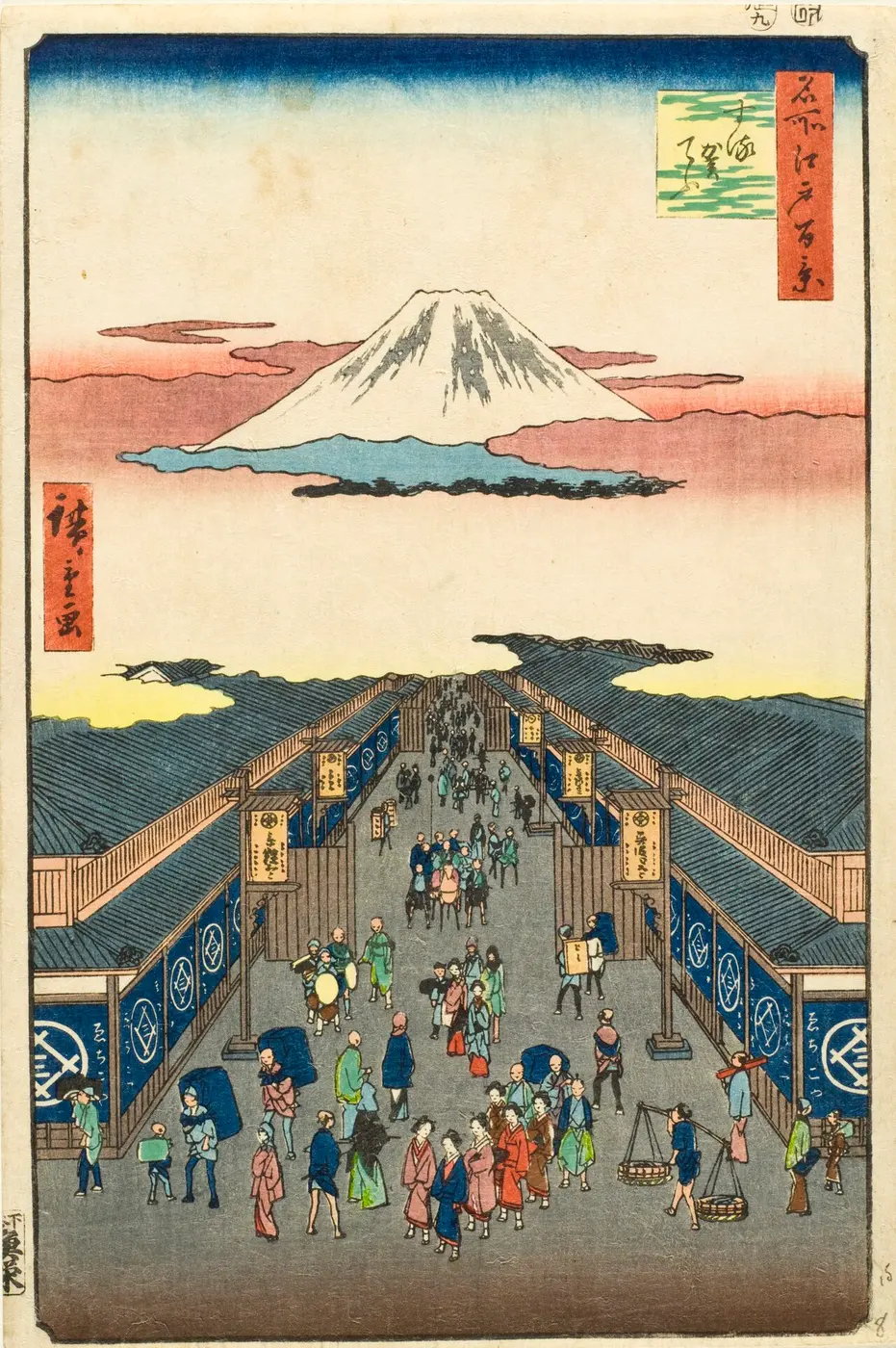

How did London and Paris compare?
The largest city in 18th-century Europe was London. Even so, according to the same paper, London’s population in the census of 1801 came to about 860,000. That is why Japanese encyclopedias describe Edo as the world’s biggest city of its time, larger than London or Paris.
Still, 18th-century city populations everywhere rest heavily on incomplete records and estimates, and the answer can change depending on which figures for which cities you compare. “Largest in the world” is best read as “very likely the largest.”
Crammed into the townspeople’s quarters
Where did a million people live? According to the encyclopedia Nihon Dai-Hyakka Zensho, about 60 percent of Edo’s land was taken up by samurai estates, mostly spacious residences in the hilly districts. The rest was divided between temples and shrines and the townspeople’s districts, which covered less than 20 percent of the city. Around 500,000 townspeople were packed into that small area.
Most townspeople rented cramped homes in back-alley row houses known as nagaya. The byword for a tiny home was kushaku niken, “nine feet by two ken”: a frontage of about 2.7 meters (9 feet) and a depth of about 3.6 meters (12 feet). That is roughly 10 square meters (110 square feet), about the size of six tatami mats. A survey in the early 19th century found that in some districts 50 to 60 percent of residents were renters.
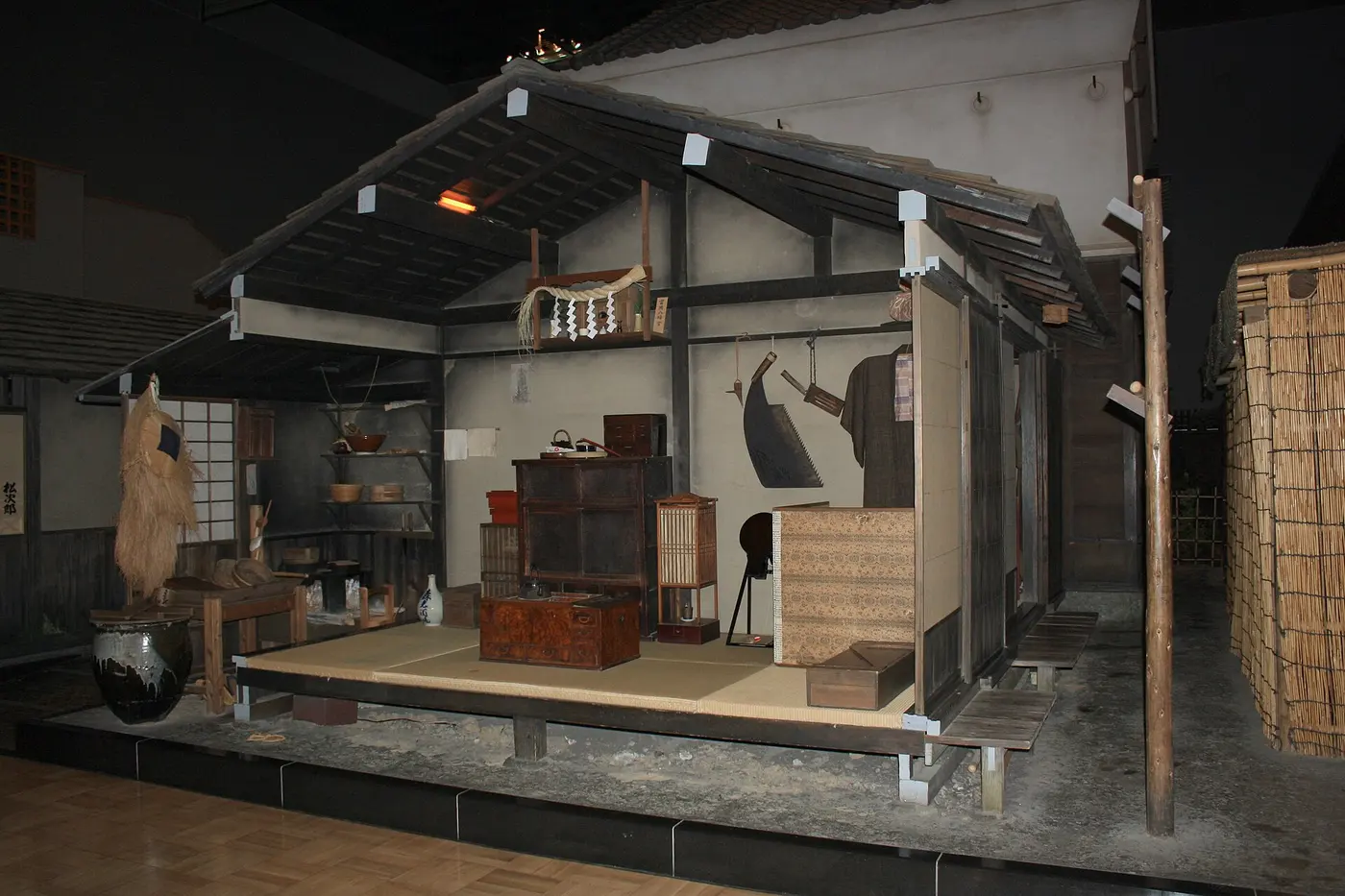

Edo’s townspeople were also overwhelmingly male. According to the Nihon Dai-Hyakka Zensho, men made up two-thirds of them, and the numbers of men and women did not even out until the final years of the shogunate, in the mid-19th century. Edo was a city built by workers streaming in from all over Japan.