Which are more common, solar or lunar eclipses?
Across the whole planet, solar eclipses happen more often. But from any one spot, you will see far more lunar eclipses.
373years
In the small hours of September 8, 2025, all of Japan could watch a total lunar eclipse, and on the evening of March 3, 2026, it got another one. Plenty of people stepped outside to see the full Moon turn a dusky red.
Solar eclipses are another story. Japan’s last total solar eclipse on land was in 2009, and the next will not come until 2035. Does that mean solar eclipses simply happen less often?
Worldwide, solar eclipses win
A solar eclipse happens when the Moon passes between the Sun and Earth and hides the Sun. A lunar eclipse is the reverse: Earth sits between the Sun and the Moon, and the Moon moves into Earth’s shadow. Because the Moon’s path across the sky is tilted about 5 degrees to the Sun’s, eclipses happen only when a new or full Moon falls near one of the two points where the paths cross, called nodes.
According to the National Astronomical Observatory of Japan (NAOJ), how close to a node things must line up is less strict for solar eclipses. A partial solar eclipse can occur within about 17 degrees of a node. For the Moon to dip even partly into Earth’s dark central shadow, the umbra, it must be within about 11 degrees, and for a total lunar eclipse, within about 6 degrees. That is why every year has at least two solar eclipses, while some years have no proper lunar eclipse at all.
Calculations compiled by Fred Espenak at NASA’s Goddard Space Flight Center agree. In the 5,000 years from 2000 BC to AD 3000, Earth gets 11,898 solar eclipses and 12,064 lunar eclipses, but 4,378 of the lunar ones are penumbral: the Moon only grazes Earth’s faint outer shadow and dims slightly, so these are not usually counted. NAOJ notes that around the Jōkyō calendar reform in Japan’s Edo period (1603–1868), every lunar eclipse that was printed in the calendar but said to have “failed to happen” was in fact penumbral. Leave them out and there are about 7,700 lunar eclipses, so solar eclipses are roughly 1.5 times as common.

Half the world sees a lunar eclipse
So why do lunar eclipses feel more familiar? Because of where they can be seen.
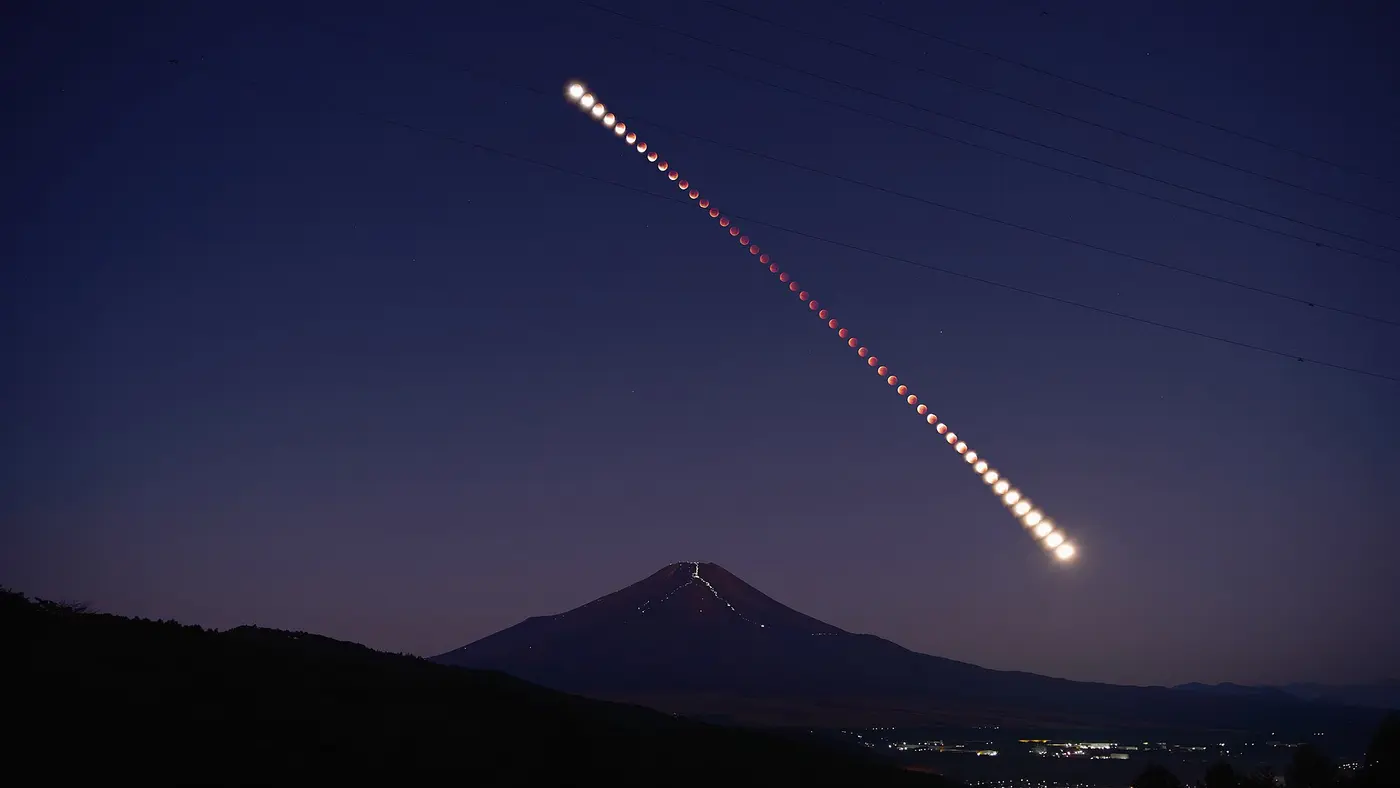
In a lunar eclipse, the Moon itself goes dark as it enters Earth’s shadow. As long as the Moon is above your horizon, the eclipse looks the same wherever you are. NAOJ points out that every lunar eclipse can be seen from more than half of the world.
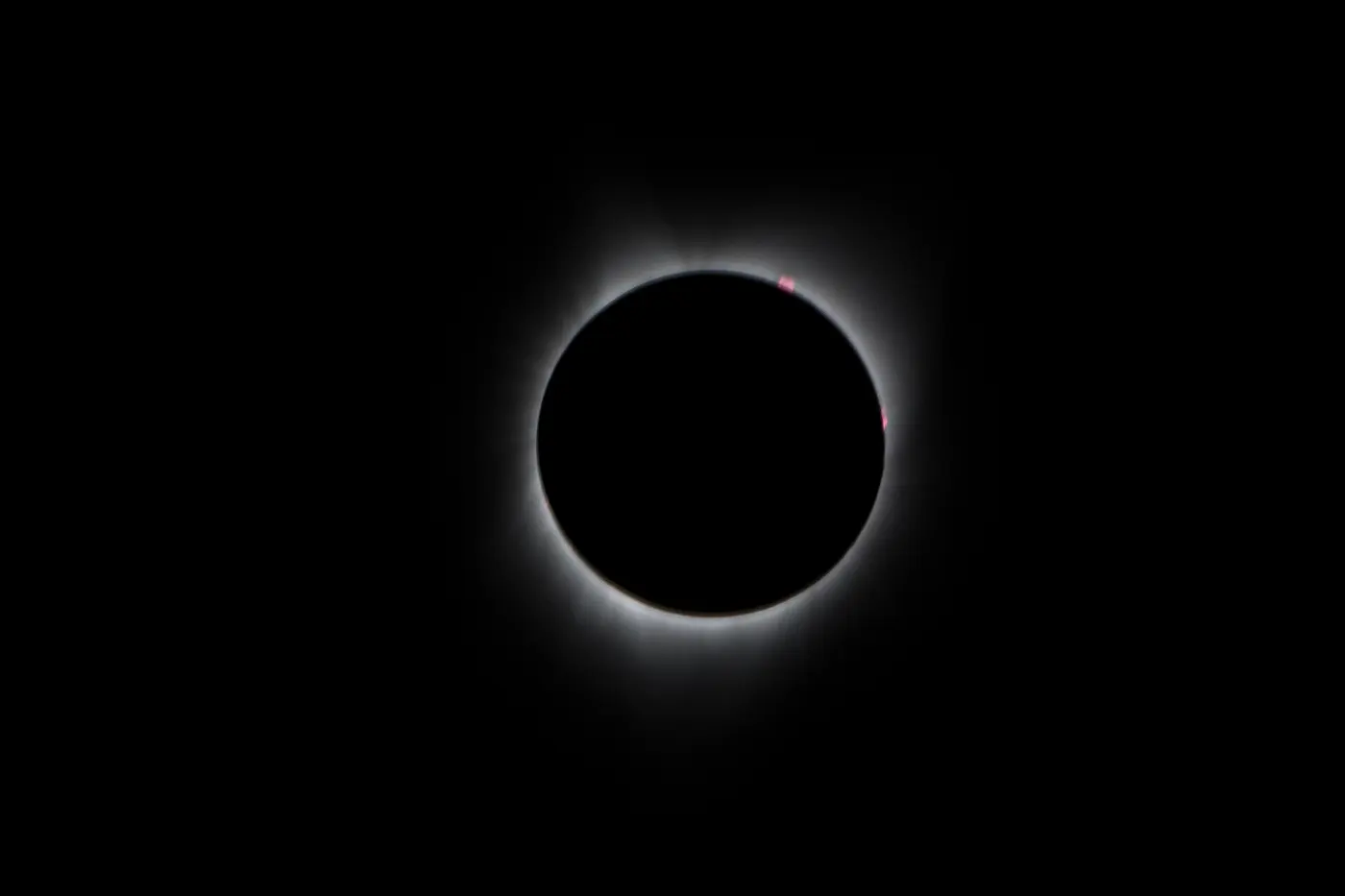
A solar eclipse, seen from space, is the Moon’s shadow falling on Earth. Totality is visible only inside the narrow strip swept by the Moon’s dark central shadow; a much wider area around it sees only a partial eclipse.
In 2025 the world had two solar and two lunar eclipses, and Japan saw only the lunar ones. In 2026 there were again two of each, and Japan saw only the March lunar eclipse. A total solar eclipse on August 12 crossed the Arctic and western Europe, followed about two weeks later by a partial lunar eclipse, but neither could be seen from Japan.
Once every 373 years
If you stayed in one place, how long would you wait between total solar eclipses? The astronomical calculator Jean Meeus tackled this statistically in 1982, and in 2026 a team using modern computing power published a narrower estimate: once every 373 years on average. For a partial solar eclipse, the average wait is about 2.59 years.
In Japan, after a total eclipse on July 21, 1963, land areas had to wait 46 years for the next one, on July 22, 2009. That time, totality fell on small southern islands such as the Tokara Islands and Yakushima, and lasted up to 6 minutes 44 seconds, the longest of the 21st century. The next total solar eclipse in Japan comes on September 2, 2035. According to NAOJ, totality will be visible in a band from the northern Kanto region north of Tokyo to the Noto Peninsula on the Sea of Japan coast, with a partial eclipse across the rest of the country.

Lunar eclipses also last longer
In a solar eclipse the Moon’s shadow keeps moving eastward across the ground, so totality at any one place lasts a few minutes at most. The total eclipse of June 20, 1955, for example, lasted up to 7 minutes 12 seconds.
A lunar eclipse is the Moon crossing Earth’s much larger shadow. On September 8, 2025, the Moon sat fully inside it for about 83 minutes, and the whole eclipse took around three and a half hours. By Espenak’s calculations, the longest total lunar eclipse of the 5,000-year span was in AD 318, lasting 106.6 minutes.