Who invented the dishwasher?
The first practical dishwasher was built by Josephine Cochran of Shelbyville, Illinois, who patented it in 1886 and sold it to hotels and restaurants.
240plates
Stack the dirty plates, press a button and let the machine do the rest. In many kitchens, the dishwasher is now an everyday appliance.
People had tried to build dishwashing machines before. According to IEEE Spectrum, the first to be patented was Joel Houghton’s in 1850: a wooden box with a hand-turned wheel that splashed water over the dishes. But early machines like this did not work very well. The person who built a dishwasher that truly worked, and turned it into a business, was a woman from a small town in Illinois.
Heirloom china, chipped
Josephine Garis was born in Ashtabula County, Ohio, in 1839. According to the U.S. Patent and Trademark Office, her father was a civil engineer who supervised mills, and on her mother’s side she was descended from John Fitch, who received the first U.S. patent for a steamboat. At 19 she married William Cochran and settled in Shelbyville, Illinois, where he prospered as a dry goods merchant and became a prominent local politician.
From their grand house, Mrs. Cochran gave frequent dinner parties, using a set of heirloom china that family legend dated back to the 1600s. When the servants washed it, pieces got chipped. So she took over the washing herself, and hated every minute. According to a 1999 profile in Invention & Technology magazine, she later recalled musing: “Why doesn’t somebody invent a machine to wash dirty dishes? Why don’t I invent such a machine myself?”
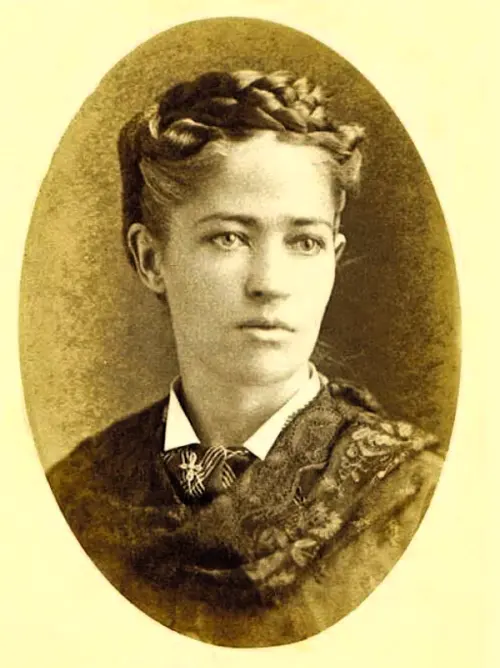

A widow’s workshop
In 1883 her husband died. Once his debts were settled, she was left with about $1,500. The dishwasher was no longer a daydream; it was how she would make a living.
In the shed behind her house, with the help of a railroad mechanic named George Butters, she built a prototype. First she measured her plates, cups and saucers and made wire compartments to fit each one. The dishes were held in place in these racks while hot, soapy water was sprayed over them. According to the National Inventors Hall of Fame, hers was the first dishwasher to use water pressure instead of scrubbers. She filed her application on New Year’s Eve, 1885, and received her patent on December 28, 1886.
Working with male mechanics was not easy. “I couldn’t get men to do the things I wanted in my way until they had tried and failed in their own,” she said. “And that was costly for me.”
A hotel lobby and a world’s fair
Housewives were slow to buy. In a 1912 interview with a Chicago newspaper, she explained why: “When it comes to buying something for the kitchen that costs $75 or $100, a woman begins at once to figure out all the other things she could do with the money. She hates dishwashing—what woman does not?—but she has not learned to think of her time and comfort as worth money.”
So she went after hotels and restaurants, which washed dishes by the thousands. A friend introduced her to the manager of Chicago’s famous Palmer House, and she came away with her first order. Next she walked into the Sherman House alone, something a woman of her class simply did not do. “The lobby seemed a mile wide,” she remembered. “I thought I should faint at every step, but I didn’t—and I got an $800 order as my reward.”
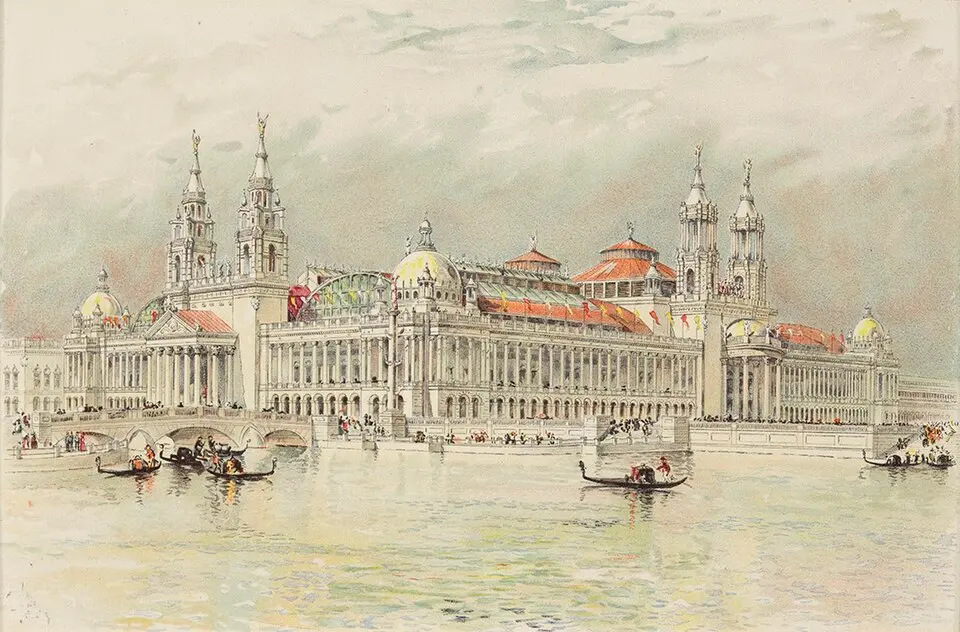

The turning point came at the 1893 World’s Columbian Exposition in Chicago. Nine of her machines worked in the fair’s restaurants. On Illinois Day, August 24, one of them washed the dishes left by eight relays of 1,000 soldiers each, finishing each batch within 30 minutes. The judges gave the machine their highest award, for “best mechanical construction, durability and adaptation to its line of work.” The large model could wash and dry 240 dishes in two minutes, and hospitals and colleges, keen on hygiene, began placing orders too.
Home at last, half a century later
By the end of the 1890s she had her own factory near Chicago. She also made a model for the home, but it sold poorly: most houses simply couldn’t supply that much hot water. Josephine Cochran died in Chicago on August 3, 1913, at the age of 74. Only the year before, she had traveled to New York to sell her machines to hotels and department stores.
In 1926 her company became part of the Hobart Manufacturing Company, and in 1949 Hobart’s KitchenAid brand introduced a home dishwasher. Only from the 1950s did dishwashers become common in American homes. Looking back near the end of her life, she said: “If I knew all I know today when I began to put the dishwasher on the market, I never would have had the courage to start. But then, I would have missed a very wonderful experience.”