Was Michelangelo’s David carved from a rejected block of marble?
Yes. Another sculptor had started on it and given up, and it then lay out in the weather for some 25 years. Michelangelo took it on at 26 and finished the statue in about three years.
5.17m
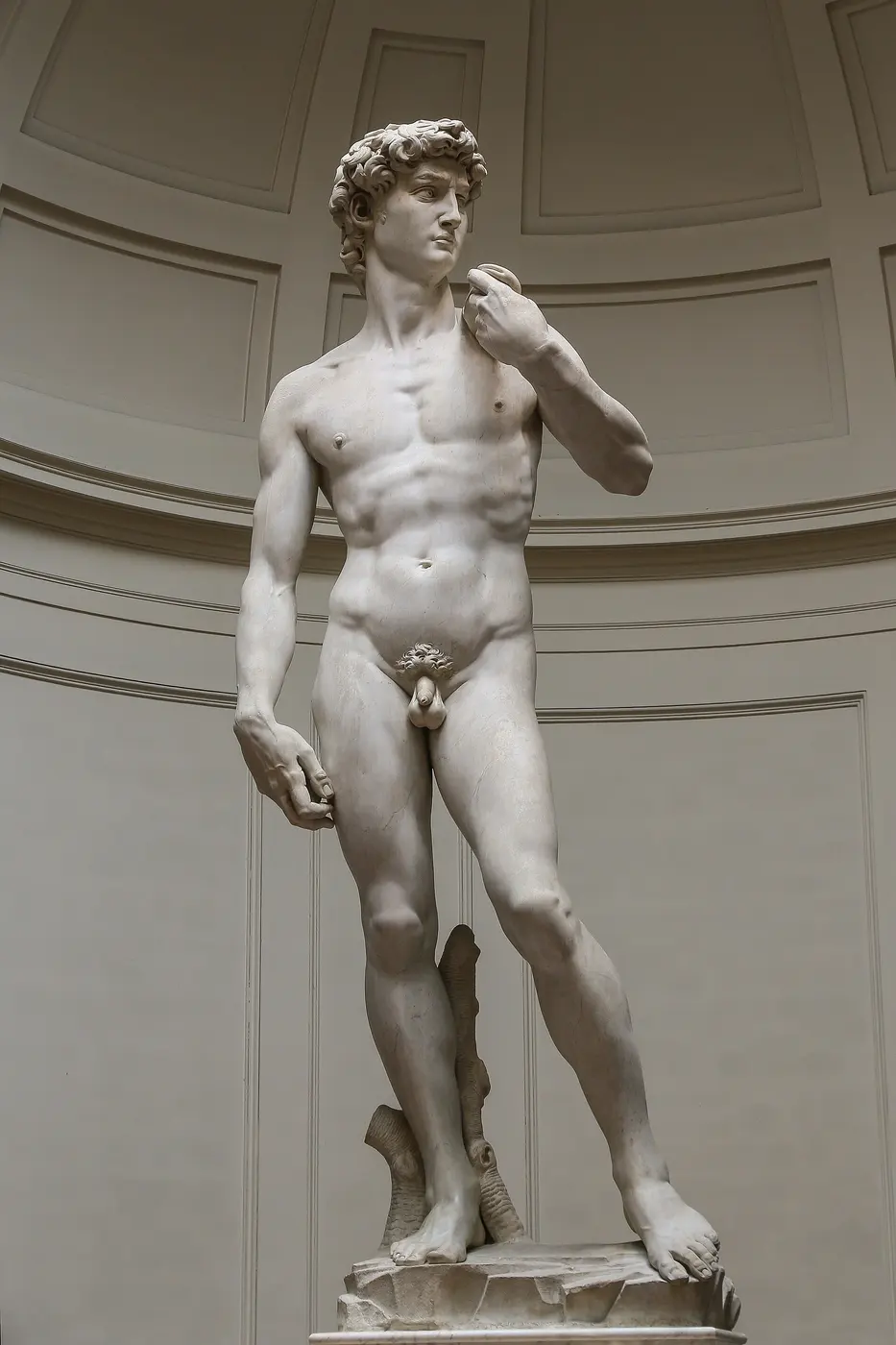
At the end of a skylit hall in the Galleria dell’Accademia in Florence stands Michelangelo’s David. According to the museum, the statue is 517 cm (17 feet) tall including its carved base and weighs 5,560 kg (about 12,300 pounds). It shows the young David of the Old Testament, who faced the giant Goliath, and it was carved from a single block of marble.
Yet this masterpiece of the Renaissance did not begin as a fresh stone. It was carved from a block that another sculptor had started on and abandoned, and that had then been left out in the weather for decades.
The cathedral’s “Giant”
In the 1460s the Opera del Duomo, the board that built and maintained Florence Cathedral, planned to set a series of huge Old Testament figures high up on the cathedral’s buttresses. In 1464 it signed a contract with the sculptor Agostino di Duccio for a statue of David. The next year Agostino obtained a large block from Carrara, the famous marble-quarrying town, and began roughing out the legs and torso.
Around 1466, work stopped, for reasons that are not known. In 1476 another sculptor, Antonio Rossellino, was given the job of carrying on, but that came to nothing too. For about 25 years the stone lay out in the yard of the cathedral workshop, exposed to the rain. An inventory of the workshop in 1500 recorded it as a marble figure called David, badly roughed out and lying on its back. People called it “the Giant.”
A 26-year-old takes it on
In 1501 the Opera had the stone stood upright and began looking for an artist who could finish it. The man who stepped forward was Michelangelo, then 26, who had made his name in Rome with the Pietà and had come home to Florence.
According to the painter and biographer Giorgio Vasari, the sculptor Andrea Sansovino also wanted the stone. But only Michelangelo had the nerve to carve a whole figure from that one block without adding pieces. The officials, Vasari says, handed it over as a thing of no value, thinking that whatever he made of it would be better than the state it was in.

The contract, signed on August 16, 1501, gave him two years to finish the male figure known as the Giant, 9 braccia (about 5.25 meters, or 17 feet) high, already roughed out and badly roughed out at that. Michelangelo began carving in earnest on the morning of September 13, working inside an enclosure of planks and masonry where no one could watch.
Vasari names the earlier sculptor as “Simone da Fiesole,” but the contract names Agostino. Either way, Michelangelo had to fit the pose of his figure to the shape that had already been cut, and he even left a few of the earlier chisel marks at the edge of the stone. Vasari called the result a miracle: Michelangelo had brought back to life a thing that was dead.
From the roofline to the square
On January 25, 1504, with the statue nearly done, a committee met to decide where it should go. Its members included Leonardo da Vinci and Botticelli. The David had been meant for a high spot on the cathedral, but the committee chose the entrance of the Palazzo Vecchio, the city hall. According to the Accademia, it was placed there as a symbol of the strength and independence of the Florentines. Moving it from the workshop took several days, and it was unveiled to the city on September 8, 1504.
The David is known for having a large head and large hands, especially the right hand. A common explanation is that the statue was designed to be seen from far below, so its most visible parts were enlarged. Its shallow depth from front to back is also thought to reflect the shape the block had already been given.
Cracked ankles and a move in 1873
The David stood outdoors for the next 369 years. In 1527, during an uprising against the Medici family, its left arm was broken into three pieces. In the mid-19th century, small cracks were found in the left leg, probably because the ground beneath the statue sank unevenly and the figure tilted.
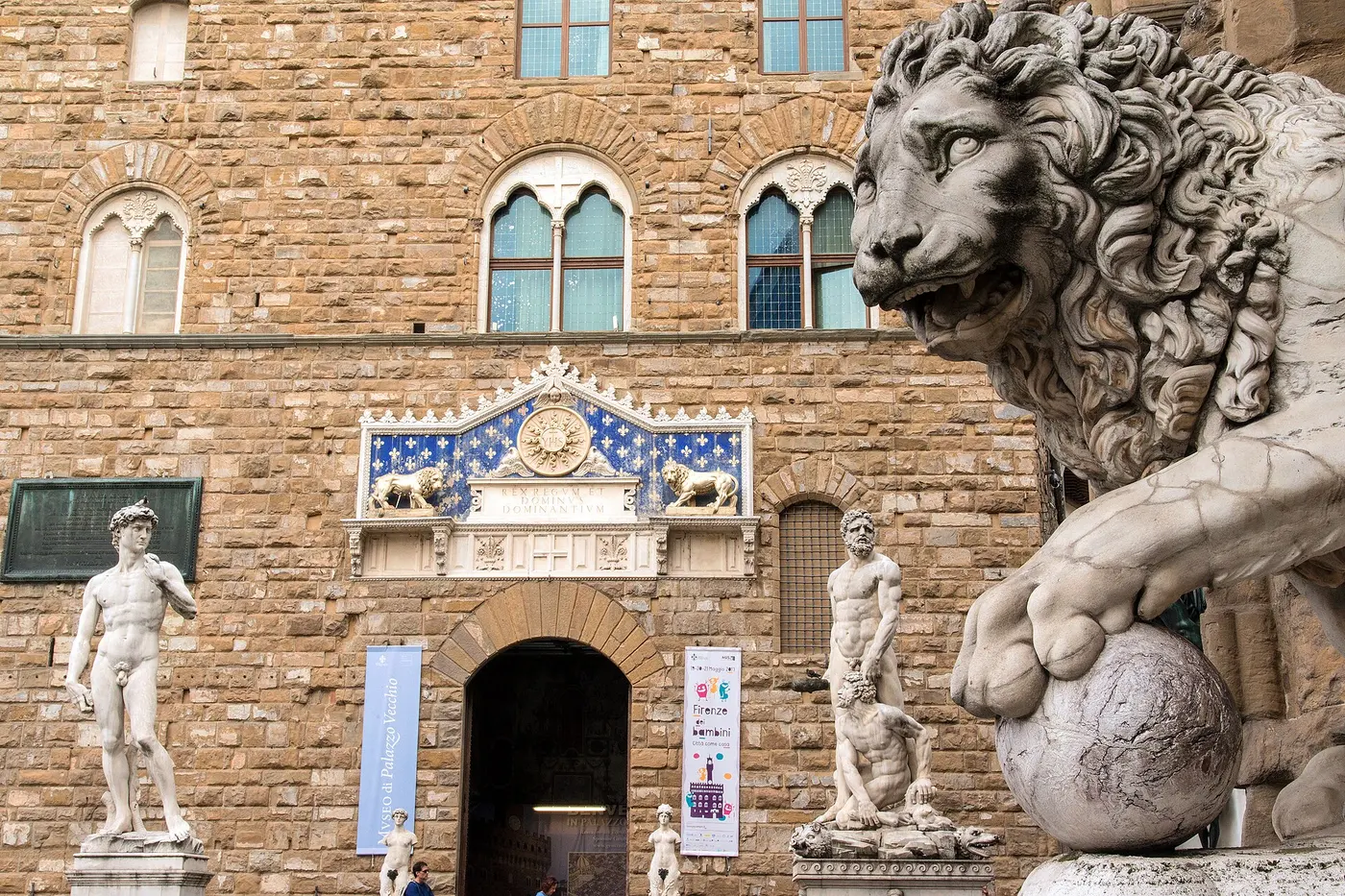
To protect it, the statue was packed into a wooden crate in 1873 and inched along rails to the Accademia, a journey that lasted from July 30 to August 10. The figure in front of the Palazzo Vecchio today is a copy, put there in 1910.

The worry has not gone away. In 2014, researchers from Italy’s National Research Council and the University of Florence reported tiny fractures in the statue’s ankles. They blamed its long years standing at a tilt and the quality of the marble, and raised concerns about vibrations from crowds of visitors and passing traffic.