Why did Leonardo da Vinci write backwards?
Most likely because he was left-handed: it came naturally and kept him from smudging wet ink.
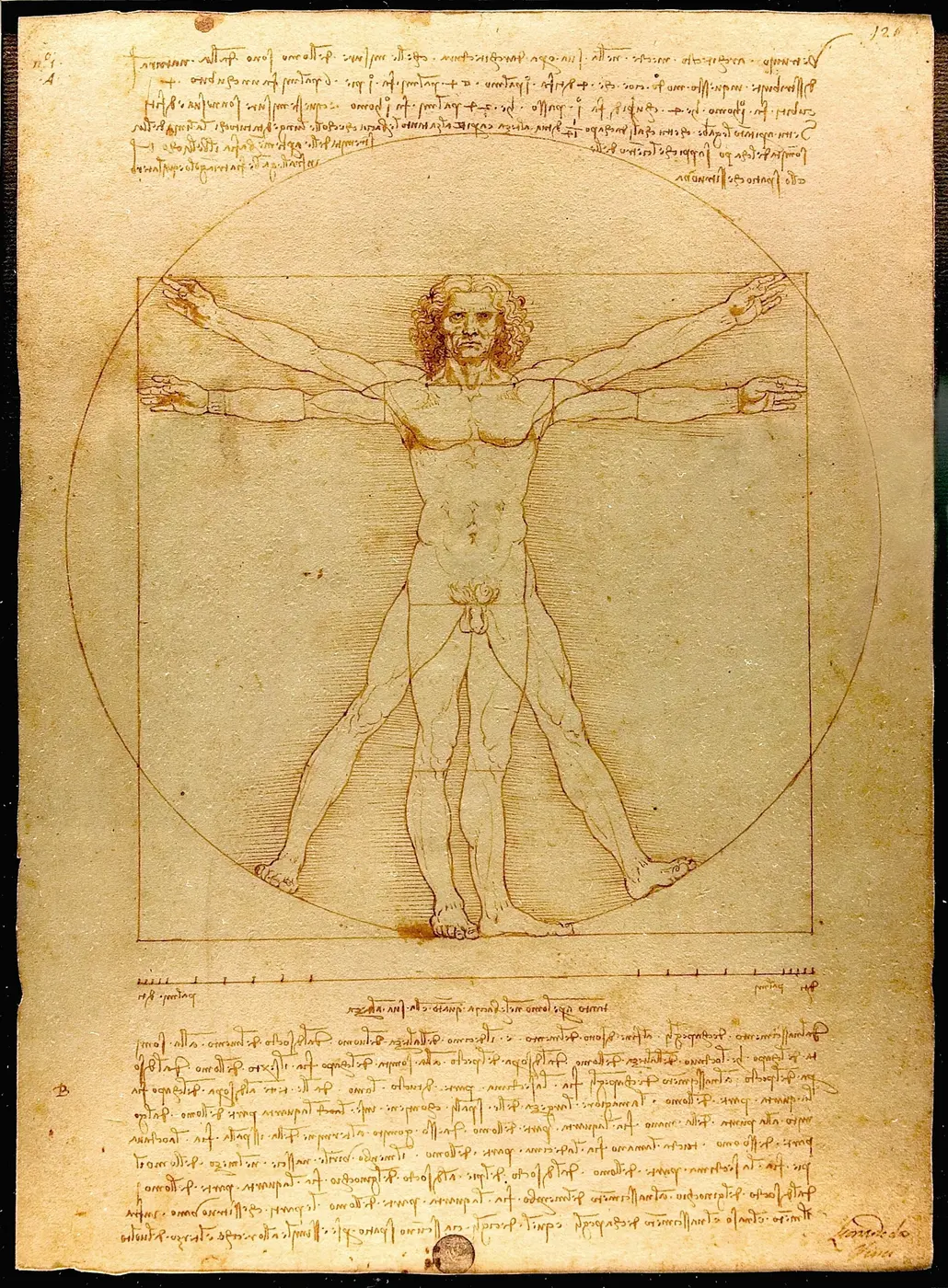
Leonardo da Vinci observed everything, not just painting but anatomy, architecture, machines, flowing water and the flight of birds, and he wrote it all down. About 7,000 pages of his notes and drawings survive. Open one, though, and you can’t read it straight away, because the writing runs from right to left, reversed as if seen in a mirror.
This is known as mirror writing: hold it up to a mirror and it reads normally. So why did Leonardo go to the trouble of writing this way?
Mirror writing at 21
Leonardo’s mirror writing goes back to his youth. His earliest known dated work is a landscape drawing in the Uffizi Gallery in Florence, Italy. In its upper left corner is a note reading “Day of Santa Maria della Neve, 5 August 1473,” and it is already in mirror writing. Leonardo, born in 1452, was 21 at the time.
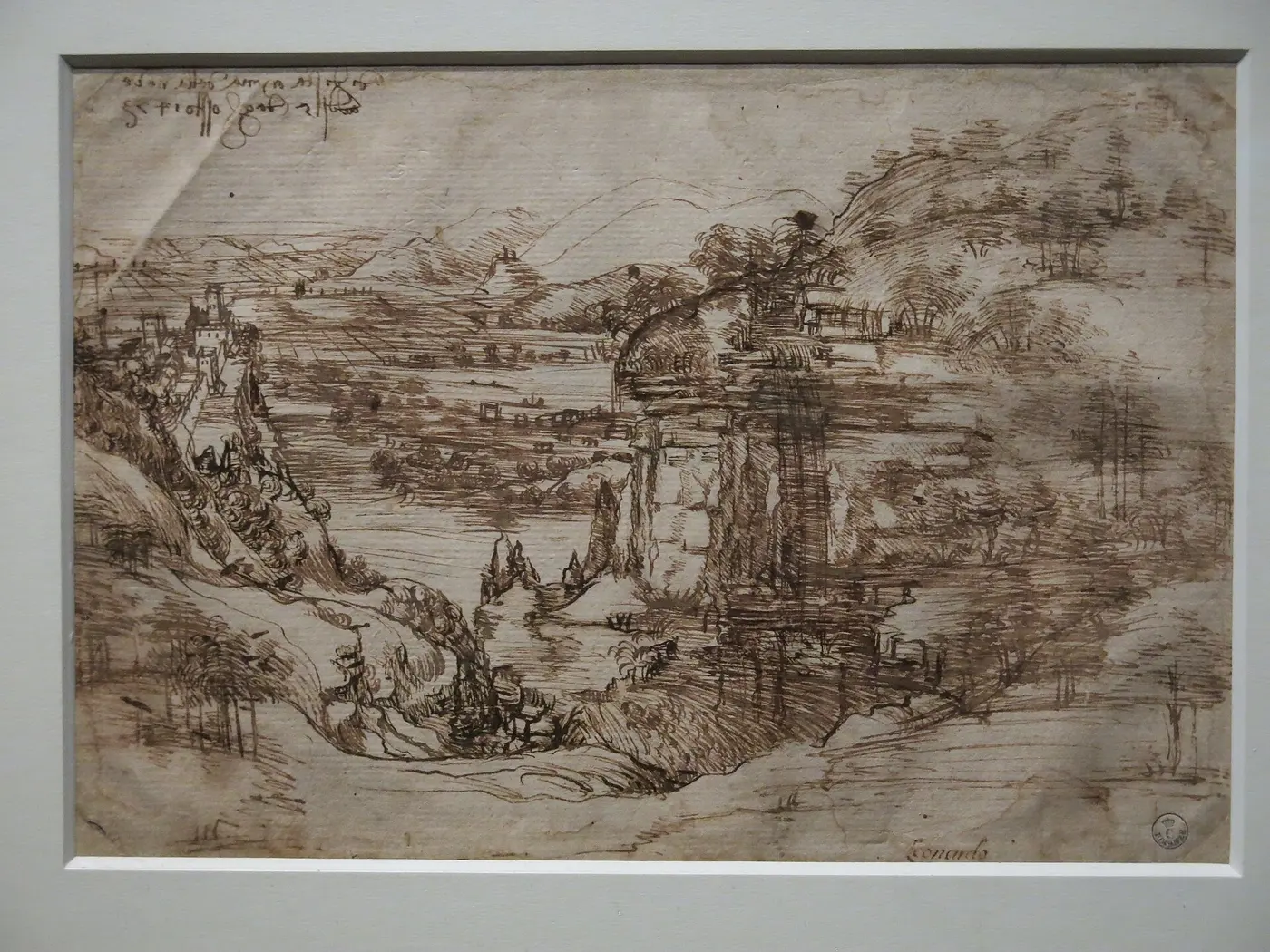

From then on, he wrote almost all of his private notes in mirror writing. Texts meant for other people, on the other hand, he wrote the normal way. In other words, Leonardo could do both, and chose between them depending on who the writing was for.
The left-handed explanation
The most widely accepted reason is that Leonardo was left-handed. In his drawings, most of the diagonal hatching used for shading runs from upper left to lower right, the direction typical of someone drawing with the left hand. It is even one of the clues experts use to tell whether a drawing is by Leonardo.
When a left-hander writes from left to right, the hand passes over the line just written. In Leonardo’s day people wrote with a quill dipped in ink, so it was all too easy to smear words before they had dried. Writing from right to left, the hand always moves across clean paper. For a left-hander, mirror writing is thought to have been the more natural and practical way to write.
The story is a little more complicated, though. In 2019, a conservation institute in Florence examined that 1473 landscape closely and concluded that the mirror-written note on the front was probably written with the left hand, while a line written the normal way on the back was written with the right. The art historian who led the study suggested that Leonardo was born left-handed but was trained at an early age to use his right hand too.
The weak case for a secret code
A popular story says the mirror writing was a code to stop people stealing his ideas. But anyone with a mirror can read it, and with a little practice you can read it without one. As a way of keeping secrets, it would hardly have worked.
The Victoria and Albert Museum in London, which holds several of his notebooks, points out that writing masters of the time would sometimes demonstrate mirror writing, and that Leonardo’s letter shapes are actually quite ordinary. It seems more natural to see his mirror writing not as a code but simply as the everyday handwriting that came easiest to a left-hander.

Where the notebooks went
When Leonardo died in France in 1519, he left his notebooks and drawings to his pupil Francesco Melzi. Melzi looked after them carefully at his family’s villa near Milan, but after his death in 1570 his heirs sold or gave them away, and the collection was broken up. Some owners, such as the sculptor Pompeo Leoni, even cut pages apart and rebound them into new albums.
Today Leonardo’s notebooks are scattered among libraries, museums and private collections in Italy, France, Spain, Britain and elsewhere. Researchers around the world are still reading their mirror-written pages.