Could a penny dropped from a skyscraper kill someone?
No. Air resistance holds a light, flat coin like a penny to a few dozen kilometers per hour, far too slow to pierce a skull. Heavy or pointed objects are another matter.
40km/h
Drop a penny from the top of New York’s Empire State Building, the story goes, and by the time it reaches the ground it will be moving like a bullet, fast enough to punch through the skull of someone walking below. Versions of this tale have circulated in the United States for generations.
The building is about 380 meters (1,250 feet) tall to its roof. Without air, a coin dropped from that height would hit the ground at more than 300 km/h (190 mph). But we do have air, and the air changes everything.
Air puts a ceiling on speed
A falling object feels air resistance as well as gravity. The faster it falls, the stronger the drag, until drag balances the pull of gravity. From then on, the object stops speeding up and falls at a steady speed, called its terminal velocity.
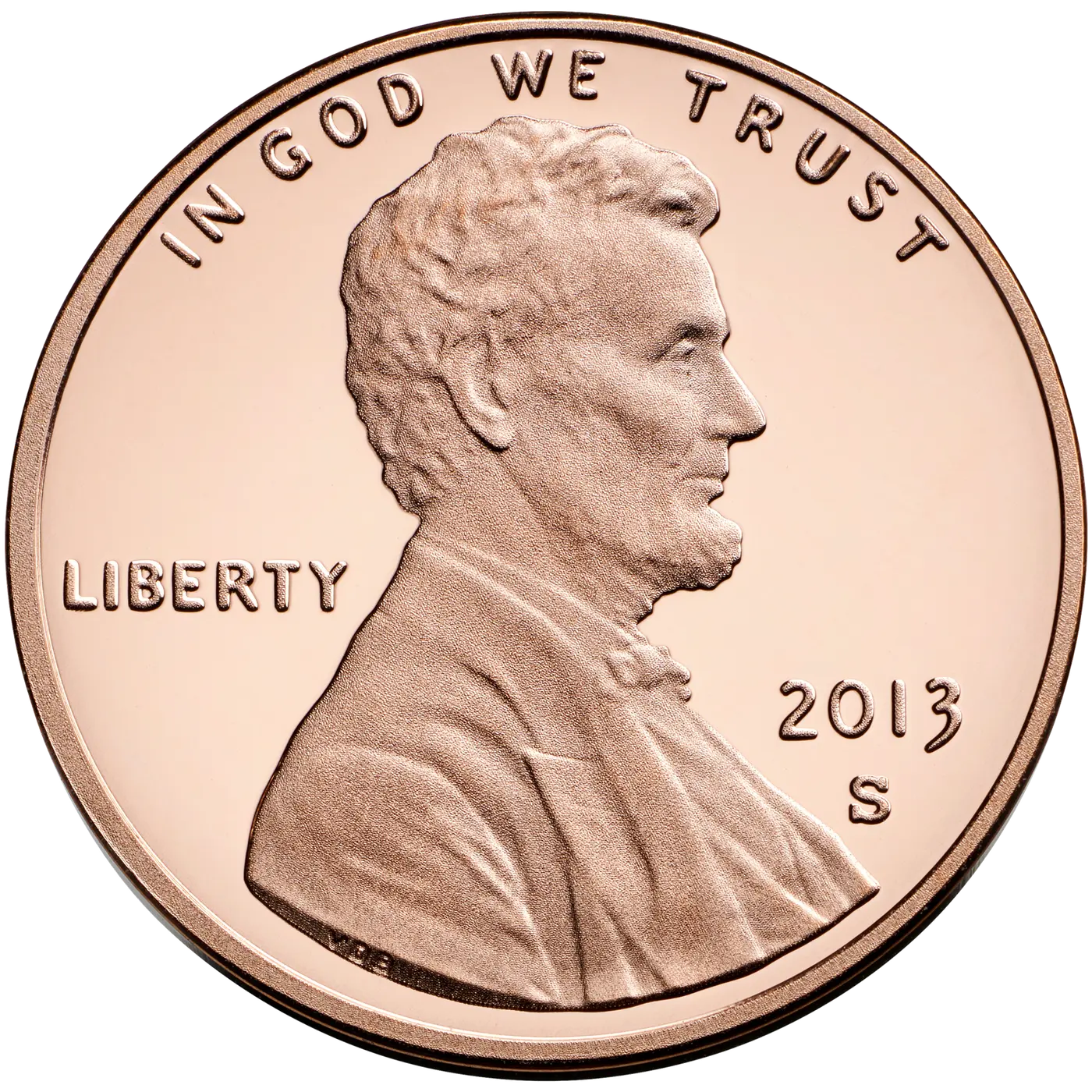
Louis Bloomfield, a physicist at the University of Virginia, used wind tunnels and helium balloons to recreate pennies falling from skyscrapers. As he told Live Science, a penny is so light and flat that it reaches terminal velocity after falling only about 15 meters (50 feet), then flutters down like a leaf at around 40 km/h (25 mph). If one hit you, he said, it would feel like a flick on the forehead, “but not even very hard.” During his experiments, he recalled, one bounced off his face.

Small, flat things fall slowly
Terminal velocity depends on the balance between an object’s weight and the area it presents to the air. Shrink something to half its size without changing its shape and its area falls to a quarter, but its weight drops to an eighth. The smaller the object, the more drag it feels for its weight.
The British biologist J. B. S. Haldane applied this logic to animals in his 1926 essay “On Being the Right Size.” You can drop a mouse down a thousand-yard mine shaft, he wrote, and on arriving at the bottom it gets a slight shock and walks away. “A rat is killed, a man is broken, a horse splashes.”
A penny is a thin disk weighing 2.5 grams and measuring about 19 millimeters (0.75 inches) across. It has a lot of surface for its weight, especially when it falls flat side down. Japan’s 10-yen coin, at 4.5 grams and 23.5 millimeters, has a similar balance of weight and area.
MythBusters takes aim
The TV show MythBusters tackled the legend in an episode first aired in October 2003. Taking a penny’s terminal velocity to be about 65 mph (105 km/h), the team fired pennies at that speed into concrete, asphalt and a ballistic gel head containing a human skull. None of them penetrated. Even a penny fired from a rifle failed to get through the concrete or the dummy’s skull.
Bloomfield’s 40 km/h and the show’s 105 km/h are far apart. The gap probably comes down to how a coin falls: tumbling and fluttering, or slicing through the air edge first, makes a big difference to the drag. Either way, it falls far short of a bullet.


The team also visited the Empire State Building and concluded that updrafts along the building’s walls, along with the setback roofs of the lower floors, would probably keep a penny tossed from the observation deck from ever reaching the street.
Still, don’t drop things
All this applies only because a penny is light and flat. The real danger, Bloomfield says, is a ballpoint pen. Depending on its design, a pen may fall straight like an arrow and could come down at around 200 mph (320 km/h), fast enough to chip the sidewalk or punch into a wooden board. “You wouldn’t want it to hit your head.” Tools and bolts, heavy and compact, are even worse, which is why hard hats are a must on construction sites.
In Japan, throwing objects without due care where they could injure people or damage property is an offense under the Minor Offenses Act, and causing an injury can lead to far more serious charges. Even with a coin, it isn’t worth the experiment.