Which has more caffeine, coffee or tea?
Cup for cup, usually coffee. Gram for gram, though, tea leaves beat coffee beans, and gyokuro, a shade-grown Japanese tea, beats coffee even in the cup.
160mg
Coffee to wake up in the morning, green tea in a break at work. Both are well-known sources of caffeine. So which one has more?
Most people would say coffee, and they are half right. Change the way you compare, and the answer flips. Let’s check with the figures in the Standard Tables of Food Composition in Japan, compiled by Japan’s Ministry of Education, Culture, Sports, Science and Technology, in their 2023 update.
By the cup, coffee wins
The tables list the caffeine in brewed drinks. Per 100 milliliters, brewed coffee has 60 milligrams, black tea 30 mg, sencha (ordinary Japanese green tea), hojicha (roasted green tea) and oolong tea 20 mg, and genmaicha and bancha, two everyday Japanese teas, 10 mg.
The coffee figure is for 10 grams of ground coffee brewed with 150 mL of boiling water, which is about one cup. That works out to roughly 90 mg per cup. The same 150 mL of sencha would contain about 30 mg, so coffee has around three times as much. Instant coffee, according to Japan’s health ministry, gives about 80 mg per cup when made with 2 grams of powder. The feeling that coffee is the stronger drink is borne out by the numbers.
By the way, the caffeine in coffee and the caffeine in tea are exactly the same substance. The German chemist Friedlieb Ferdinand Runge isolated it from coffee around 1820. In 1827 a substance isolated from tea was named “theine,” but it was later shown to be identical to caffeine.

By weight, tea wins
Compare the raw materials instead of the drinks, though, and the picture changes.
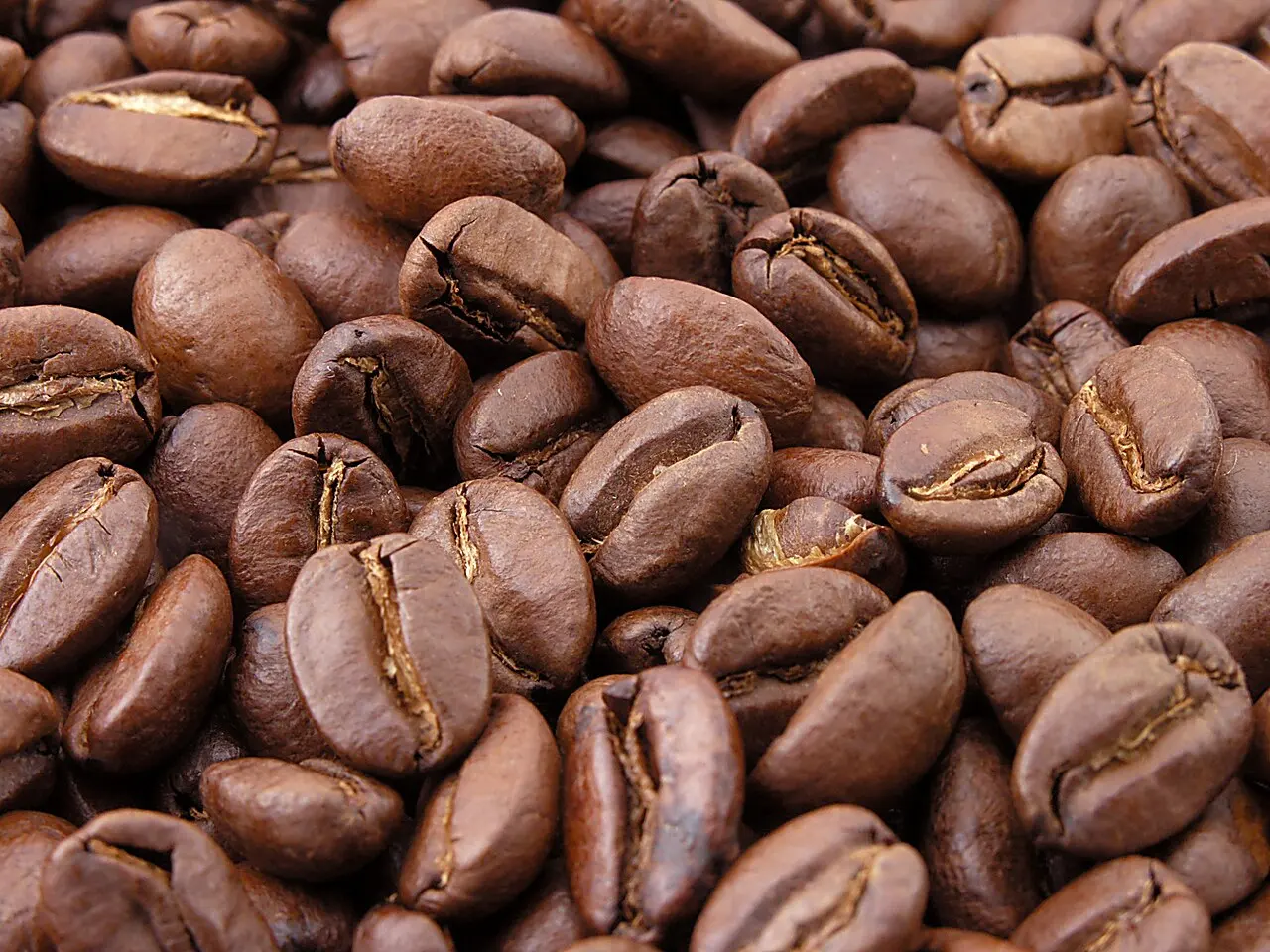
According to the food tables, 100 grams of dry tea leaves contain 2.3 grams of caffeine for sencha, 2.9 g for black tea, 3.2 g for matcha and as much as 3.5 g for gyokuro. And coffee beans? A 2021 review by researchers at the Medical University of Białystok in Poland puts the caffeine in unroasted beans at 0.9 to 1.5 percent of their weight for the widely drunk Arabica and 1.2 to 2.4 percent for Robusta. Gram for gram, tea leaves generally contain more caffeine than coffee beans.
So why does coffee come out ahead in the cup? The answer lies in how the drinks are made. The tables brew coffee with 10 g of grounds per 150 mL of water, but sencha with 10 g of leaves per 430 mL of 90°C (194°F) water, steeped for just one minute. For the same amount of water, coffee uses about three times as much raw material. That difference in brewing is the main reason a cup of coffee is stronger.
Gyokuro is in a league of its own
There is an exception: gyokuro. According to the tables, brewed gyokuro contains 160 mg of caffeine per 100 mL, more than twice as much as coffee.
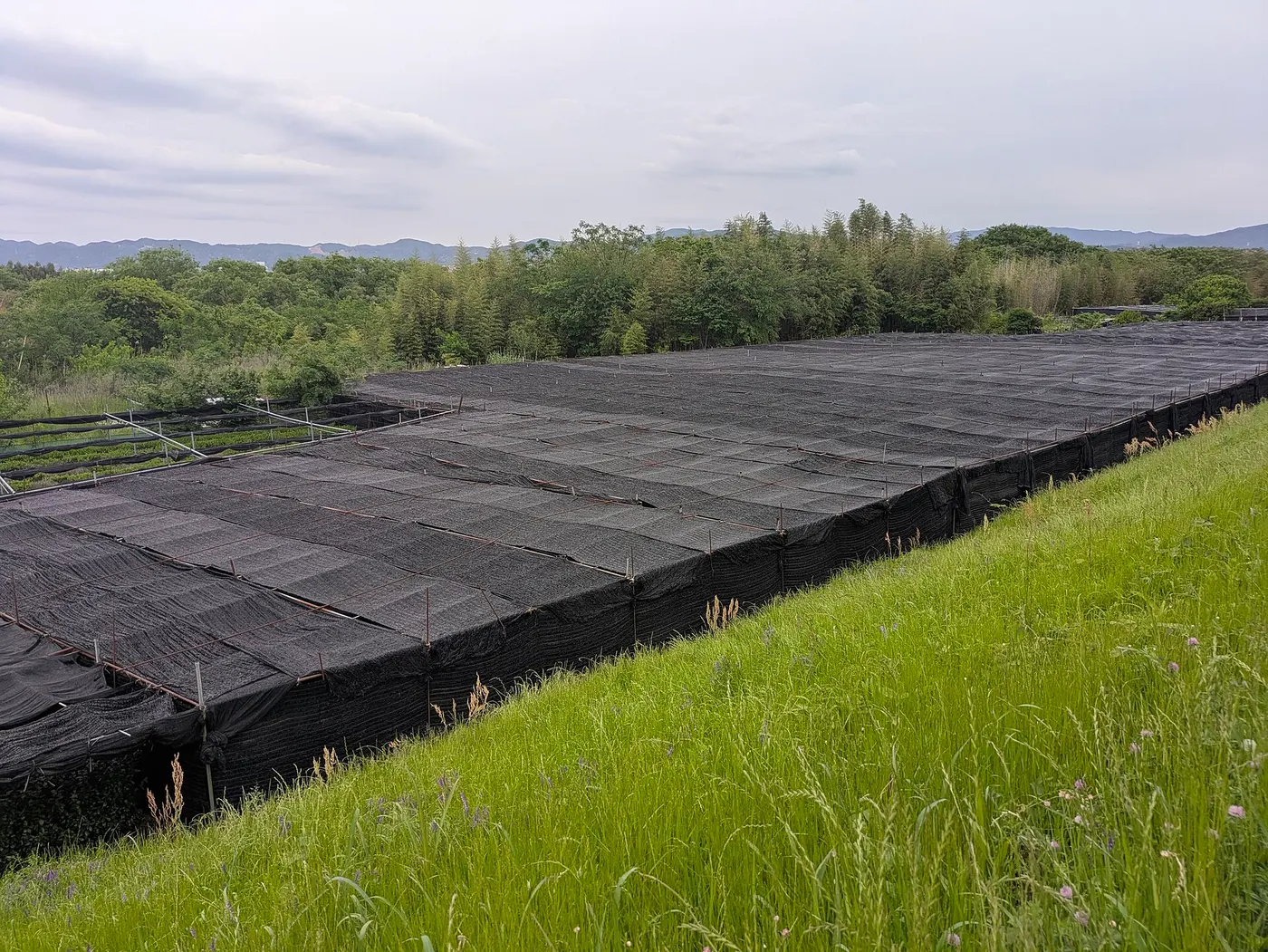
Gyokuro is a premium Japanese green tea. When the new shoots are growing, the tea bushes are covered with reed screens or black netting for about 20 days, cutting sunlight to around a tenth. The leaves themselves are rich in caffeine, and the tables brew them strong: 10 g of leaves in just 60 mL of water at 60°C (140°F) for two and a half minutes. It is a rich, savory tea, sipped slowly from a small cup. The Nipponica encyclopedia notes that gyokuro turns cloudy as it cools because it contains so much caffeine.

Still, nobody drinks gyokuro by the mugful. The same encyclopedia suggests 10 g of leaves and 70 mL of water for three people, a little over 20 mL each. By that measure, one serving has less than 40 mg of caffeine, under half a cup of coffee.
For reference, Health Canada advises that healthy adults keep caffeine to 400 mg a day, about three mugs of coffee. Pregnant and breastfeeding women and children are advised to have less.
Nature’s insect repellent?
Why do tea and coffee plants make caffeine in the first place?
In 1984 the researcher J. A. Nathanson reported in the journal Science that caffeine and related compounds, at the concentrations found in plants, suppress insects’ feeding and can kill them. That led to the widely cited idea that caffeine is a natural pesticide that helps plants defend themselves. The substance we use to stay awake may have started out as a plant’s way of protecting itself.