Did goats really discover coffee?
The goat tale is a legend first written down in 1671. Firm evidence points to Sufis in 15th-century Yemen.
Plenty of us can’t wake up without that first cup of the morning. Coffee is drunk around the world every day, and its origins come with a very famous story.
Long ago in Ethiopia there lived a goatherd named Kaldi. One day his goats ate the red berries of an unfamiliar shrub, and that night, instead of sleeping, they leapt about. Amazed, Kaldi told the monks at a nearby monastery, who boiled the berries into a drink and found they could stay awake through their night prayers. You may well have seen some version of this tale on a coffee shop poster or the side of a bag of beans.
The legend first appears in 1671
So how old is the goat story?
The earliest written version we can trace is in a Latin treatise on coffee published in Rome in 1671. Its author was Antoine Faustus Nairon, a Christian scholar from Lebanon of the Maronite church. That was some 200 years after coffee is thought to have actually come into use as a drink.
Nairon’s version also differs from the one we know today. It is set not in Ethiopia but in the region of southern Arabia known as “Arabia Felix,” roughly present-day Yemen. And its hero is a nameless man looking after camels or goats.
Is “Kaldi” a 20th-century name?
Then where did the name “Kaldi” come from?
The goatherd has no name in the earliest accounts. The name Kaldi was attached later, and it is said to have spread widely thanks to All About Coffee, the encyclopedic tome published in 1922 by the American writer William Ukers. The setting also seems to have moved to Ethiopia in later retellings.
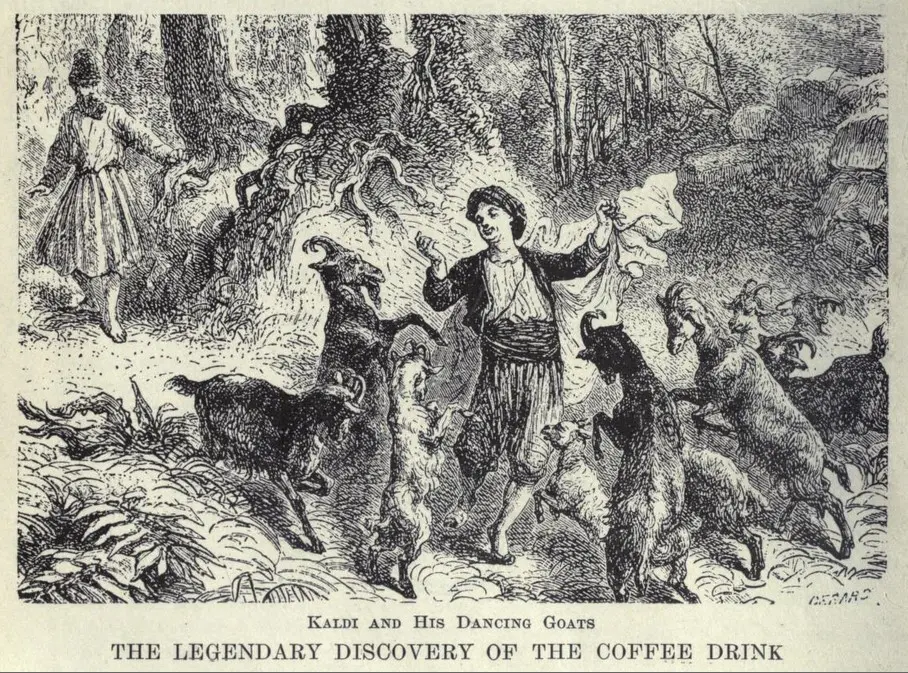

In other words, the story of Kaldi the goatherd that we know so well is a legend that grew, taking shape bit by bit over centuries. There are other coffee origin stories too, such as one about a holy man banished from his town who found red berries in the mountains, but none of them has solid support.
The firm evidence: 15th-century Yemen
Leaving legend aside, let’s look for hard evidence.
The coffee plant, and in particular wild arabica coffee, is thought to have originated in the highlands of Ethiopia. As a drink, however, coffee has left no reliable trace, in written records or archaeology, from before the 15th century.
Trustworthy records first appear around the middle of the 15th century, in Yemen. The people drinking coffee were Sufis, mystics of Islam. They held rituals in which they chanted the name of God through the night, and they prized coffee as a drink that kept sleep at bay. By the end of the 15th century, coffee drinking is said to have become firmly established among Yemen’s Sufis.
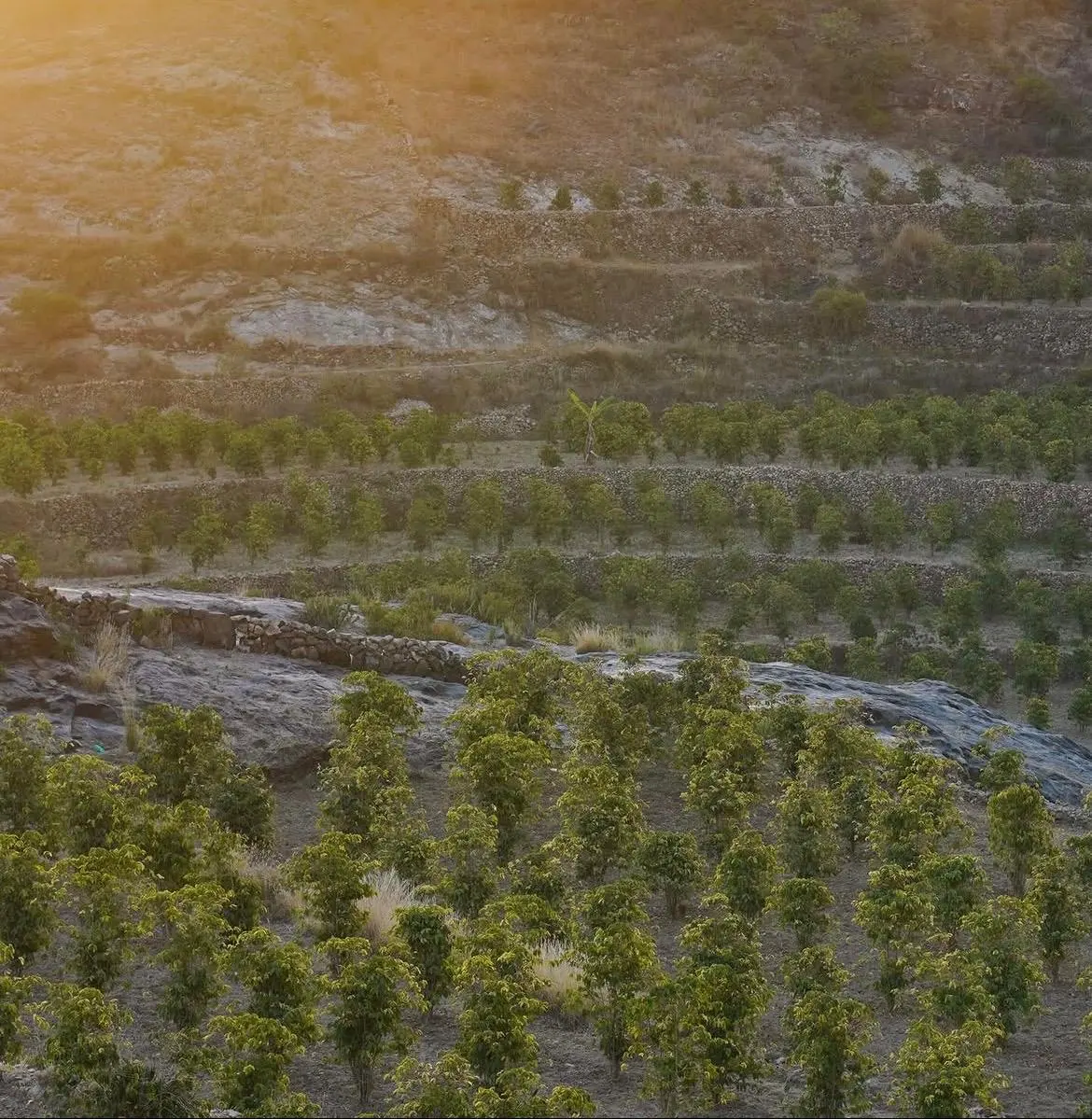

As a drink for staying awake through night prayers, the coffee of the legendary monks and that of the real Sufis look strikingly alike. Perhaps the goat story is simply real history with some playful embroidery.
From the port of Mocha to the world
From Yemen, coffee spread during the 16th century to Mecca, Cairo and Istanbul. It was briefly banned in Mecca in 1511, but nothing could stop its popularity. Mocha, the Yemeni port that thrived by shipping coffee, still lives on in coffee varieties and on café menus.
The word itself followed the same path. It began as the Arabic qahwa, passed through Turkish kahve into the languages of Europe, and Japanese kōhī (コーヒー) is thought to have come from the Dutch koffie during the Edo period (1603–1868).