Why do chameleons change color?
By changing the spacing of tiny crystals in their skin, mainly to signal to others and control body heat.
Chameleons have a reputation for matching their surroundings: green on a leaf, brown on a branch. In everyday speech, calling someone a chameleon means they change their colors to suit the situation.
It’s true that most chameleons can change color. But research over the past decade or so has shown that both the mechanism and the purpose are a little different from what we tend to imagine.
Color from crystals, not pigment
Most animal colors come from pigments. For a long time, chameleon color change was thought to work the same way, with grains of pigment spreading out or bunching together inside skin cells.
In 2015, however, a team led by Michel Milinkovitch at the University of Geneva in Switzerland examined the skin of panther chameleons in detail and uncovered a different mechanism. The key players are skin cells called iridophores. Inside them, tiny crystals made of a substance called guanine are packed together, each measured in nanometers (millionths of a millimeter).
When crystals line up in a regular pattern, they strongly reflect one particular color of light. This is a form of “structural color,” the same family of effects behind the colors of soap bubbles and the blue shimmer of some butterfly wings. Chameleons switch the color they reflect by changing the spacing between these crystals.
When the animal is calm, the crystals sit close together and reflect blue light. That blue passes through a layer of yellow pigment above it, and blue plus yellow gives the chameleon its usual green. When it gets excited, the spacing widens, and the reflected light shifts toward yellow, orange and red. The team also soaked bits of skin in liquids of different concentrations to make the cells swell or shrink, and watched the colors change one after another as they did.
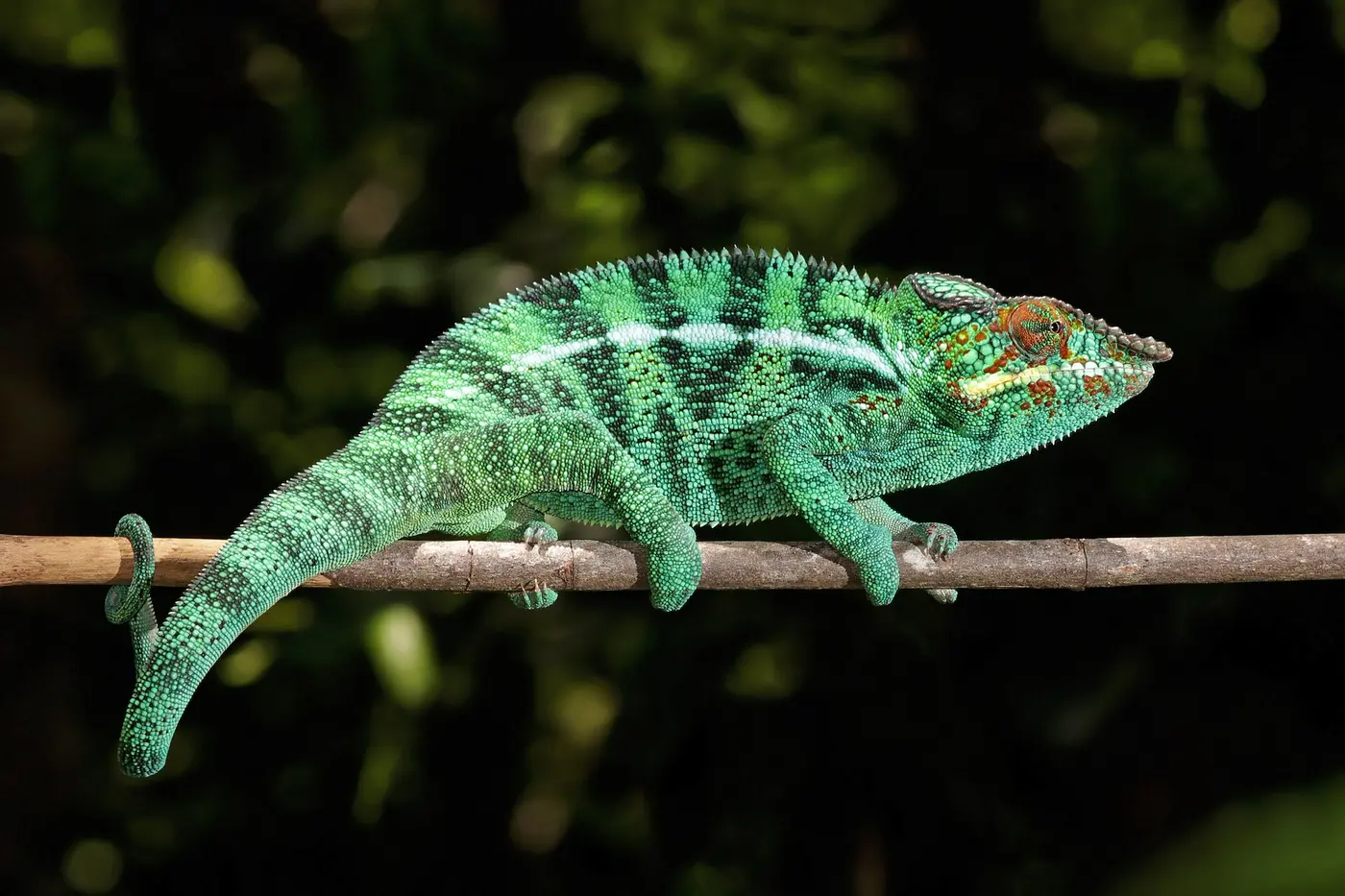

A second layer works as a sunshade
The researchers also found that the iridophores are stacked in two layers. Beneath the upper, color-switching layer lies another layer with larger crystals, and this one is especially good at reflecting near-infrared light, an invisible part of sunlight.
Near-infrared light is very good at heating things up. For chameleons living under strong sun, this deeper layer is thought to work as a built-in sunshade, keeping the body from overheating. The upper layer, the one responsible for dramatic color shifts, was especially well developed in adult males.
Changing color to stand out
So what do chameleons change color for?
Their colors are messages to other chameleons. When two males face off, or when a male courts a female, chameleons turn brighter and more vivid. When they lose a fight or signal submission, they tend to turn darker.
Color also helps with body temperature. Chameleons are cold-blooded and can’t keep their bodies warm on their own, so when it’s cold they turn darker to absorb light and heat, and when it’s hot they turn lighter to reflect it.
A study published in 2008 compared 21 lineages of dwarf chameleons from southern Africa. It found that the species able to change color most dramatically were the ones that use the most conspicuous signals in male contests and courtship. It found no evidence, on the other hand, for the idea that color change evolved to help them blend into the background. The ability to change color seems more likely to have evolved for standing out than for hiding.
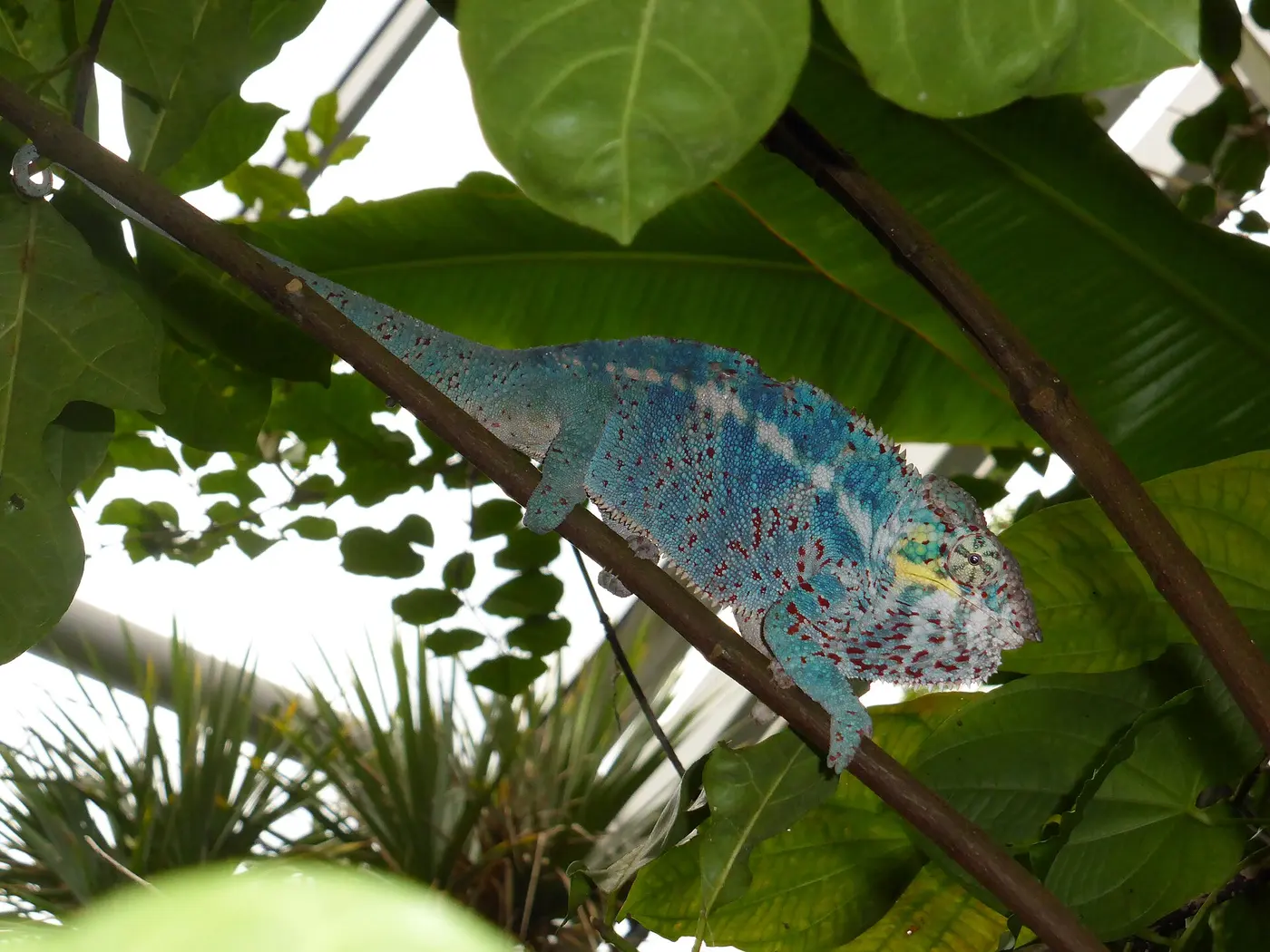

Their everyday greens and browns are thought to help them hide among leaves and branches in some situations. But chameleons can’t copy the pattern of whatever they happen to be sitting on, adjusting their color at will.