Why do so many people in Japan have cedar pollen allergy?
Japanese cedar grows wild only in Japan, and the vast plantations of it set out after World War II have grown up and now release enormous amounts of pollen.
38.8%
In Japan, the first warm days of the year bring sneezing, runny noses and itchy eyes. According to the Ministry of the Environment, the country’s most common hay fever is an allergy to the pollen of sugi, the Japanese cedar. A 2019 nationwide survey of ear, nose and throat doctors and their families estimated that 38.8 percent of people have it, nearly one in three.
Yet the first case was reported only in 1964. How did it become so common so fast? The answer lies in the trees people planted on the country’s hillsides.
Discovered in Nikko
In 1964, Shinsaku Horiguchi and Yozo Saito of Tokyo Medical and Dental University published a paper in the journal Arerugi (Allergy) announcing “the discovery of Japanese cedar pollinosis in the Nikko area of Tochigi Prefecture.”
The two doctors had examined 21 people in the area with seasonal allergic symptoms in the nose, throat and eyes. The symptoms appeared just when the cedars were in flower, and most of the patients reacted to cedar pollen extract in skin and nasal tests. The doctors concluded that this was a hay fever caused by cedar pollen.
According to the Forestry Agency’s 2024 white paper on forests, the first case of hay fever reported in a Japanese person, in 1961, was an allergy to ragweed. Cedar pollen allergy, found three years later, was a brand-new disease.
Millions of hectares of cedar
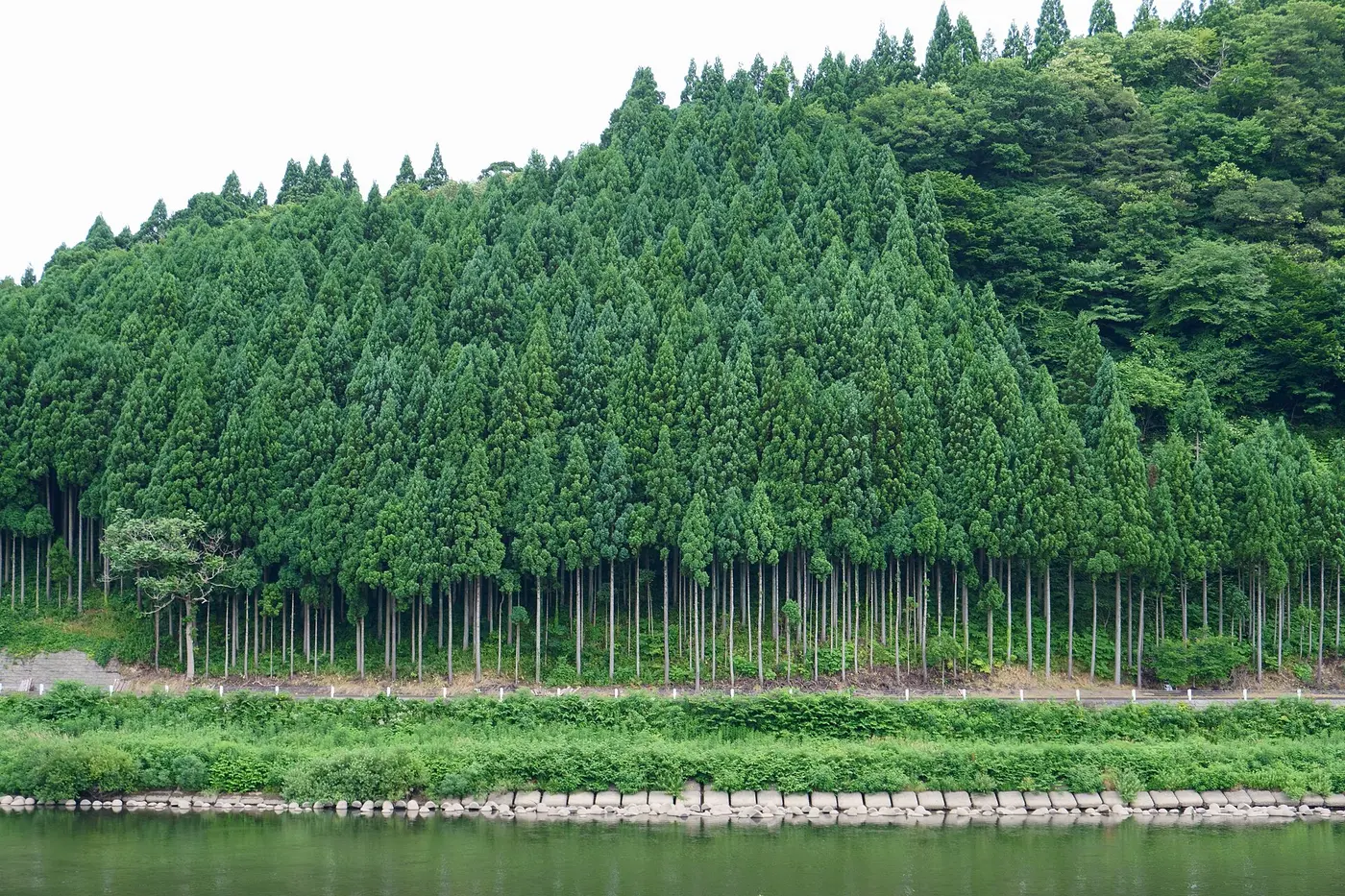
The Japanese cedar, Cryptomeria japonica, is a tree found in the wild only in Japan. There are natural cedar forests, but most of today’s cedar woods are plantations.
The white paper explains that during and after World War II, Japan’s forests were cut on a huge scale for war materials and then for reconstruction. By 1949, about 1.5 million hectares (3.7 million acres) of logged land lay bare. To restore the mountains, cedar and other familiar trees were planted across the country under slogans such as “Dress the ravaged land in green finery.”
Then demand for building timber soared. Woods that had supplied firewood and charcoal, no longer needed once people switched to oil and gas, were cut down along with natural broadleaf forests, and fast-growing conifers, cedar above all, were planted in their place. Until around 1970, nearly 400,000 hectares (about 1 million acres) were planted every year. Japan’s plantation forests doubled to about 10 million hectares, and some 4.41 million hectares (10.9 million acres) of that is cedar, more than a tenth of the country’s land area.

The trees grow up
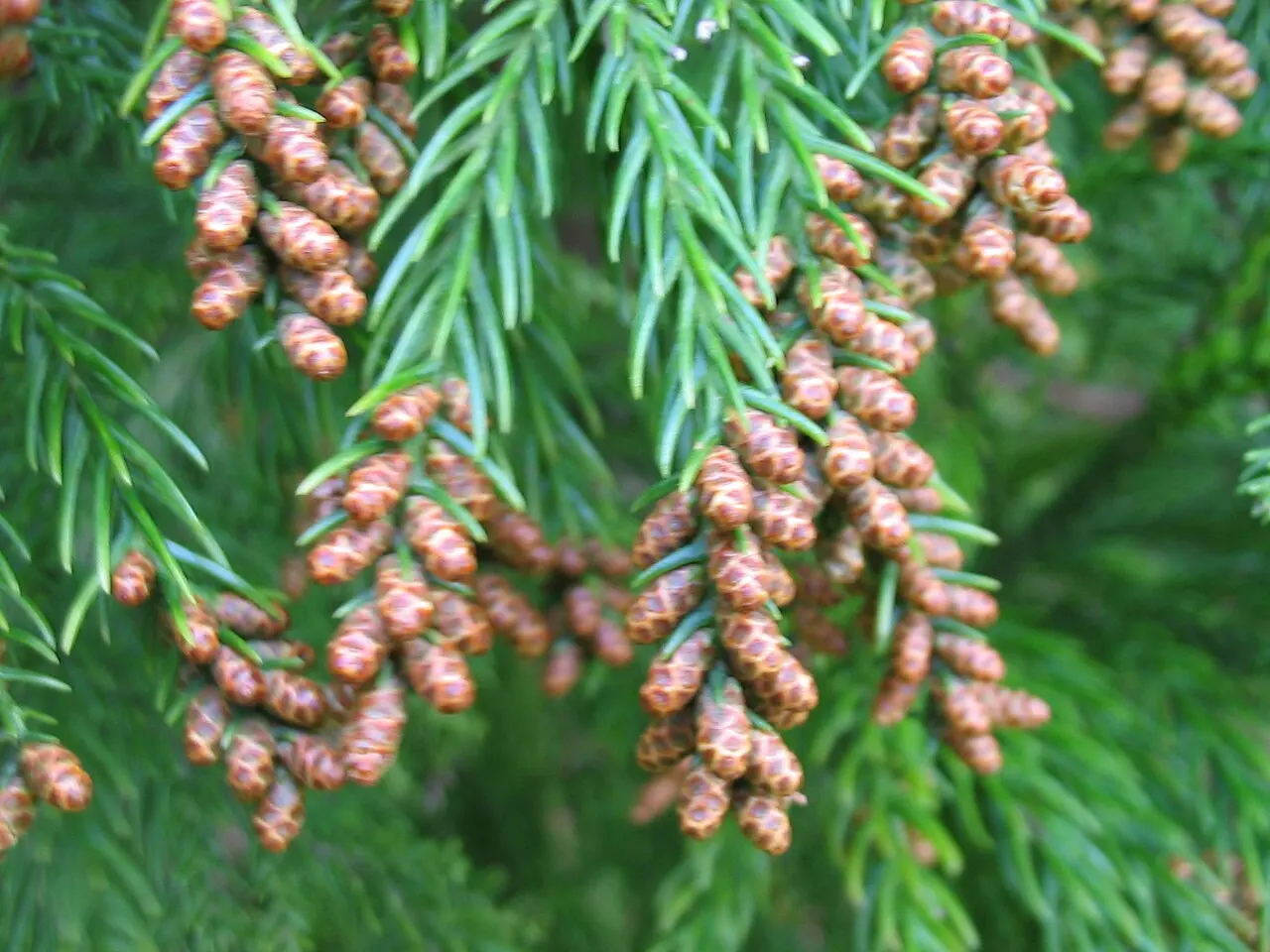
A young cedar does not shed pollen right away. According to the environment ministry, cedars start producing large numbers of male cones at around 25 to 30 years of age, and a single cone holds about 400,000 pollen grains. The Forestry Agency attributes the rise in airborne pollen to the growth, from 1970 on, of cedar forest aged 20 years or more. Reports of hay fever suddenly multiplied in the early 1970s, just as the postwar plantings came of age.
Once people develop hay fever, it rarely goes away on its own, so the number of sufferers keeps piling up. In the national surveys, the share of people with cedar pollen allergy rose from about 16 percent in 1998 by roughly 10 percentage points each decade.

Pollen is not the only factor. Officials also point to changes in diet and gut bacteria and a decline in infections. Still, Hokkaido, Japan’s northernmost main island, shows how much the trees matter. Cedar has been planted only in limited areas there, and cedar pollen allergy is relatively rare; birch and grass allergies are more common instead.
Swapping in low-pollen cedars
In 1991 the Forestry Agency began surveying cedars for trees that produce little pollen. Since 1996 it has developed low-pollen varieties that release 1 percent or less of the pollen of an ordinary cedar; there were 147 of them by 2024. In 1992 a cedar that makes no pollen at all was found in Toyama Prefecture, the result of a mutation in a gene involved in forming pollen, and 28 pollen-free varieties had been developed by March 2024.
Nurseries are producing more of these trees. In fiscal 2022, about 16 million low-pollen cedar seedlings were grown, about half of all cedar seedlings. In May 2023 the government set out a plan to cut the area of pollen-producing cedar plantations by about 20 percent within ten years and to halve the amount of pollen within about 30 years.
It took two decades or so for the postwar plantings to set off the allergy boom. Undoing it will probably take just as patient an approach.