Do lemmings jump off cliffs in mass suicide?
No. When their numbers boom, lemmings spread out in search of new ground, and some drown while swimming across rivers and lakes. But they do not kill themselves.
Lemmings are small rodents of the far north, and they are famous for one thing: when there are too many of them, the story goes, they march in great columns to the edge of a cliff and hurl themselves into the sea. The idea is so familiar that in English a person who mindlessly follows the crowd toward disaster can be called a lemming.
Lemmings, however, do not commit mass suicide. The legend grew over centuries, and in the middle of the 20th century a famous film scene fixed it in the public mind for good. That scene was staged by the film crew.
Little rodents of the north
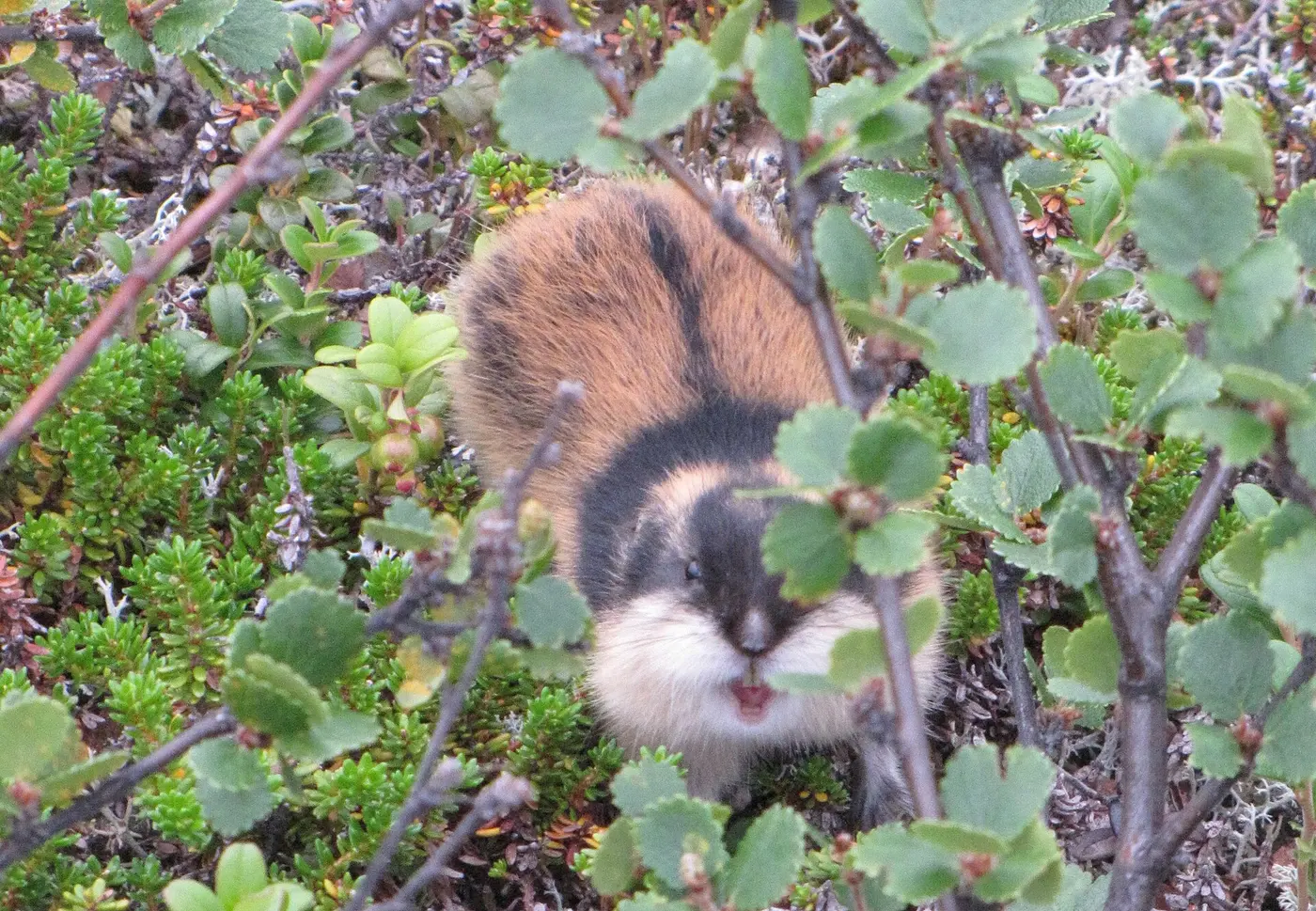
Lemmings are close relatives of voles, and they live on the Arctic tundra and nearby. The star of the legend, the Norway lemming, lives in the mountains of Scandinavia and is about 13 cm (5 inches) long.
Lemmings are known for population booms followed by crashes every few years. A 2003 study of collared lemmings in Greenland showed how the relationship with predators such as stoats could produce a four-year cycle. For the Norway lemming, researchers have found that winter snow conditions also play a large part.
In boom years, lemmings leave home and scatter in all directions in search of food. The Alaska Department of Fish and Game explains that this is not suicide but dispersal, something moose and beavers do as well. Lemmings can swim, and when a river or lake lies in their way they try to cross it. Some run out of strength and drown.
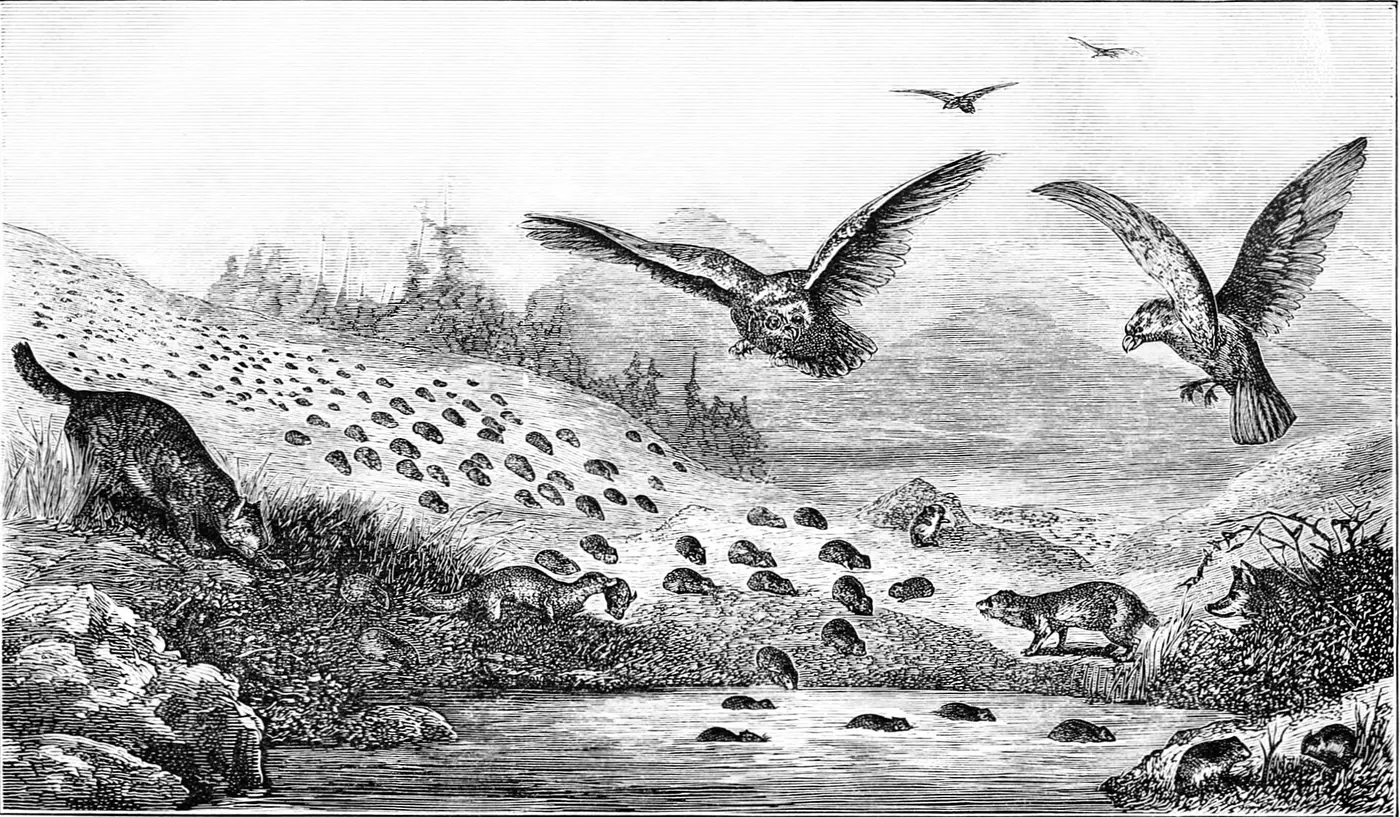
In 1877 the English naturalist W. D. Crotch, who spent his summers in the Norwegian mountains, described a lake a mile (1.6 km) wide thickly dotted with swimming lemmings, “every head pointing westward.” But whenever the slightest wind ruffled the water, he wrote, every swimmer was drowned.

From the clouds, into the sea
Lemmings that appeared from nowhere in vast numbers and then vanished have puzzled people for centuries. According to the 1911 Encyclopædia Britannica, Norwegian peasants long believed that lemmings fell from the clouds, a view shared by the 16th-century Swedish churchman Olaus Magnus.
The idea that they disappear into the sea was already around in the 19th century. In the same 1877 article, published in the American magazine Popular Science Monthly, Crotch claimed that every member of the migrating swarms perished in the sea. He even suggested that the lemmings were swimming out in search of a land that had sunk beneath the ocean long ago. The 1911 Britannica noted that lemmings perishing in the sea were “committing what appears to be a voluntary suicide,” but were really following the same blind impulse that had already carried them safely across shallower water.

The film crew did the pushing
The legend went worldwide with White Wilderness, a nature documentary released by Walt Disney Productions in 1958. Among its scenes of Arctic wildlife was a horde of lemmings marching to a cliff and dropping, one after another, into the sea. In 1959 the film won the Academy Award for Best Documentary Feature.
In 1982, however, The Fifth Estate, a current affairs program on Canada’s public broadcaster CBC, reported that the scene had been faked. According to the Alaska Department of Fish and Game and the Walt Disney Family Museum, it was filmed in landlocked Alberta, in western Canada. The lemmings were brought in from Manitoba, filmed running on a snow-covered turntable to look like a great migration, and then herded off a cliff. The “sea” was a river.
The Walt Disney Family Museum says the crew did this without the knowledge or approval of Walt Disney or the studio. A wildlife biologist quoted by the Alaska agency put it bluntly: lemming mass suicide is “a complete urban legend.”