What are a cat’s whiskers for?
They are touch sensors. Their roots are packed with nerves that detect contact with objects and even faint movements of the air.
24
Picture a cat’s face and the whiskers come with it, fanning out stiffly on either side of the nose. Sketch a cat, and it hardly looks like one until the whiskers go on.
Yet whiskers are far more than decoration. They are extraordinarily sensitive instruments that let a cat feel its surroundings. So how do they work, and what exactly do they do?
Not ordinary hairs
The scientific name for whiskers is vibrissae, or tactile hairs. Japan’s Heibonsha World Encyclopedia explains that the whiskers above a cat’s or a rat’s lip, and the long hairs over its eyes, sit in follicles containing a blood-filled space into which sensory nerve endings reach, turning each one into a small sense organ. Humans have no hairs like these.
According to veterinarians at VCA Animal Hospitals, a large chain of animal clinics in North America, a cat’s whiskers are thicker and coarser than its other hairs, and their roots are buried about three times deeper. The follicles are richly supplied with blood vessels and nerves, so even the slightest movement at the tip of a whisker registers at the root.
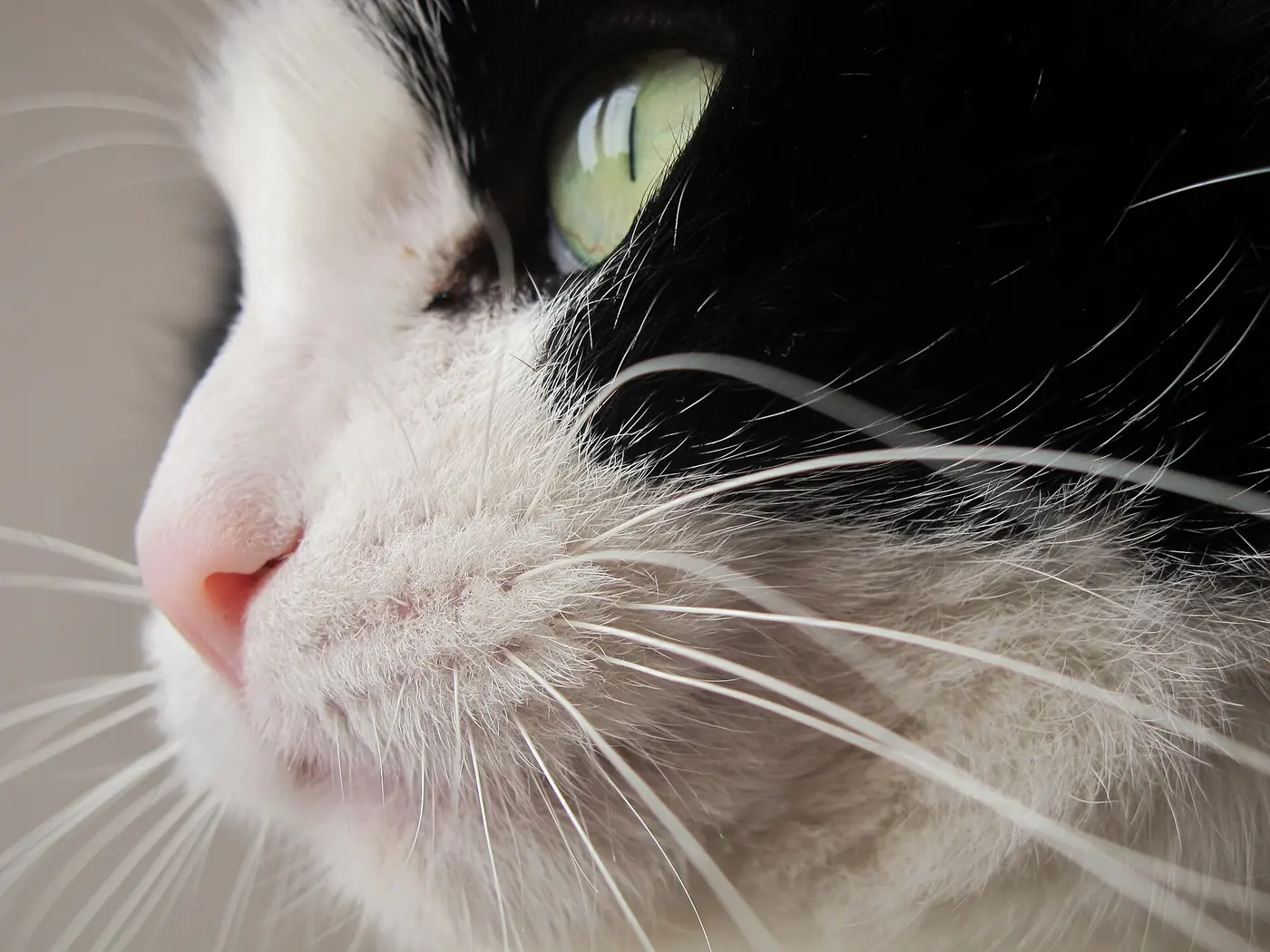

Most cats have 12 whiskers on each side of the muzzle, arranged in four rows. But that is not the only place they grow. Cats also have whiskers above the eyes, on the chin and on the back of the front legs, near the wrist.
Feeling the air itself
Whiskers do not only react when they brush against something. VCA’s vets explain that they pick up extremely faint vibrations caused by changes in the air currents around the cat. Walls and furniture nearby alter how the air moves. That is thought to be one reason a cat can prowl a dark room without bumping into things.
The whiskers above the eyes have a protective job too. When dust or debris touches them, the cat reflexively blinks or shakes its head, shielding its eyes from harm.
Help for eyes that can’t focus up close
Whiskers really come into their own during a hunt. Cats see well in dim light, but they are poor at focusing on things close to their faces. According to Cats Protection, a British cat welfare charity, cats struggle to focus on anything nearer than about 30 centimeters (12 inches).
That is where whiskers step in. When prey is right under a cat’s nose and hard to see, the whiskers around the muzzle and on the wrists pick up its tiny movements and vibrations. The wrist whiskers are thought to help a cat sense movement beneath its paws.
Whiskers also work as a mood gauge. A relaxed cat holds them loosely out to the sides. A curious or alert cat points them forward. A frightened or angry cat pulls them back flat against its face.
A built-in measuring tape?
One of the most popular whisker facts is that cats use them to judge whether they can squeeze through a gap. Vets and cat charities explain it this way: the distance from whisker tip to whisker tip is roughly the width of the cat’s body, so if the whiskers on both sides touch the edges of an opening, the cat knows the fit is tight.
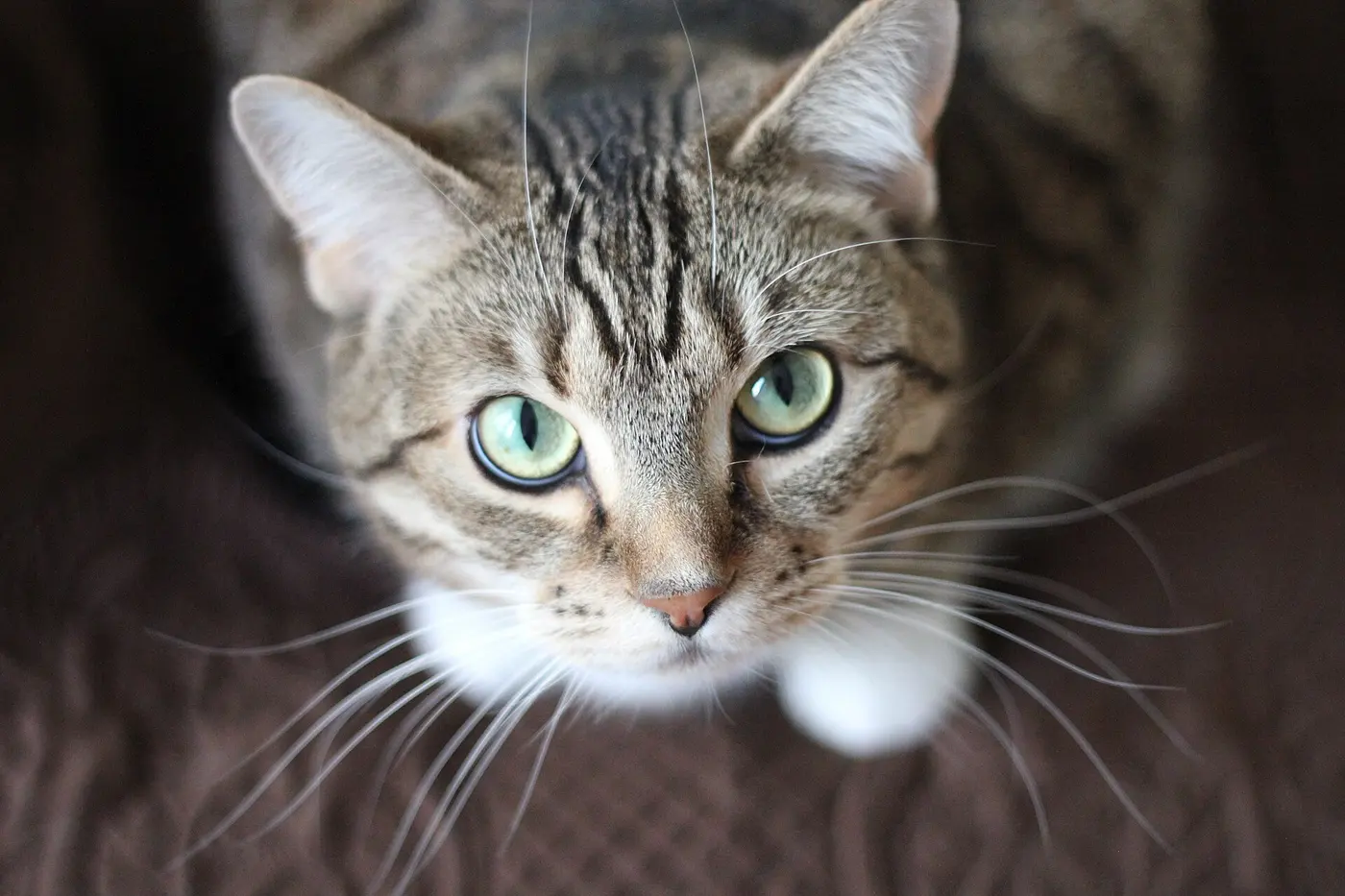

With so much riding on them, a cat’s whiskers should never be trimmed or plucked. A cat whose whiskers have been cut can lose its sense of its surroundings and may become confused or stressed. It may misjudge jumps or bump into things.
Like other hairs, whiskers fall out and regrow naturally, so finding the odd whisker on the floor is nothing to worry about. As long as the follicle is undamaged, a new whisker usually grows back to full length in six weeks to three months. If a cat loses many whiskers at once, or they stop growing back, that can be a sign of illness or injury, and it is worth checking with a vet.