Is there a frog that can freeze solid and come back to life?
Yes. The North American wood frog spends the winter with up to two-thirds of its body water turned to ice and its heart stopped, then thaws out and hops away in spring.
218days
Put a fish in the freezer and thaw it out, and it will not swim away. When an animal’s body water freezes, sharp ice crystals tear its cells, and the water inside them gets pulled out. For most living things, freezing means death.
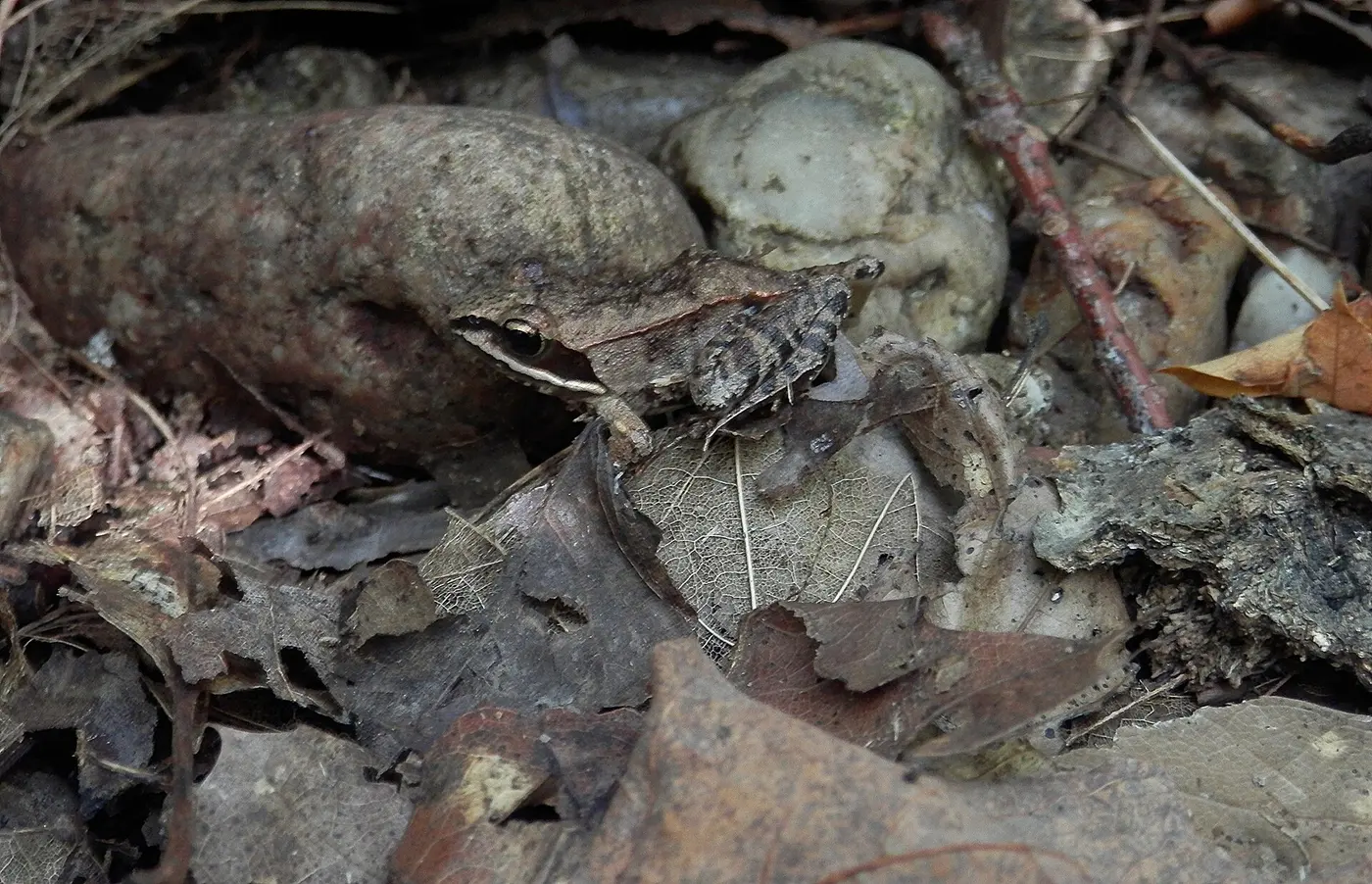
Yet in North America there is a frog that spends the winter with most of its body frozen and starts moving again when it thaws in spring. It is the wood frog, Lithobates sylvaticus.
A winter without a heartbeat
Wood frogs live across the northern part of North America, from the eastern United States through Canada to Alaska. Instead of hibernating underwater, they ride out the winter on the forest floor, tucked under leaf litter and snow.
Kenneth Storey of Carleton University in Ottawa, who has studied the frogs with his colleagues since the 1980s, reports that a frozen wood frog can have 65 to 70 percent of its body water turned to ice. While it is frozen, its heart stops beating, it stops breathing, its blood stops flowing, its muscles do not move and no brain activity can be detected. From the outside it is simply a frozen frog. Yet it can survive in this state for weeks or even months.

Ice only on the outside
Part of the trick is where the ice forms. In a wood frog, ice forms outside the cells and in the spaces around the organs. Water is drawn out of the cells, which shrink, but the cells themselves never freeze inside.
Lose too much water, though, and cells cannot survive. That is where sugar comes in. As soon as ice begins to form near the skin, the frog’s liver starts breaking down its stores of glycogen and pumping huge amounts of glucose into the blood. Within minutes to hours of the start of freezing, the glucose is distributed throughout the body. According to Storey and his colleagues, glucose levels in the blood and tissues can rise as much as 50-fold.
Just as sugar dissolved in water lowers its freezing point, a cell packed with glucose loses less water to the ice outside and shrinks less. The frog also builds up urea, which helps the glucose do its job.
The sugar helps again in spring. When researchers used magnetic resonance imaging to watch frozen frogs thaw, the liver and heart, where glucose is especially concentrated, melted first. The vital organs at the core can get going while the rest of the body is still thawing. Storey thinks the frogs’ ability to survive freezing probably grew out of an older ability among amphibians to cope with drying out.
Tougher in Alaska
How much cold a wood frog can take seems to depend on where it lives. Earlier studies had reported that the frogs could survive down to about −7°C (19°F). In Ontario, researchers estimated that frogs stay frozen for no more than 76 hours at a stretch, or 11 to 13 days over a whole winter.
Then Don Larson and colleagues at the University of Alaska Fairbanks tracked wild wood frogs to their winter hiding places in the forests near Fairbanks and recorded the temperatures there. In a study published in 2014, they found that the frogs settled 4 to 10 cm (1.5 to 4 inches) below the surface of the leaf litter and stayed frozen for an average of 193 consecutive days. At some sites, temperatures stayed below freezing for as long as 218 days. The average temperature from October to May was −6.3°C (21°F), and the coldest spot reached −18.1°C (−0.6°F). Yet all 18 frogs they followed woke up alive in spring.
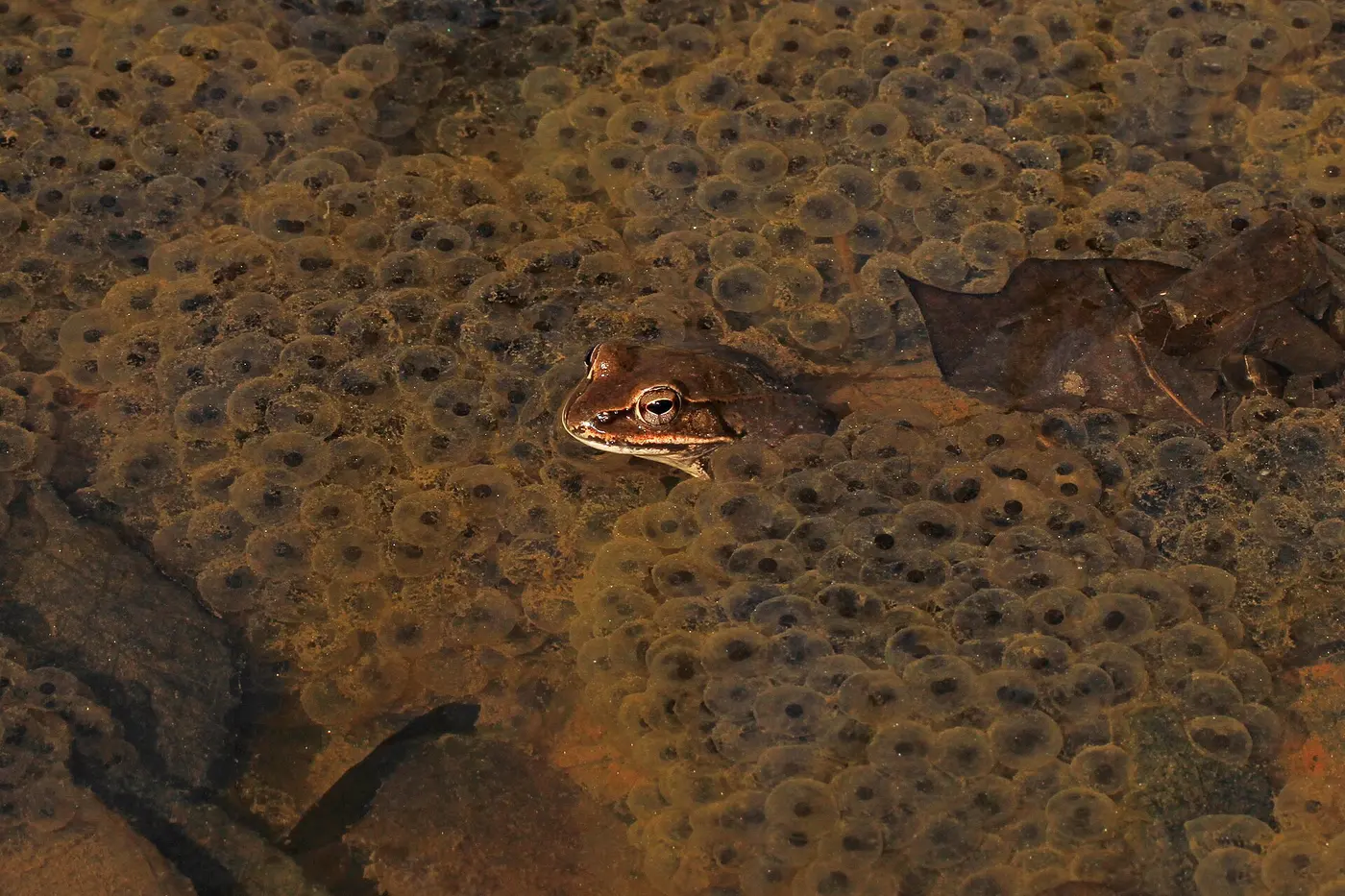

Compared with frogs frozen in the laboratory, the Alaskan frogs had 13 times as much glucose in their muscles, 10 times as much in their hearts and 3.3 times as much in their livers. The researchers pointed to the repeated freezing and thawing the frogs go through in early fall. In early October, the frogs experienced an average of 12, and as many as 17, nights of freezing followed by daytime thaws. These dress rehearsals before winter sets in for good may be what lets the frogs stockpile so much glucose, the team suggests.