Is there any melon in Japanese melon bread?
Usually not. The leading theory is that the crisscross pattern on top looks like the rind of a muskmelon.
A crisp, cookie-like crust over soft, fluffy bread, its surface glittering with sugar: melon pan, or melon bread, is one of Japan’s best-loved sweet buns. Almost every bakery and convenience store in the country has at least one on the shelf.
Yet hardly anyone takes a bite and thinks, “Ah, melon.” The classic version contains no melon at all. So why is it called melon bread?
Named for its looks
The best-known explanation is that the pattern on top resembles a muskmelon. Before baking, the cookie dough on the bun is scored in a crisscross grid. Once baked, that grid looks a lot like the raised netting on a muskmelon’s rind.
Muskmelons were first grown in Japan in the Meiji era (1868–1912), and they reached the market around the Taisho era (1912–1926). Raised with great care in greenhouses, they were a coveted luxury fruit. Naming a humble bun after one makes a certain kind of sense.
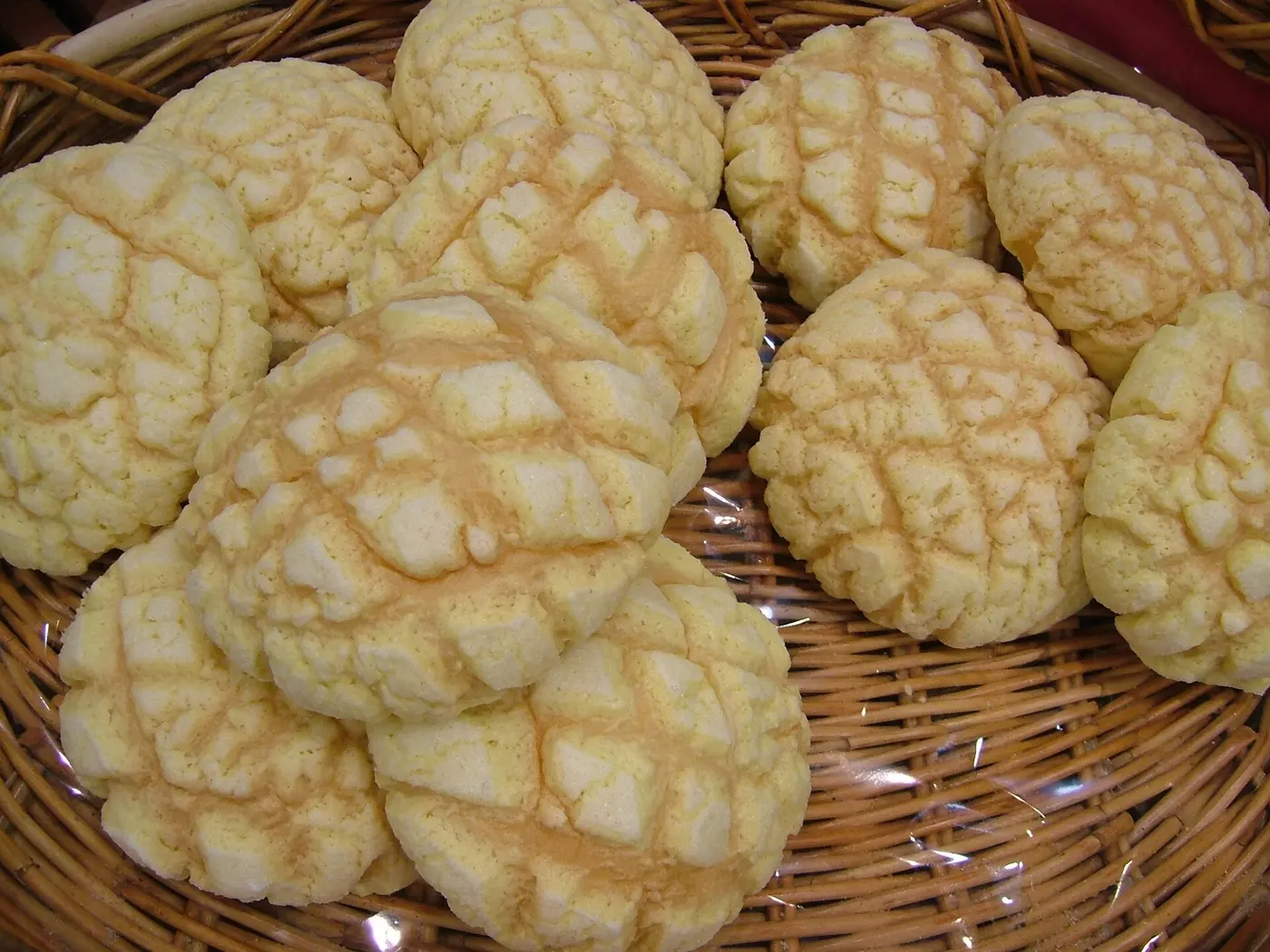

Another theory holds that the crust was once made with whipped egg whites, so the bun was called “meringue bread,” which was later garbled into “melon bread.” The food writer Yūko Shibukawa, however, considers this explanation unconvincing.
Who invented it?
Nobody knows for certain who made the first melon bread, either.
One often-told story features Ivan Sagoyan, an Armenian baker said to have served the Russian imperial court. The industrialist Ōkura Kihachirō brought him to Japan from Harbin in northeast China, and while working at Tokyo’s Imperial Hotel he supposedly created the bun that became melon bread. There is no record, however, that Sagoyan ever called it “melon bread.”
Another clue is a bread registered as a utility model in 1930 by the owner of a bakery in Komagome, Tokyo. It involved baking bread dough under a covering of a second, sweet dough, much as melon bread is made today. Buns like this, it seems, were already being baked in Tokyo by the early 1930s.
Western Japan’s “other” melon bread
Curiously, western Japan has a separate lineage of “melon bread” altogether.
A bakery called Melon Pan in Kure, Hiroshima Prefecture, opened in 1936. Its founder, Nakashio Haruma, topped spindle-shaped buns filled with custard with cookie dough and sold them as “melon bread.” Shaped rather like a rugby ball, they remain a local specialty in Kure today.
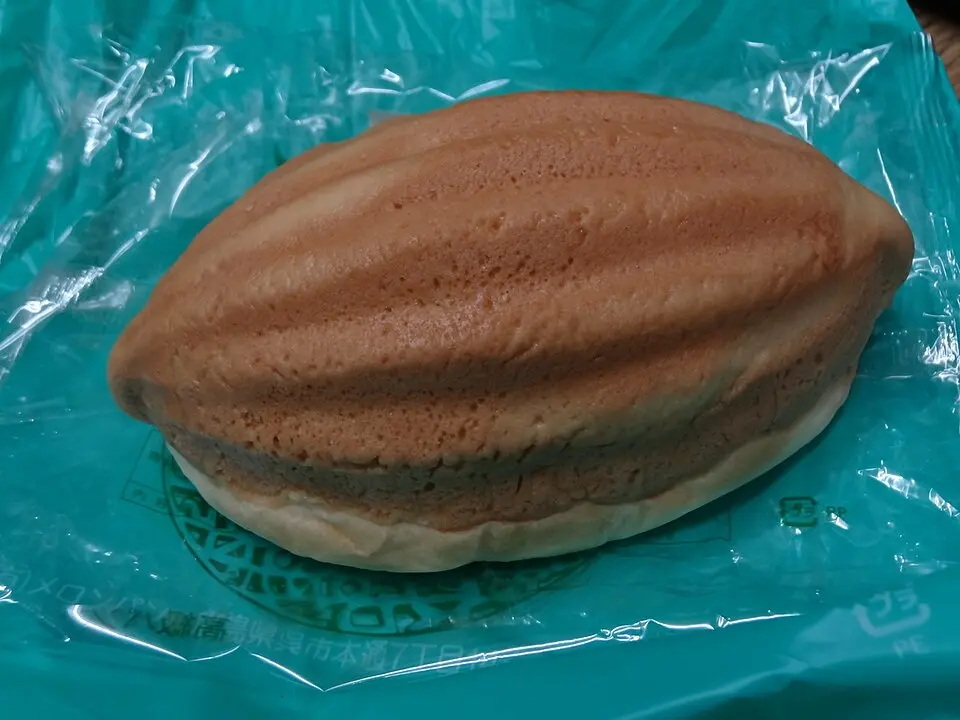

In Kobe in 1952, a young baker at the forerunner of the Coop Kobe consumer cooperative used an omelet-rice mold to create a rugby-ball-shaped bun filled with sweet white bean paste. It was called melon bread because its shape resembled the makuwa uri, an Asian melon that people at the time simply called “melon.” Here it was the shape, not a net pattern, that suggested a melon.
Partly for this reason, in parts of the Kansai, Chūgoku and Shikoku regions of western Japan, the round cookie-topped bun is sometimes called “sunrise” instead, its round form likened to the rising sun.
Fruitless cousins abroad
Japan is not the only place with a bun named after a fruit it doesn’t contain.
Hong Kong’s bo lo bao is known in English as the pineapple bun. Its sweet, crumbly top bakes to a golden crackled pattern that looks like pineapple skin, and the traditional version contains no pineapple at all. Mexico, meanwhile, has the concha, or “shell,” a sweet bun named for the seashell-like stripes on its crust.
These days you can also find melon bread that really does taste of melon, made with melon juice or melon-flavored cream. You might say the flavor has finally caught up with the name.