Are bananas radioactive?
Yes, slightly. A tiny fraction of their potassium is naturally radioactive potassium-40. But the amount is small, and eating bananas does not raise the radioactivity in your body.
4,000 Bq
Bananas give off radiation. Hearing that, you might feel like putting down the one in your hand. But it is true. What’s more, bananas are not alone. Rice, milk and even our own bodies all give off tiny amounts of radiation.
The culprit is potassium. Potassium is an element that every living thing needs, and it is found in nearly all foods. A very small part of that potassium happens to be radioactive.
One atom in ten thousand
Natural potassium is a mix of three kinds of atoms of slightly different weights. About 0.012 percent of them, roughly one in ten thousand, are potassium-40, which is radioactive. Potassium-40 is extremely long-lived: it takes about 1.25 billion years for half of it to decay. Japan’s Ministry of the Environment explains that long-lived radioactive elements like this were forged in space long ago and became part of the Earth when it formed. When a potassium-40 atom decays, it gives off beta and gamma rays.
According to Japan’s official food composition tables, the edible part of a banana contains 360 milligrams of potassium per 100 grams. One gram of natural potassium has a radioactivity of about 30 becquerels, so a banana with 100 grams of fruit comes to a little over 10 becquerels. A becquerel is one atom decaying and giving off radiation per second. In other words, about ten atoms in a banana are giving off radiation every second.
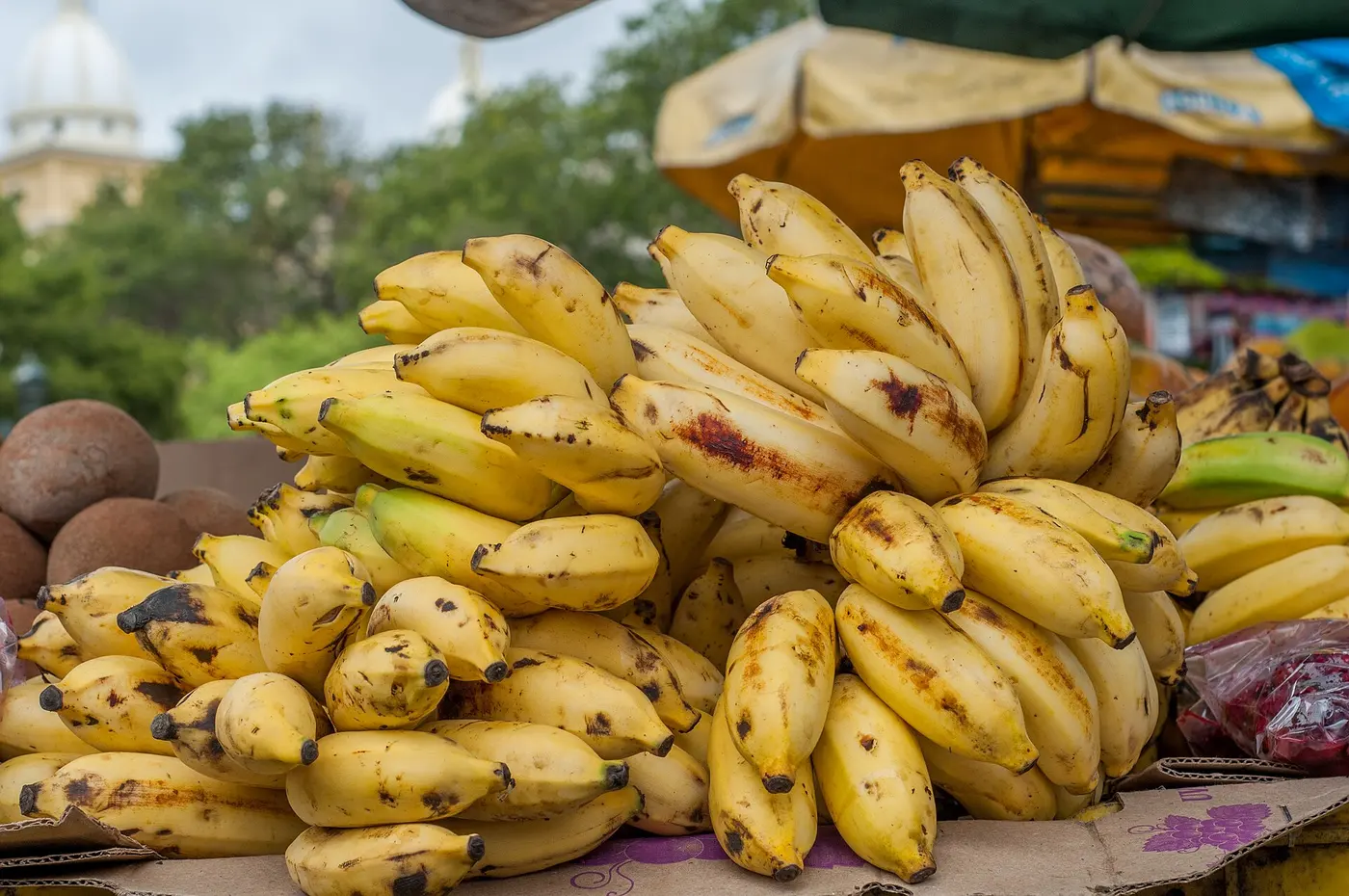

That is nothing special compared with other foods. A Ministry of the Environment handout lists potassium-40 levels of 30 becquerels per kilogram in rice, 50 in milk, 200 in spinach and 2,000 in dried kelp. Working out the same figure for bananas gives about 110 becquerels per kilogram, a little over half the figure for spinach.
The “banana equivalent dose”
Even so, the banana has become famous as a yardstick for radiation: the “banana equivalent dose.”
One early example of the idea is a March 1995 post to RadSafe, a mailing list for radiation safety professionals, by Gary Mansfield of Lawrence Livermore National Laboratory in California, who signed himself “Captain Internal Dosimetry.” Using a handbook figure for potassium-40 in bananas, he calculated the dose from eating an average banana weighing about 150 grams (5 ounces). The answer was about 0.1 microsieverts. He wrote that he found this “Banana Equivalent Dose” very useful for explaining tiny doses, and the correspondingly tiny risks, to members of the public. His post ended with a tongue-in-cheek disclaimer that neither his laboratory nor the Department of Energy recommends eating bananas.
For comparison, 0.1 microsieverts is about one twenty-thousandth of the natural background radiation that people in Japan receive each year, about 2.1 millisieverts.
The catch
But the comparison has a catch. Eating a banana does not increase the potassium-40 in your body.
Our bodies keep the amount of potassium they contain more or less constant. Japan’s Ministry of the Environment explains that because the body holds its potassium level steady, the dose we receive from potassium in food depends on our body size, not on what we eat. Paul Frame, who curates a museum collection of radiation history at Oak Ridge Associated Universities in Tennessee, writes that eating foods rich in potassium will not increase the body’s potassium content, so eating bananas does not increase your annual radiation dose.
Besides, there is already plenty of potassium-40 inside us. According to the Ministry of the Environment, a person weighing 60 kilograms (132 pounds) carries about 4,000 becquerels of it, several hundred times the amount in one banana. It can even be measured from outside the body. When a person is scanned with a device called a whole-body counter, the gamma rays from potassium-40 show up as a clear peak. Because potassium sits mainly in the water inside our cells, there is plenty in muscle and very little in fat.
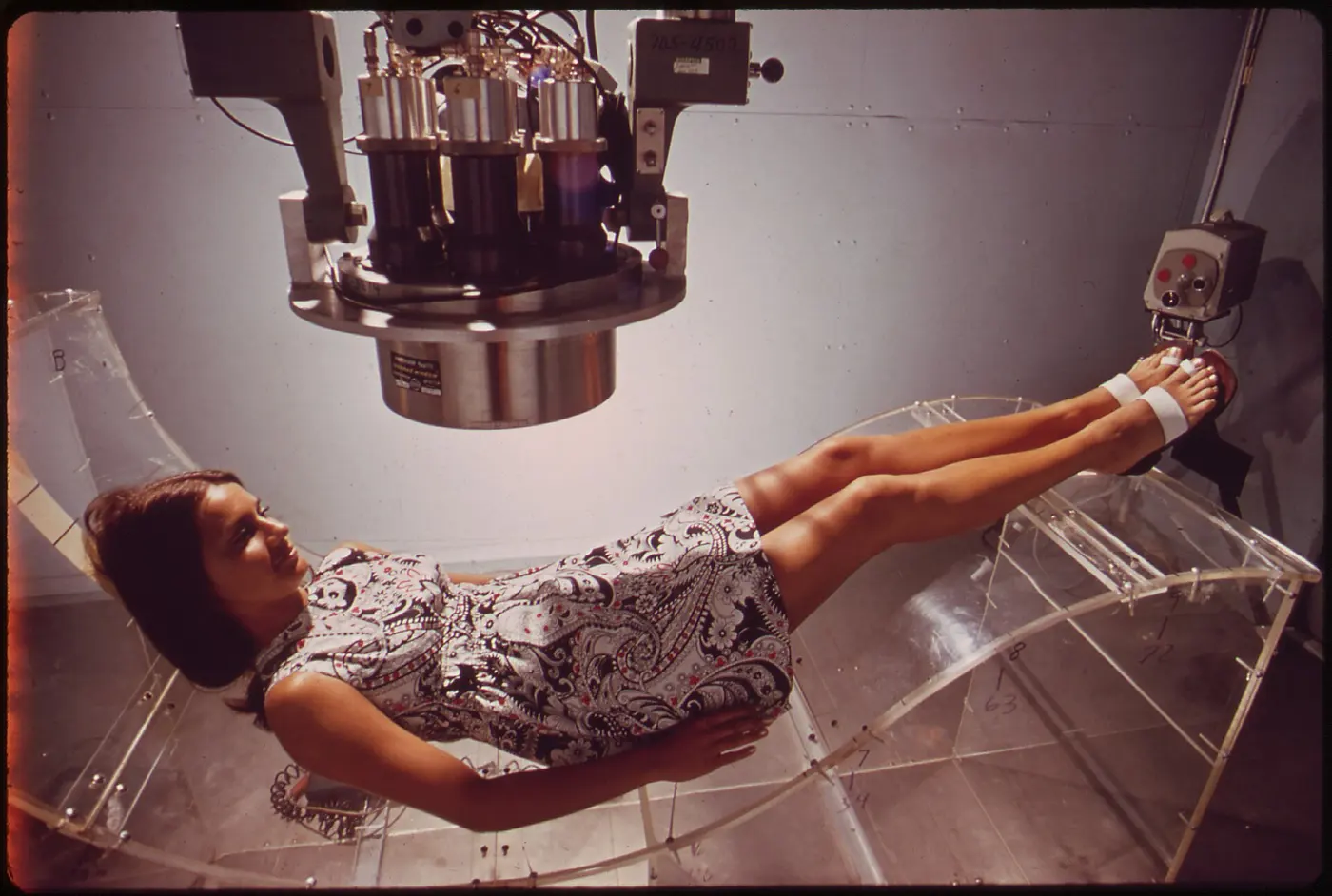

The Nuclear Safety Research Association in Japan estimates that people in Japan receive about 0.18 millisieverts a year from the potassium-40 inside them.
The banana equivalent dose is a handy way to get a feel for very small numbers. What it is not is a running total, as though every banana you eat adds another tenth of a microsievert.