Is there a lowest possible temperature?
Yes: absolute zero, −273.15°C or 0 kelvin. Nobody found it by cooling something that far. Its value was worked out from the way gases behave.
−273.15°C
In 1983, the Soviet Union’s Vostok Station in Antarctica recorded an air temperature of −89.2°C (−128.6°F). Cold as that is, temperature has a floor far below it, a point beyond which nothing can get colder: −273.15°C, or absolute zero.
The curious thing is that this floor was located at a time when nobody had come close to reaching it. How do you measure the depth of a bottom you can’t see?
When the air’s “spring” runs out
The first person to tackle the question was the French physicist Guillaume Amontons. He was working on air thermometers, which measure temperature by how strongly a trapped pocket of air pushes up a column of mercury. In a paper of 1703, he reasoned that the colder the air gets, the weaker its push, or its “spring,” as people said then. The temperature at which that spring disappeared altogether, he argued, would be the extreme of cold for his thermometer.
Converted to the Celsius scale, Amontons’ zero comes to about −240°C (−400°F), a remarkably good first estimate.
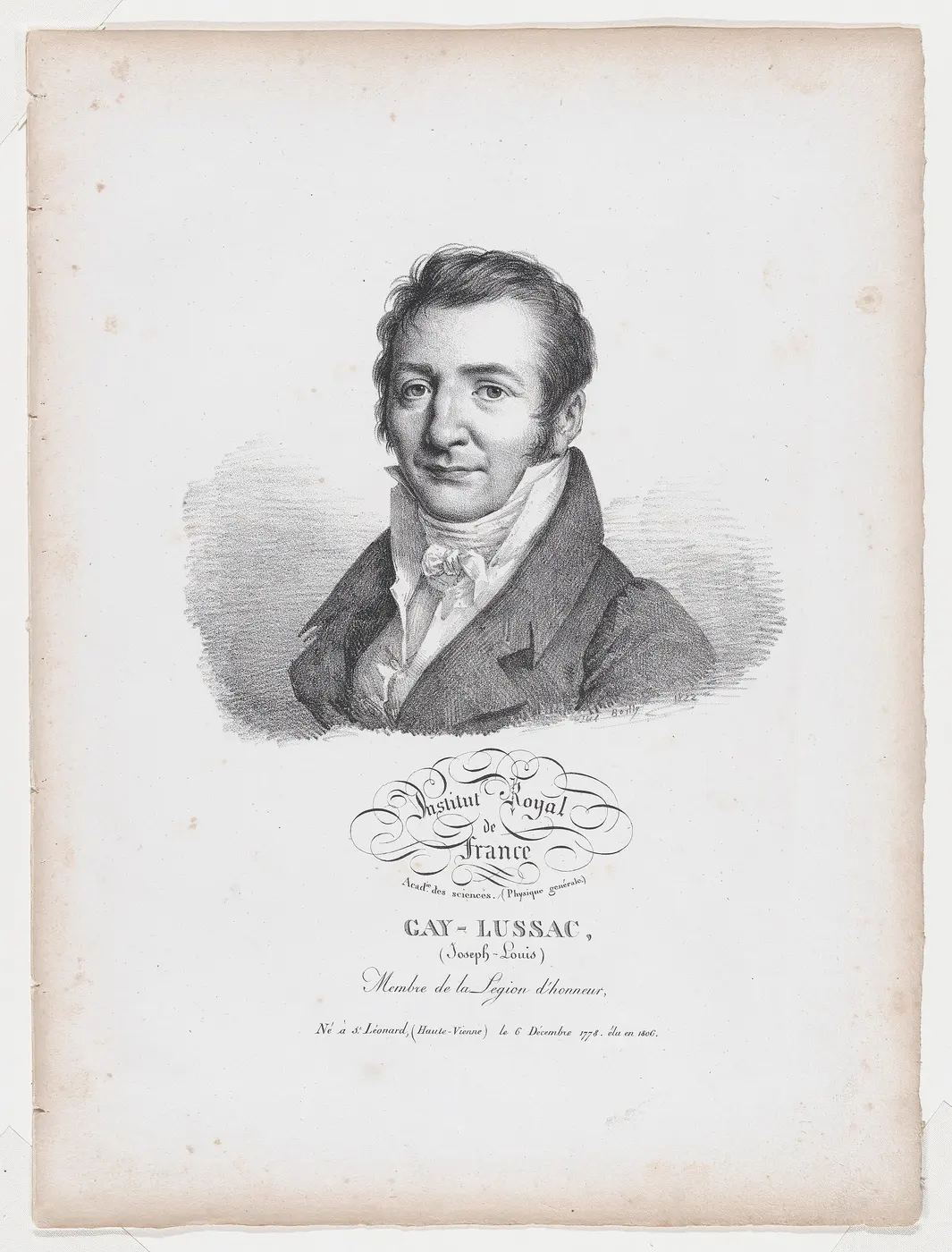

In the early 19th century, Joseph Louis Gay-Lussac and others in France established that a gas held at constant pressure shrinks by a fixed fraction of its volume for every degree it cools. Later, more precise measurements put that fraction at about 1/273 of the gas’s volume at 0°C. Keep shrinking at that rate and the gas would have no volume left at −273°C. A real gas would turn into a liquid well before that, of course.
A scale that doesn’t depend on any substance
In 1848 the British physicist William Thomson, later Lord Kelvin, proposed an “absolute” temperature scale that did not depend on the properties of any particular substance. In a footnote, he noted that −273 degrees, the point where the air in a thermometer would shrink to nothing, could never be reached at any finite temperature, however low.
That first scale was not quite the one we use today. In 1854, Thomson and James Joule put forward a new scale with absolute zero as its zero point, the basis of today’s unit, the kelvin (K).
That left the digits after the decimal point. According to the Tokyo Institute of Technology (now part of Institute of Science Tokyo), in the 1930s laboratories in Germany, the Netherlands and the United States used precision gas thermometers to measure how many kelvins 0°C corresponds to, and came up with values ranging from 273.11 to 273.19. Two physicists at the institute, Masao Kinoshita and Jiro Oishi, joined the race. With an apparatus assembled from handmade glassware, and nearly ten years of work, they found the answer lay between 273.15 and 273.16. When the temperature committee of the International Committee for Weights and Measures finally settled the question in 1954, the institute says, the value it adopted was the 273.15 kelvins derived by Kinoshita and Oishi’s team.
The closer you get, the harder it gets
So how close can we actually get? In 1908, Heike Kamerlingh Onnes at Leiden University in the Netherlands became the first to liquefy helium, the last gas that had resisted, reaching about 4 kelvins, or −269°C (−452°F). The work earned him the 1913 Nobel Prize in Physics.
Meanwhile, the German chemist Walther Nernst, building on the heat theorem he had published in 1906, argued in 1912 that no process could reach absolute zero in a finite number of steps. That idea is one statement of what is now called the third law of thermodynamics. Each round of cooling brings the temperature down by a smaller amount, the closer you are to the bottom.
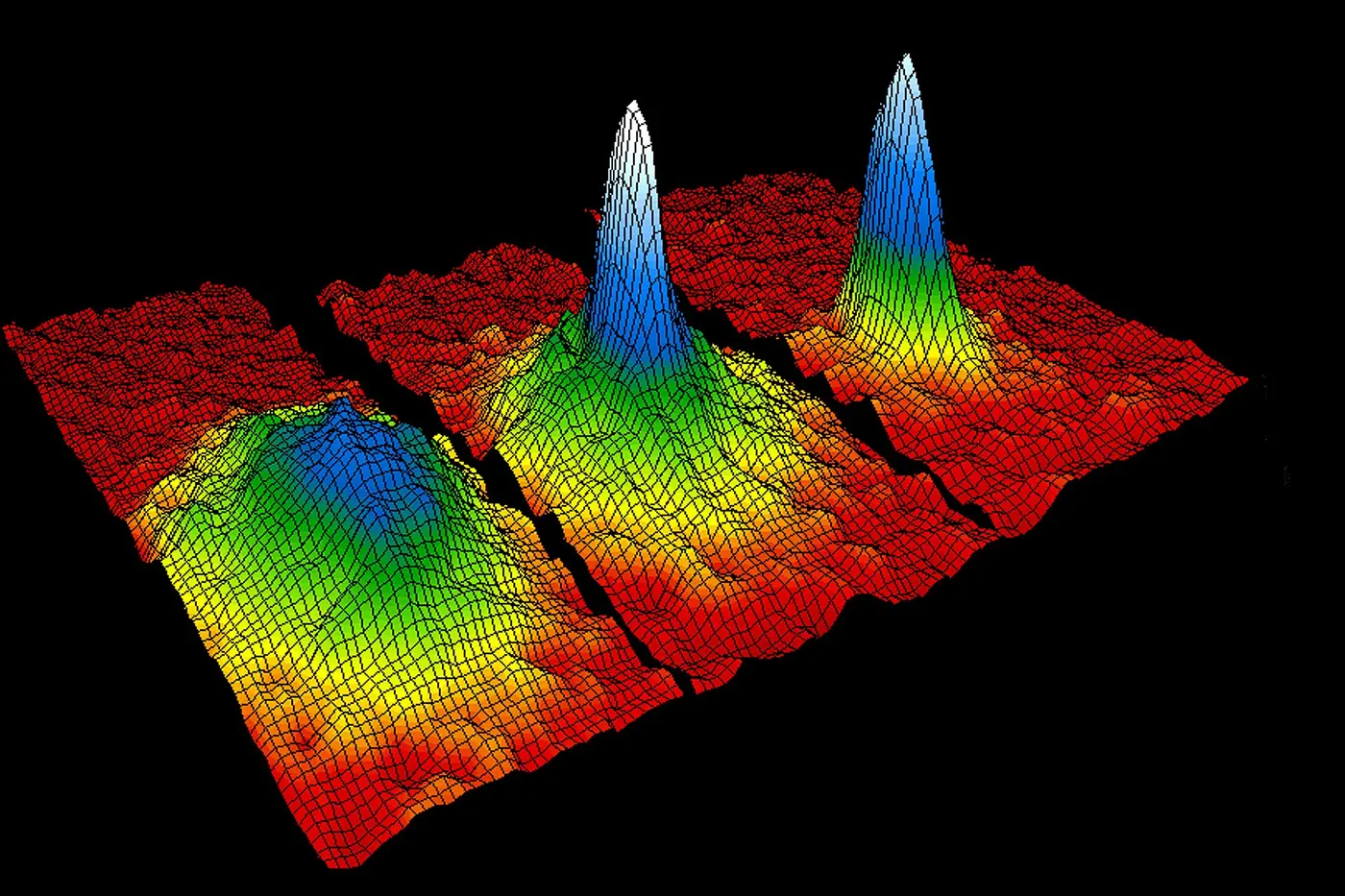
The approach continued anyway. In 1924, the Indian physicist Satyendra Nath Bose sent Albert Einstein his calculations on particles of light. Einstein extended them to certain kinds of atoms and predicted that if such a gas were cooled far enough, the atoms would all suddenly crowd into the lowest possible energy state. In 1995, more than 70 years later, Eric Cornell and Carl Wieman in the United States produced this “Bose–Einstein condensate” with rubidium atoms. According to the Nobel Foundation, their pure condensate of about 2,000 atoms was a mere 20 billionths of a degree above absolute zero.