Why are there two high tides a day?
The sea bulges in two places at once, on the side facing the Moon and on the opposite side, and the spinning Earth carries each coast under both.
Go to the seaside and you may find that waves lapping at the rocks in the morning have pulled far out by early afternoon, uncovering a wide stretch of beach or mudflat. That is the tide.
According to the Japan Meteorological Agency, most coasts get two high tides and two low tides a day. It is common knowledge that tides are caused by the Moon’s gravity. But the Moon goes around the sky only once a day. Why, then, are there two high tides?
Two bulges: one facing the Moon, one facing away
The Moon’s gravity pulls harder on places close to it and more weakly on places farther away. Ocean water on the side facing the Moon is pulled toward it more strongly than Earth’s center is, so it heaps up toward the Moon. So far, so intuitive.
The puzzling part is that the sea also bulges on the side directly opposite the Moon.
The key is that Earth is not standing still either. We say the Moon orbits Earth, but in fact the two circle together around their shared center of mass. Because Earth is far heavier, that point lies inside Earth itself, about 1,700 kilometers (1,050 miles) below the surface. Earth, too, is swinging around this point in a small circle.
That circling produces an inertial force pointing away from the Moon, and it is the same size everywhere on Earth. The Moon’s pull, by contrast, is stronger the closer you are to it. Put the two together and what is left over pushes water toward the Moon on the near side and away from the Moon on the far side. The Japan Meteorological Agency calls this combined force the tide-generating force. The result is that the sea bulges in two places at the same time: under the Moon and on the opposite side of the planet.
High tide comes about 50 minutes later each day
Because Earth spins once a day, any stretch of coast passes under both bulges in turn. When it is under a bulge, it has high tide; in between, it has low tide.
Meanwhile, though, the Moon has moved a little farther along its orbit in the same direction Earth spins. So it takes about 24 hours and 50 minutes for a given spot to come back under the Moon. High tides are about 12 hours and 25 minutes apart, which is why high and low tides arrive roughly 50 minutes later each day.

The Sun pulls on the tides too
The Moon is not the only tide-maker. The Sun pulls on the oceans in the same way. It is about 27 million times more massive than the Moon, but it is also about 390 times farther away, so its tide-generating force is only about half the Moon’s. That is because tides depend not on the strength of a body’s gravity as such but on how much that pull differs from one side of Earth to the other, and that difference shrinks very quickly with distance.
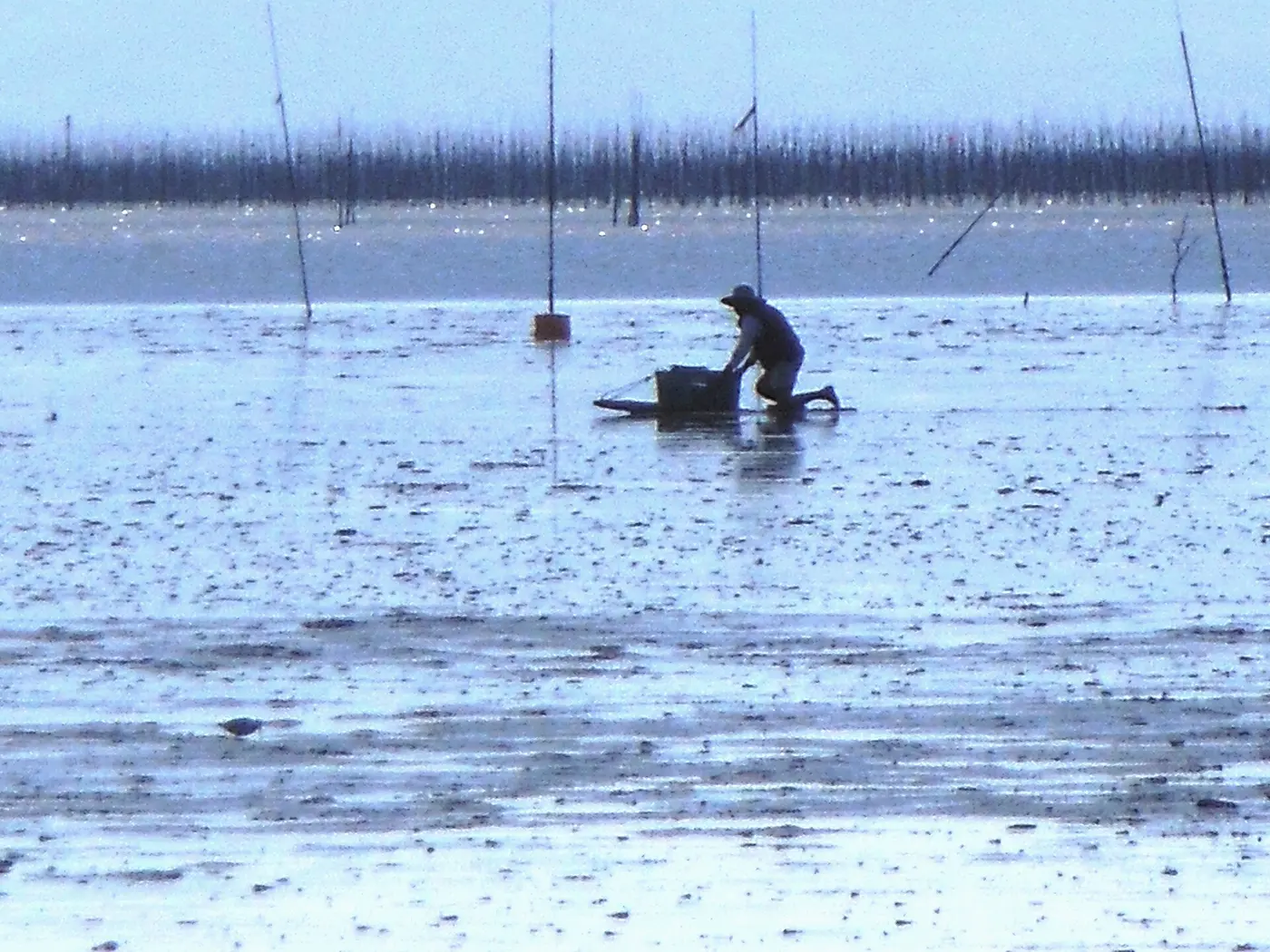
Around the new moon and the full moon, the Sun, Moon and Earth line up, the two effects add together, and the tides are especially large. These are spring tides (nothing to do with the season). Around the half moons, the two effects partly cancel out and the tides are smaller; these are neap tides. Because the water drops especially low at low tide during spring tides, they are also the best days in Japan for shiohigari, the popular pastime of digging for clams on the exposed shore.
Once a day in some places, 15 meters in others
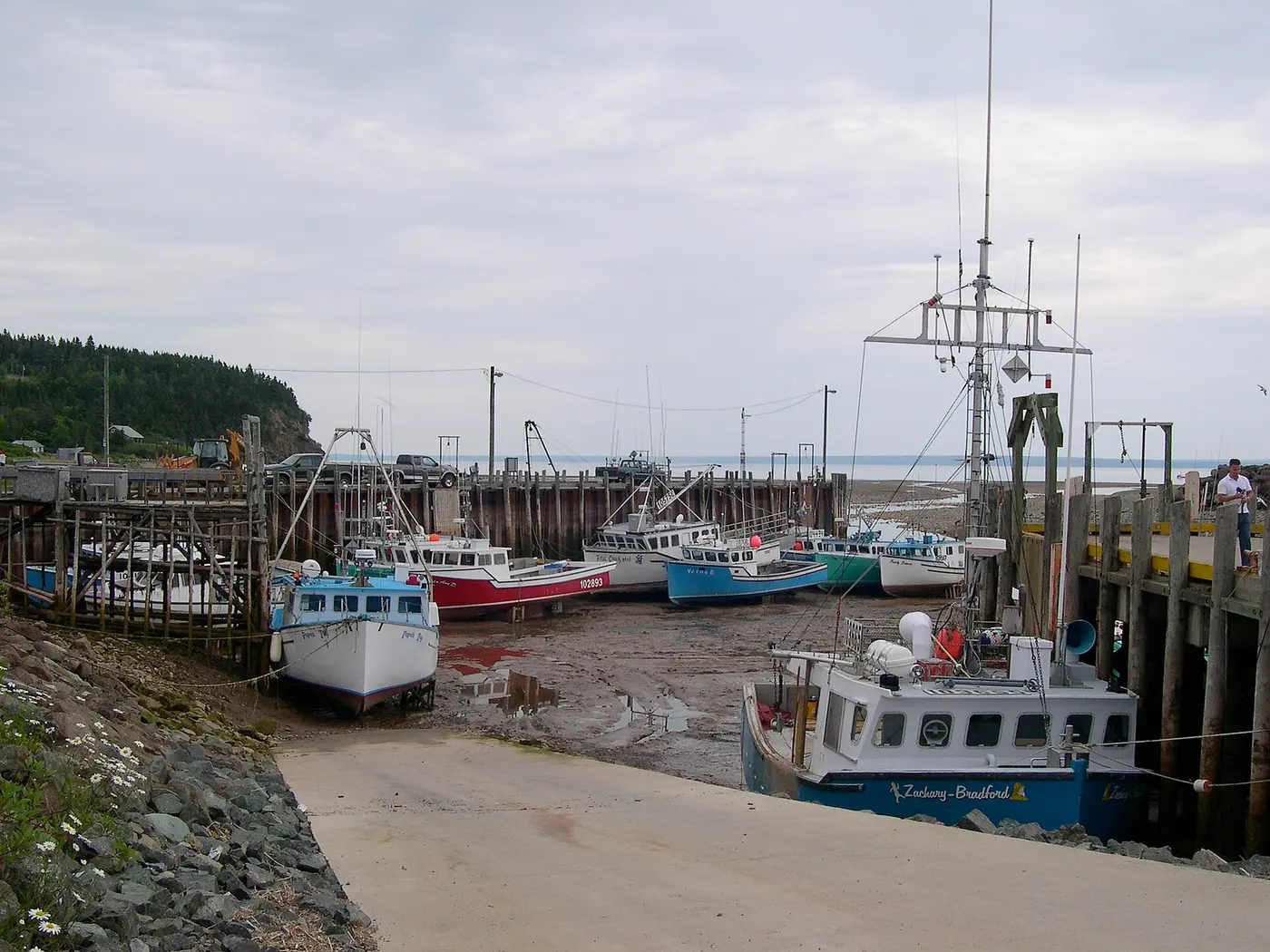
In the real ocean, coastlines and the shape of the seabed get in the way of the moving water, so tides vary enormously from place to place. According to the US National Oceanic and Atmospheric Administration (NOAA), some places, such as the Gulf of Mexico, get only one high and one low tide a day, while others, such as the west coast of North America, get two high tides of very different heights.
How big the tides are also depends on the shape of the coast. In Japan, the long, shallow Ariake Sea has a tidal range of up to 6 meters (20 feet), while tides on the Sea of Japan coast are much smaller. The record is usually given to the Bay of Fundy in Canada, whose shape makes the water resonate with the tide, producing ranges of up to about 15 meters (50 feet).