How many stitches are on a baseball?
A regulation baseball has 108 stitches, and Major League balls are still sewn by hand.
108stitches
A seam of red thread loops in a great curve around a ball of white leather. A baseball is instantly recognizable, and anyone who has watched a game on TV or from the stands has seen one many times over. But have you ever counted how many stitches it has?
The answer is 108. To a Japanese reader, that number rings a bell: it is the number of times temple bells are struck on New Year’s Eve, one for each of the 108 earthly desires that Buddhism says trouble the human heart. So a baseball carries exactly as many stitches as there are worldly passions. It is pure coincidence, but almost too neat to be true.
From lemon peel to figure eight
In mid-19th-century America, when baseball was still taking shape, balls were made by hand, and their size and weight varied from one maker to the next. A common type was what later came to be called the “lemon peel” ball. A single piece of leather was cut into a petal-like shape and sewn around the core, leaving four lines of stitching across the surface.
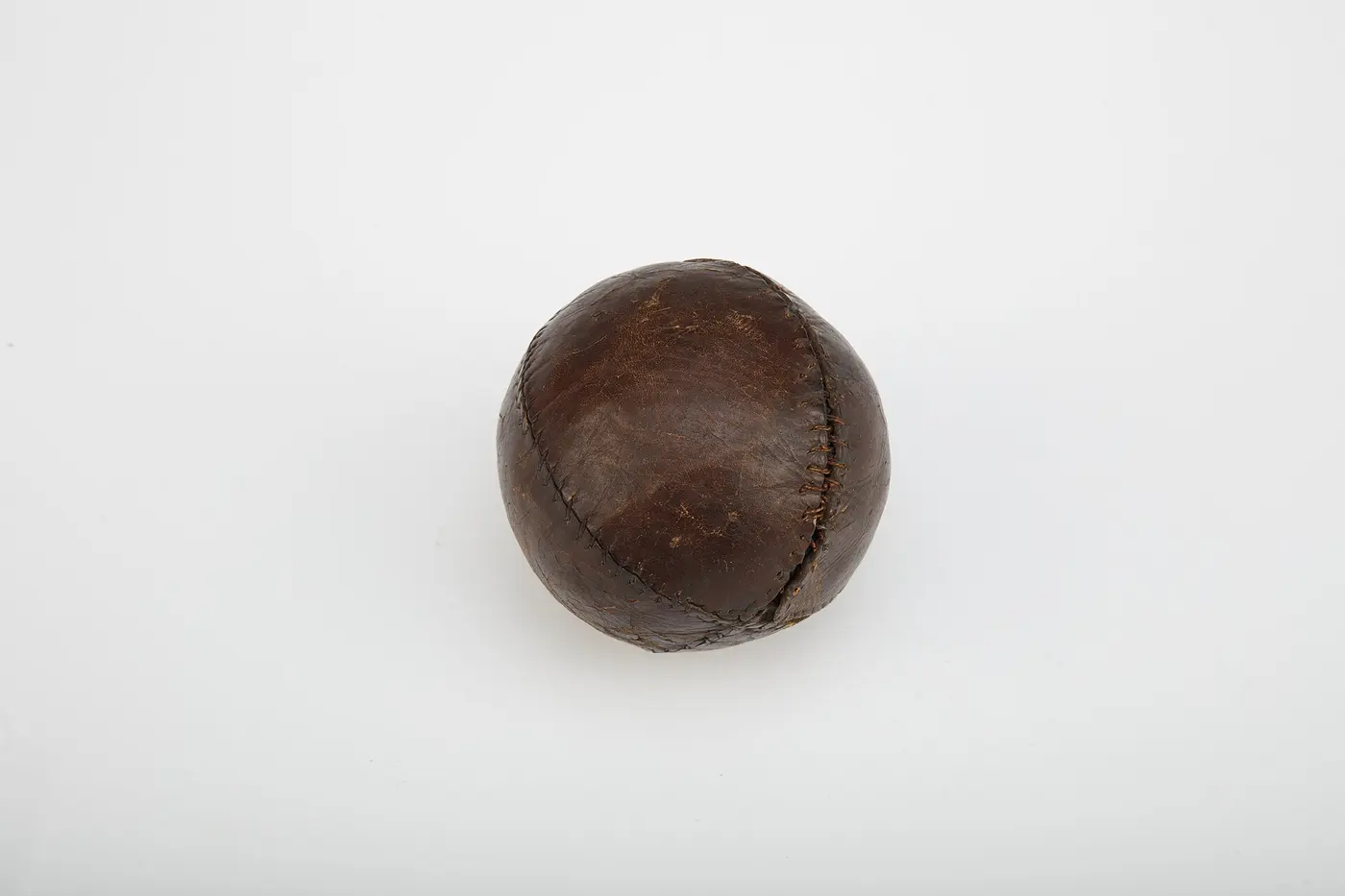

Over time, the figure-eight design we know today took over: two pieces of leather, each cut in a shape like a gourd, fitted together. Accounts differ on who came up with it. One story credits Ellis Drake, the son of a shoemaker; another says a man named William Cutler devised it and sold the idea to William Harwood. Either way, Harwood is said to have opened a factory in Massachusetts around 1858 and mass-produced balls of this shape, which is what helped the design spread.
Where the two pieces of leather meet, a single long seam runs all the way around the ball in one smooth, unbroken curve. Count the V-shaped stitches lined up along that seam, and you get 108.
Still sewn by hand
Surprisingly, Major League Baseball’s official rules never say a ball must have 108 stitches. What they specify is a cork or rubber core wound with yarn, covered with two strips of white leather tightly stitched together, plus a permitted range of weight and circumference. The number 108 is thought to have settled out naturally from the size of the ball and a sensible spacing between stitches.
The really surprising part is how the stitching is done. Official Major League balls are still sewn one by one, by hand, by workers at a factory in Costa Rica, in Central America. Machines have been tried, but they are said to have fallen short of hand-stitched quality. The leather has changed over the years, too. Balls were once covered in horsehide, but a shortage of it led the major leagues to switch to cowhide in 1974.
The hard balls used in Japanese professional baseball and in high school baseball also generally have 108 stitches. The match with the number of earthly desires is regarded as nothing more than coincidence.
The stitches make the ball curve
The stitches do more than hold the ball together. For a pitcher, they are an essential tool for controlling a pitch.
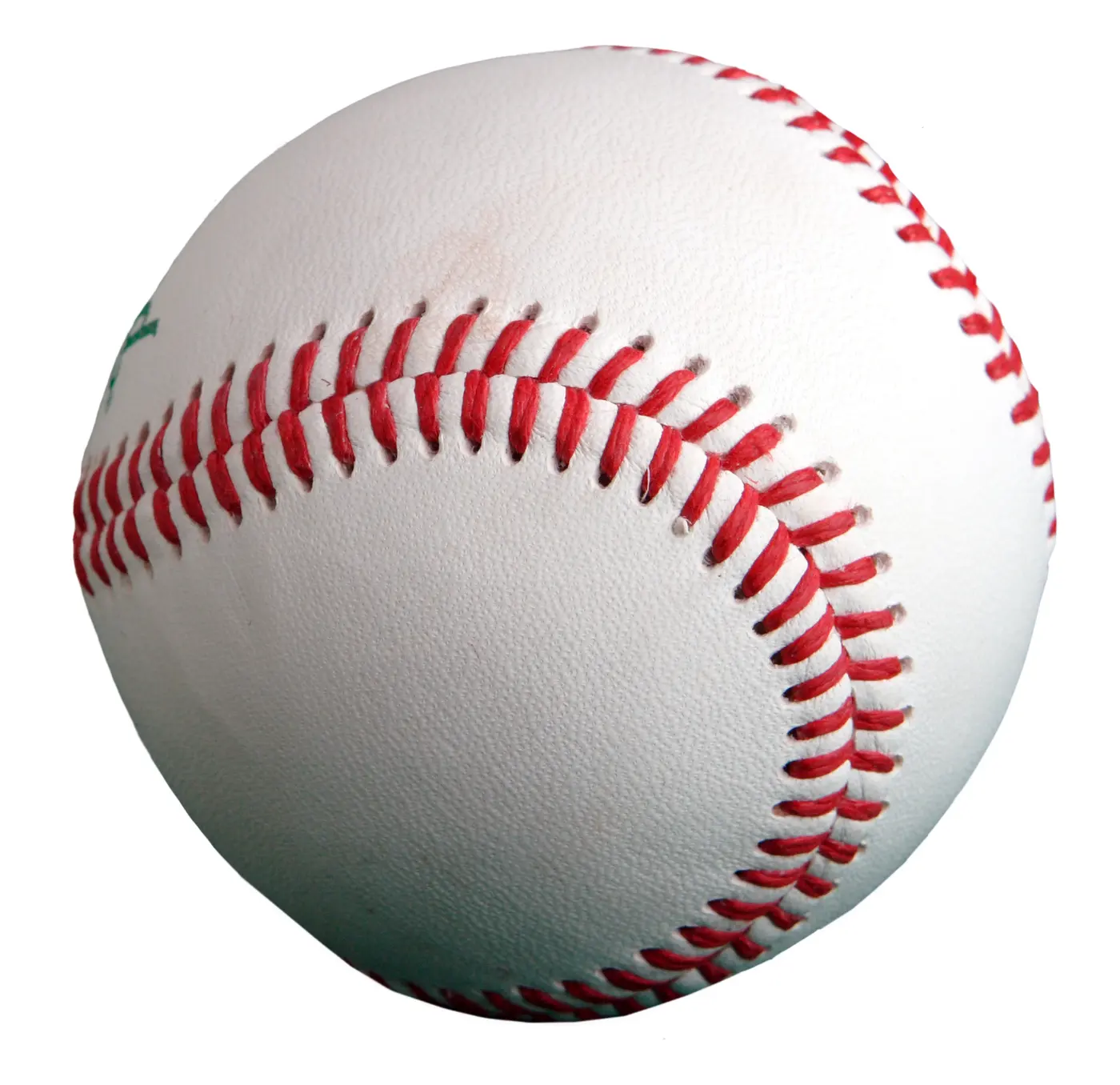

As a spinning ball flies through the air, its raised seams disturb the airflow across its surface. Depending on how the seams are oriented when the ball is thrown, a different number of seams cut through the air with each rotation, and that changes how the ball carries and how it breaks. The names of the two basic fastball grips, the “four-seam” and the “two-seam,” refer to exactly this: the number of seams that cross the air.
The 108 stitches give a baseball its shape, and at the same time they become a language spoken through the pitcher’s fingertips.
A pitcher feels for the seams, and the tiniest change in angle alters the path of the ball. Without that red thread, the dazzling variety of breaking balls might never have existed.