Why do golf balls have dimples?
Dimples tame the airflow around the ball, cutting drag so it flies much farther.
Pick up a golf ball, and you’ll see its surface packed with tiny hollows. These are called dimples. The number varies from ball to ball, but many have somewhere around 300 to 400.
It is an odd design when you think about it. If you want a ball to fly fast and far, a smooth surface seems as if it would cut through the air more cleanly. In fact, the opposite is true: a smooth golf ball flies surprisingly poorly. The dimples are the real stars behind a golf ball’s distance.
Leather stuffed with feathers
Golf is said to have taken off in Scotland around the 15th century. The earliest balls are sometimes thought to have been made of wood, but that isn’t certain. What came into wide use from around the 17th century was a ball called the “featherie.” A pouch of cowhide or similar leather was sewn together, stuffed tight with feathers that had been boiled to soften them, and then left to dry hard.
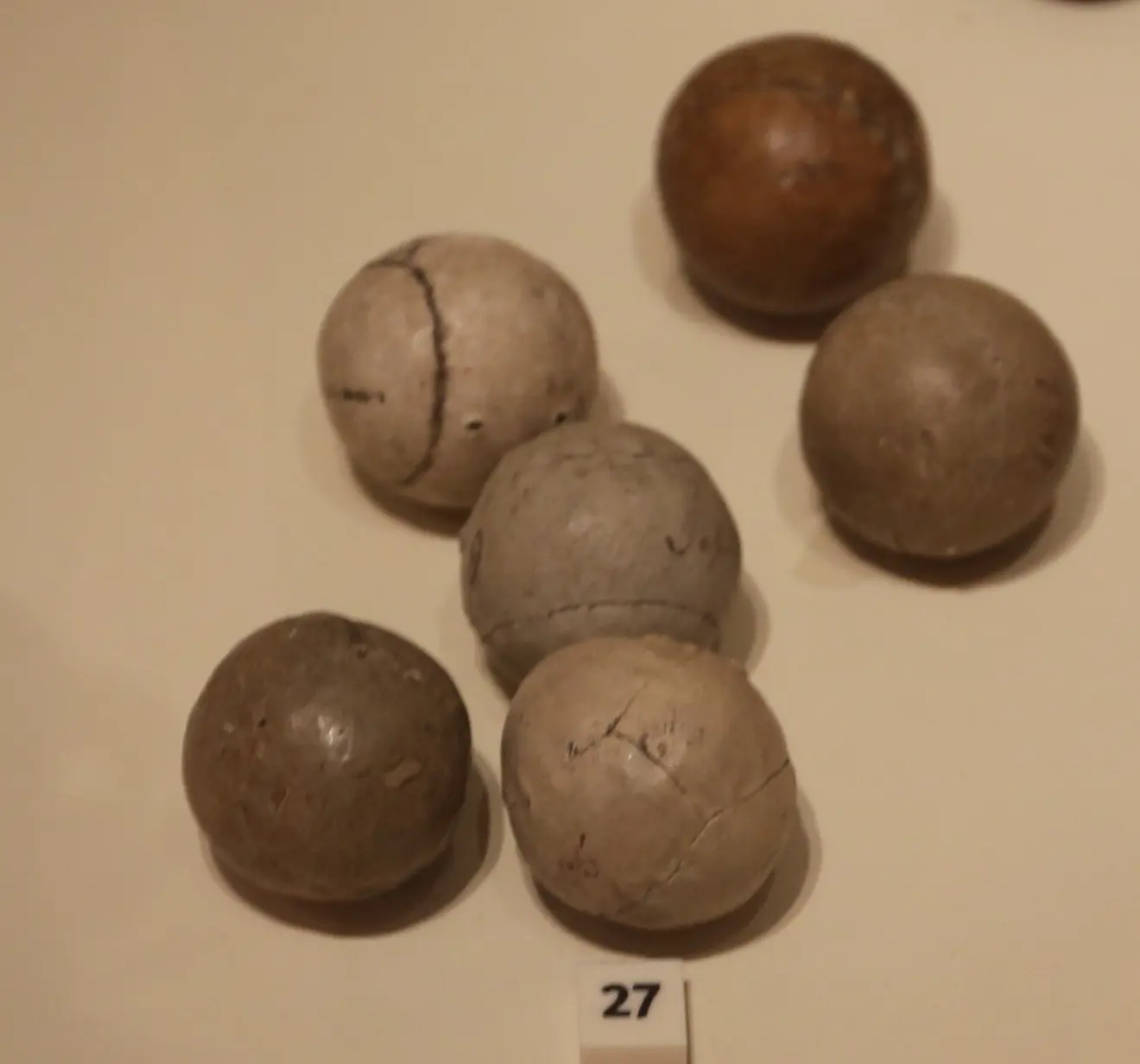

Because featheries were made by hand by skilled craftsmen, they were very expensive. They also grew heavy when they got wet, and a hard hit could split the seams. For a long time, golf had something of the character of a pastime for the wealthy.
The battered balls flew better
Around 1848 a new ball appeared: the “gutty,” molded from gutta-percha, a resin taken from trees native to Southeast Asia. Cheap and easy to mass-produce, the gutty suddenly put golf within reach of far more people.
Yet a brand-new, smooth gutty reportedly didn’t fly as well as expected. Golfers gradually noticed that a well-used ball, its surface covered in nicks and dents, actually flew farther and straighter.
So ball makers began roughing up new balls on purpose. They hammered patterns into the surface, or cut bumps into the molds to make balls called “brambles,” covered in small knobs like a blackberry. Without understanding why, people learned from experience that a bumpy ball goes farther.
Dimples put the air on your side
Dimples like today’s caught on in earnest at the start of the 20th century. William Taylor of England patented a ball covered with hollows instead of bumps, and this is said to be the prototype of the modern dimple.
So why do dimples help a ball fly? As a ball moves through the air, a swirling wake forms behind it. The bigger that wake, the more the ball is dragged backward and the more momentum it loses. On a smooth ball, the air flowing over the surface breaks away early, leaving a large wake behind.
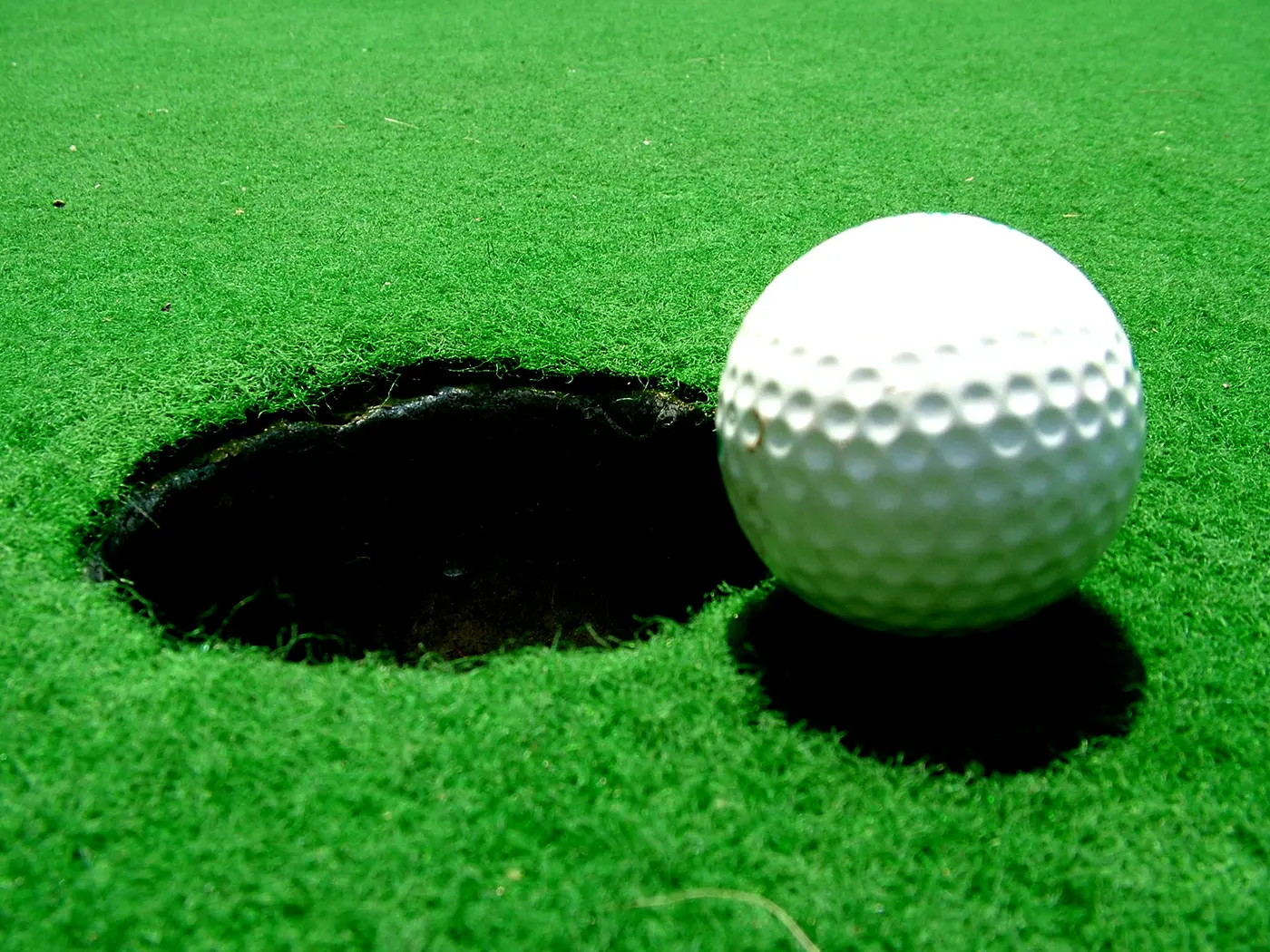

Dimples stir up the air close to the ball’s surface, creating fine turbulence. Counterintuitively, this turbulent layer of air clings more closely to the surface and separates later. As a result, the wake behind the ball shrinks, and air resistance drops dramatically.
On top of that, a ball struck by a club spins strongly backward. Around a spinning ball, the air flows differently over the top and the bottom, and that difference produces a force that lifts the ball. Dimples help this effect too, letting the ball climb higher and stay in the air longer.
Battered balls fly farther. The old golfers’ rule of thumb turned out to make perfect sense in terms of fluid dynamics.
A ball without dimples is said to fly only about half as far as a dimpled one. Today, manufacturers compete fiercely with designs that fine-tune the number, depth and shape of the dimples.