Does sugar make children hyperactive?
Careful experiments have found no evidence that sugar changes children’s behavior. What changes may be the way adults see them.
The cake has been eaten, the juice has been drunk, and now the children are tearing around the room. Plenty of parents have watched a scene like that and thought: too much sugar. English even has a name for it, the “sugar high,” and the idea that sweets wind children up is about as widely believed as a piece of folk wisdom can be.
But when the idea is put to rigorous tests, something unexpected turns up. The people whose behavior changed were not the children who ate sugar, but the parents who believed they had.
When food was the suspect
Linking children’s restlessness to what they eat became a hot topic in the United States in the 1970s. Benjamin Feingold, a physician who had been chief of pediatrics at a Los Angeles hospital and later headed the allergy department at Kaiser Permanente in San Francisco, told the American Medical Association’s annual meeting in 1973 that food additives such as artificial colors and flavors could make children hyperactive. His 1975 book, Why Your Child Is Hyperactive, made the additive-free “Feingold diet” famous, although later controlled trials found no benefit beyond the placebo effect.
Sugar came under suspicion around the same time. In 1980 a paper appeared with the title “Can what a child eats make him dull, stupid, or hyperactive?”

A sugar-loaded diet, and no difference
One team that tackled the question head-on was led by the American pediatrician Mark Wolraich. In an experiment published in the New England Journal of Medicine in 1994, 25 children aged 3 to 5, and 23 children aged 6 to 10 whose parents considered them “sensitive to sugar,” followed three diets with their families, each for three weeks. One was high in sugar. The other two were low in sugar and sweetened with either aspartame or saccharin. All three were essentially free of additives and artificial colors, and the study was double-blind: neither the families nor the researchers knew which diet was which.
During the high-sugar period, the younger children ate an average of 5.6 grams of sugar per kilogram of body weight per day. For a 40-pound (18 kg) child, that is about 100 grams a day. Even so, among the children described as sugar-sensitive, none of 39 measures of behavior and thinking differed between the diets. Among the younger children, only 4 of 31 measures differed, with no consistent pattern.
The following year, Wolraich and his colleagues published a meta-analysis in the Journal of the American Medical Association. They included only studies that gave children a known amount of sugar, compared it with a placebo containing an artificial sweetener, and kept the children, parents and researchers in the dark about which was which. Pooling 16 reports covering 23 experiments, they found that sugar did not affect children’s behavior or cognitive performance. They added that they could not rule out a very small effect, or effects on some subsets of children.
The change was in the parents’ eyes
So why are so many parents convinced that sugar makes their children wild? Wolraich and his colleagues pointed to parents’ expectations, and to the fact that sweets tend to turn up on the same kinds of occasions.
Another experiment tested the power of expectation directly. In 1994, the American psychologists Daniel Hoover and Richard Milich recruited 35 boys aged 5 to 7 whose mothers believed they were sensitive to sugar. Half of the mothers were told that their sons had just been given a large dose of sugar; the other half were told it was a placebo. In fact, every boy had received the artificial sweetener aspartame.
The researchers videotaped each mother and son together. Mothers who thought their sons had eaten sugar rated them as significantly more hyperactive. They also stayed physically closer to their sons and tended to criticize them, watch them and talk to them more. The same boys behaving in the same way looked different through eyes expecting a sugar rush.
The real reason for the excitement
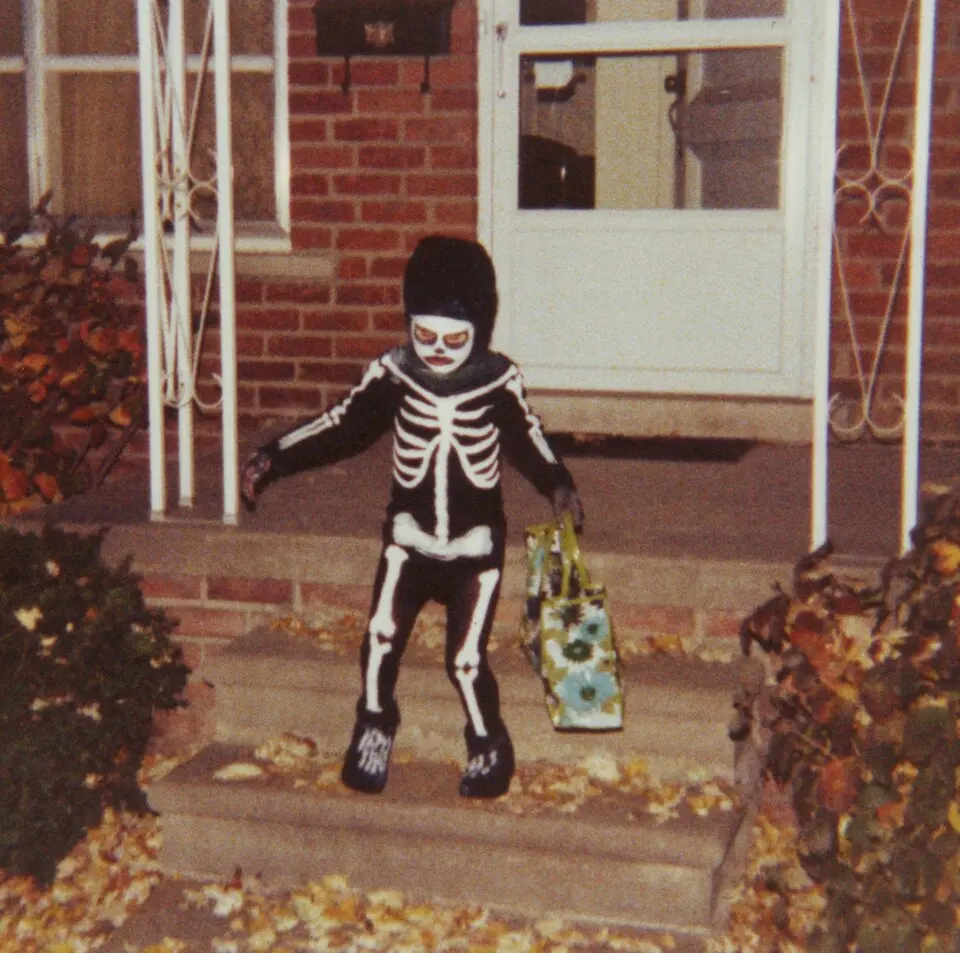
Think about when children eat the most sweets: birthday parties, festivals, Halloween. These are occasions when children are excited anyway. It seems more natural to blame the excitement on the occasion than on the sugar.


Adults have been studied too. In 2019, researchers in Britain and Germany pooled 31 studies on carbohydrates and mood. Eating carbohydrates did not improve mood at any point; if anything, within the first hour people felt more tired and less alert than after a placebo. The researchers concluded that the “sugar rush” is a myth.
None of this means there is no reason to go easy on sweets. In 2015 the World Health Organization recommended that adults and children keep “free sugars” to less than 10% of their daily energy intake, to reduce the risk of obesity and tooth decay.