Why do the Japanese celebrate with red rice?
Red was believed to ward off evil, and the custom may echo an ancient red-grained rice. Neither explanation can be proved.
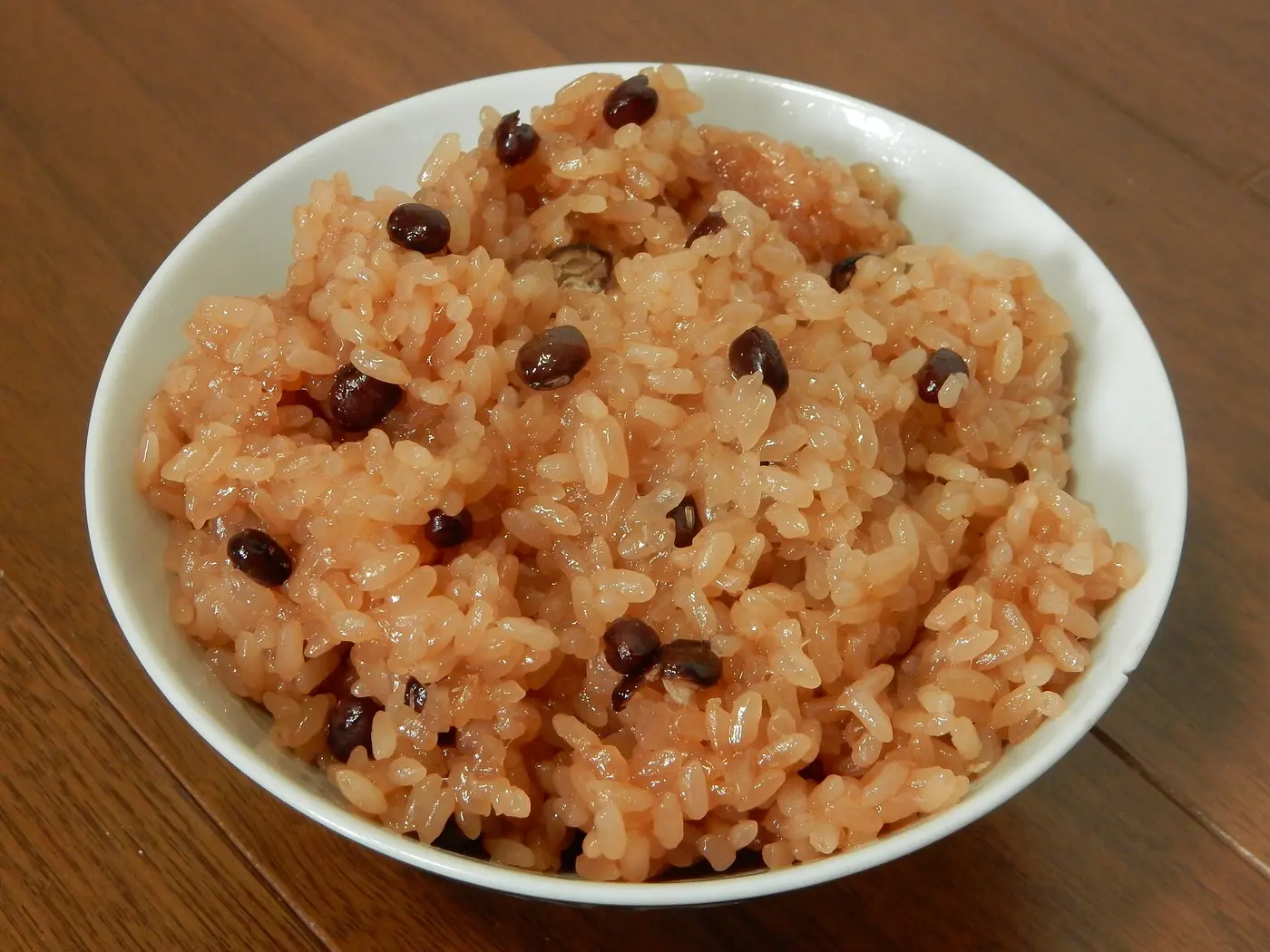
Birthdays, the Shichi-Go-San festival for young children, the first day of school, a passed entrance exam. On happy occasions, many Japanese families still cook sekihan, literally “red rice”: glutinous rice steamed with small red beans until it turns a soft pinkish red. It is sold at traditional sweet shops and, these days, as rice balls in convenience stores.
Why red, though? The usual answer is that red keeps evil away. But dig into Japanese dictionaries and encyclopedias, and the reason turns out to be far from settled. Nor, it turns out, has sekihan always been reserved for celebrations.
Rice dyed with bean broth
The Nihon Kokugo Daijiten, Japan’s largest dictionary, defines sekihan as glutinous rice mixed with cooked azuki beans or cowpeas and their red cooking liquid, then steamed. It is a kind of okowa, or steamed sticky rice. According to the Heibonsha World Encyclopedia, the beans amount to about a tenth of the rice. The rice soaks overnight in the bean broth to take on its color, and more broth is sprinkled over it as it steams.
The earliest records come from the imperial court. The Chūji Ruiki, a record of court menus thought to date from the late Kamakura period, which ended in 1333, notes that red rice was customarily served at the seasonal festivals on the third day of the third month, the fifth of the fifth and the ninth of the ninth. The dictionary adds that the custom spread among ordinary people only in the Edo period (1603–1868). In Ihara Saikaku’s 1686 novel The Life of an Amorous Woman, a large lacquered box is lined with nandina leaves and heaped high with sekihan.
Cowpeas instead of azuki
Sekihan can be made with cowpeas as well as azuki beans. Cowpeas, a crop that originated in Africa, look much like azuki but keep their skins intact when boiled.
According to the Japan Bean Foundation, cowpeas are often used instead of azuki in the Kanto region around Tokyo. The reason given is that azuki skins split easily, and a split belly called to mind seppuku, ritual disembowelment, which made azuki unwelcome among the samurai. Japan’s agriculture ministry tells the same story. Both, however, present it as something that “is said,” not as recorded fact.
The superstition extends to the topping. The Heibonsha World Encyclopedia says the sesame salt sprinkled over sekihan should be made with whole roasted black sesame, not chopped or ground, because “cutting” and “grinding” are words to avoid on a happy day.

A charm, or a memory of red rice?
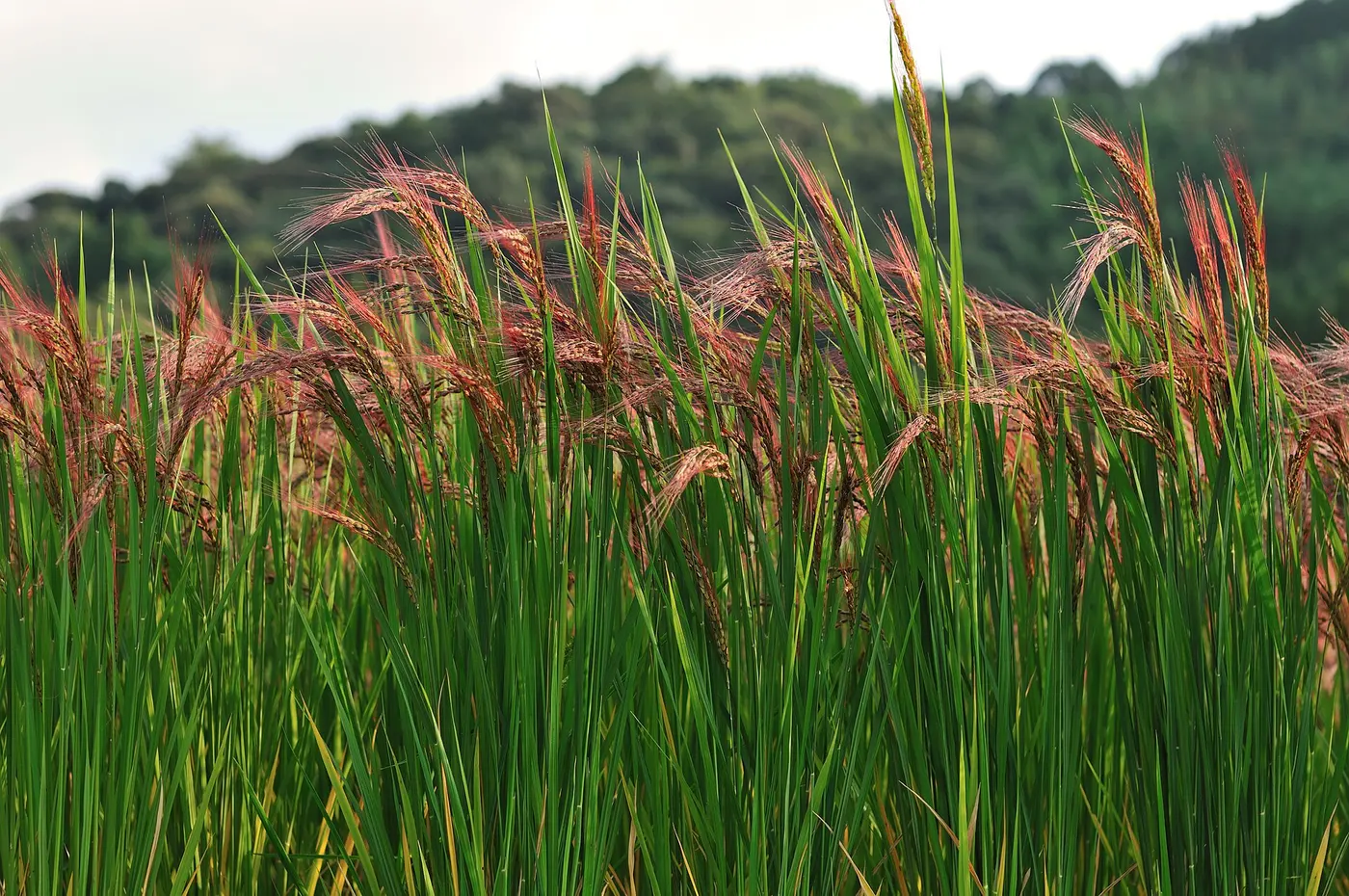
So why red in the first place? The Nihon Kokugo Daijiten says it is “said” to be because red was believed to ward off misfortune, or because it echoes an ancient rice that was red. Neither is more than a theory.
The red rice theory comes from Kunio Yanagita, the founder of Japanese folklore studies. He argued that the Japanese grew and ate red-grained rice before white rice, and that the memory of it led people to dye white rice red with beans for special days. Red rice really was grown in Japan long ago. Wooden tags from the Nara period (710–794) record shipments of red rice sent to the capital from provinces such as Owari and Harima. Today, a few shrines still raise it in sacred paddies and guard the seed closely, among them Kunishi Shrine in Sōja, Okayama Prefecture; Takuzudama Shrine in Tsutsu, on the island of Tsushima; and Hōman Shrine on the island of Tanegashima.
Other researchers point instead to slash-and-burn farming. The folklorist Kan’ichi Nomoto showed that dishes combining azuki beans with other crops were common in such farming areas, where they served both as everyday food and as offerings to the gods. Which theory is right remains an open question.

Red rice at funerals
Sekihan is not always about celebration. According to the Nipponica encyclopedia, in parts of the Tōhoku region along the Sea of Japan and in the western Kanto region, sekihan is eaten at funerals. Close relatives of the dead bring it in large quantities, 18 liters or more, and share it with everyone who attends. In Okinawa, red rice called kashichī has been given as a gift during Obon, the summer festival for the dead. And in Akita Prefecture, the agriculture ministry notes, sekihan is served under the name “black rice” at the funeral of someone who lived a long, full life.
The same encyclopedia suggests why red rice could serve on both happy and sad days: seeing rice that was not the usual white reminded everyone that this was no ordinary day. Perhaps the red never meant “congratulations” so much as “today is different.”