Does instant udon taste different in eastern and western Japan?
Yes. Nissin’s Donbei noodles have come in separate eastern and western versions since their launch in 1976, with the dividing line drawn around Sekigahara.
1976
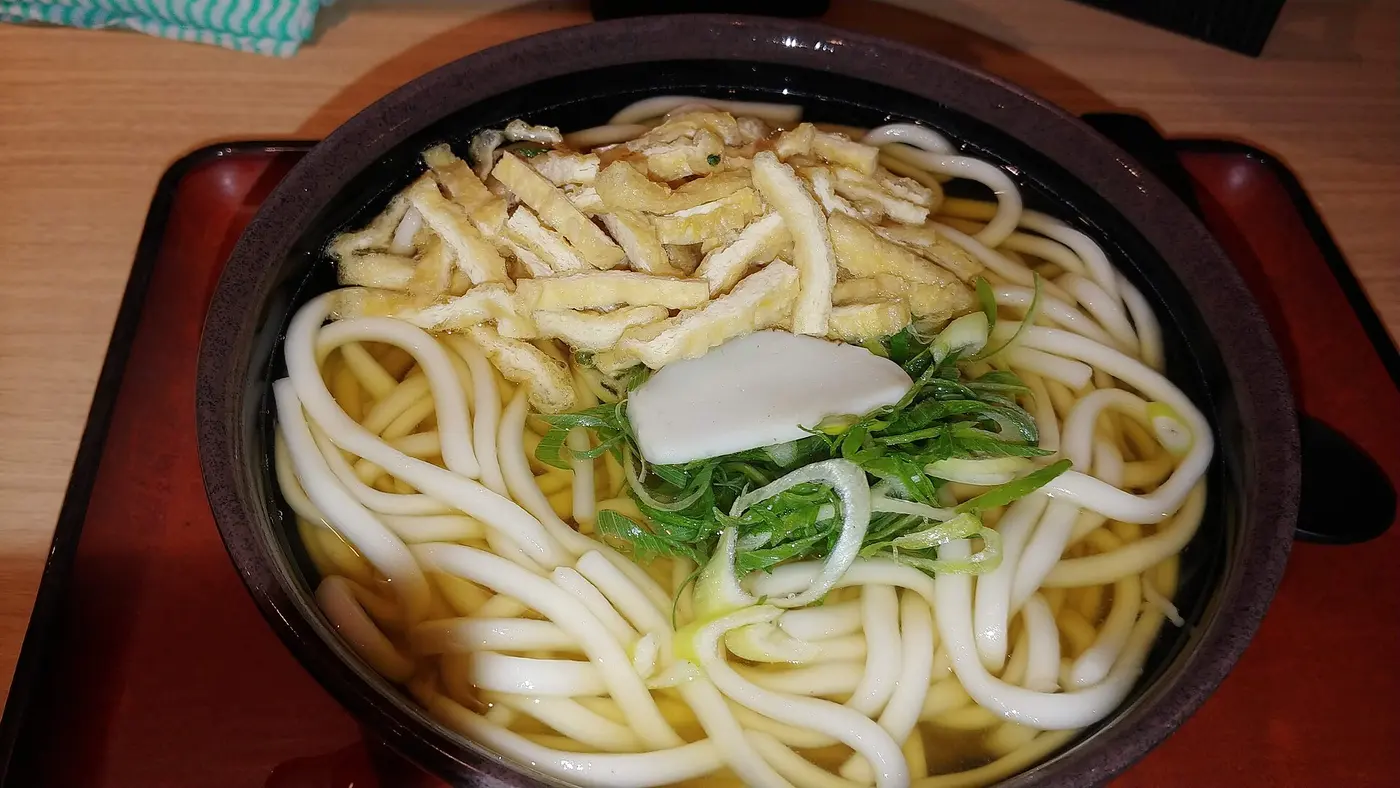
Instant kitsune udon, thick wheat noodles in broth topped with a sweet slab of fried tofu, sits on the shelves of supermarkets and convenience stores all over Japan, looking the same everywhere. Yet the same product bought in Tokyo and in Osaka can taste noticeably different.
The best-known example is Donbei, from Nissin Foods, the company behind Cup Noodles. It comes in an eastern and a western version, and according to Nissin, it has done so ever since it was launched in 1976.
E for East, W for West
Telling them apart is easy. According to a 2012 Nissin press release, the lid carries a small “(E)” or “(W)” beside the company logo, and the same letter appears on the side, below the list of ingredients.
The sales areas are fixed, too. Nissin says the western version is sold in Toyama, Ishikawa, Fukui, Shiga, Nara and Wakayama prefectures and everywhere west of them, while Niigata, Nagano, Gifu, Aichi, Mie and everything to the east get the eastern one. Hokkaido, in the far north, has a third version of its own, made with kelp from Rishiri Island.
Nissin describes the eastern broth as a dark one built on two kinds of dried bonito, and the western broth as a pale one built on bonito and kombu kelp. Bonito goes into both, in other words; the difference lies in the kelp and in the color. In 2024 the company went further and split everything into eastern and western versions, including the noodles, the fried tofu and tempura, and even the shichimi chili blend.

Searching for the line by bullet train
Why go to the trouble? According to Nissin, people in eastern and western Japan had long preferred different flavors in their udon and soba. One broth for the whole country would have been more efficient to produce, but the developers decided to respect regional tastes, and Donbei became the first nationally sold cup noodle to change its flavor by region.
The question was where to draw the line. Nissin says no written source clearly showed where the boundary lay, so a developer rode the Kodama, the Shinkansen bullet train service that stops at every station, getting off station after station and eating udon in and around each one until the taste changed. The boundary, he found, was at Sekigahara, the site of the great battle of 1600 that decided who would rule Japan.
Strictly speaking, the town of Sekigahara is in Gifu Prefecture, which gets the eastern version. The sales line runs just west of it, along the border with Shiga Prefecture.
Nissin is not alone. Toyo Suisan, maker of the rival Akai Kitsune (“Red Fox”) udon, launched in 1978, says it comes in four flavors: an eastern one with a robust bonito and soy sauce taste; a western one with a stock of bonito, kelp and dried sardines, seasoned with light-colored soy sauce; one for Hokkaido made with Rishiri kelp; and one for the Kansai region around Osaka made with round herring.
Kelp in the west, dark soy sauce in the east
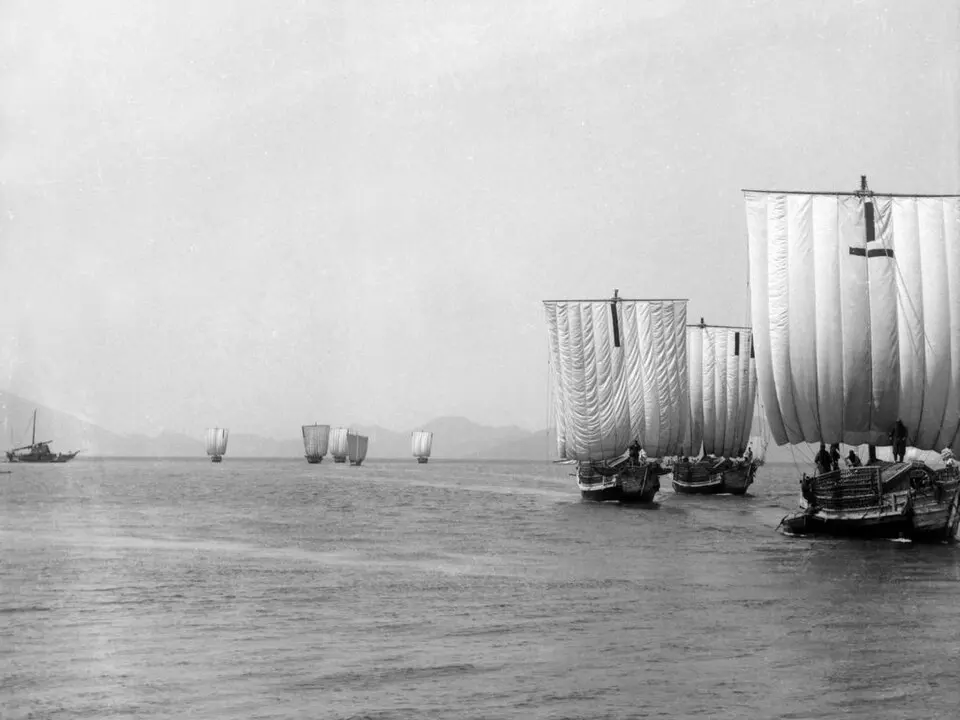
The divide has deep roots. According to the Japan Kombu Association, during the Edo period (1603–1868) kelp from Hokkaido was loaded onto merchant ships called kitamaebune and carried along the western sea route, through the strait at Shimonoseki and the Inland Sea, straight to Osaka, then known as “the nation’s kitchen.” This “kombu road” later stretched to Edo (now Tokyo), Kyushu and the Ryukyu Kingdom (now Okinawa). Because it reached the Kanto region around Tokyo late, the association says, Kanto still consumes relatively little kelp compared with the rest of Japan.
Soy sauce matters too. According to the Japan Soy Sauce Brewers’ Association, production of dark koikuchi soy sauce began in the Kanto region in 1640, and it came to suit the tastes of Edo’s people. The city’s signature dishes, such as soba, tempura and grilled eel, could not have been born without it. Light-colored usukuchi soy sauce, by contrast, is said to have been created in the Kansai region in 1666.

Light in color does not mean light on salt, though. The association says usukuchi uses about 10 percent more salt than koikuchi, which slows fermentation and keeps the color pale. Koikuchi is about 16 percent salt; usukuchi, about 18 percent. The western broth looks clear not because it is less salty, but because of its pale soy sauce and kelp stock.